

You're choosing a gift for someone who enjoys whiskey, and the glasses all seem to promise something different. A tall stem looks elegant. A rounded snifter feels traditional. A heavy tumbler looks ready for an evening pour. The useful question isn't which looks most expensive, but which fits the way your recipient drinks.
When shopping for whiskey glasses with stem designs, treat the stem as part of a working tool, not just decoration. Our barware and gifting assortment gives you room to match the glass, accessories, and personalization to the person, whether you're buying an anniversary present or planning client gifts.
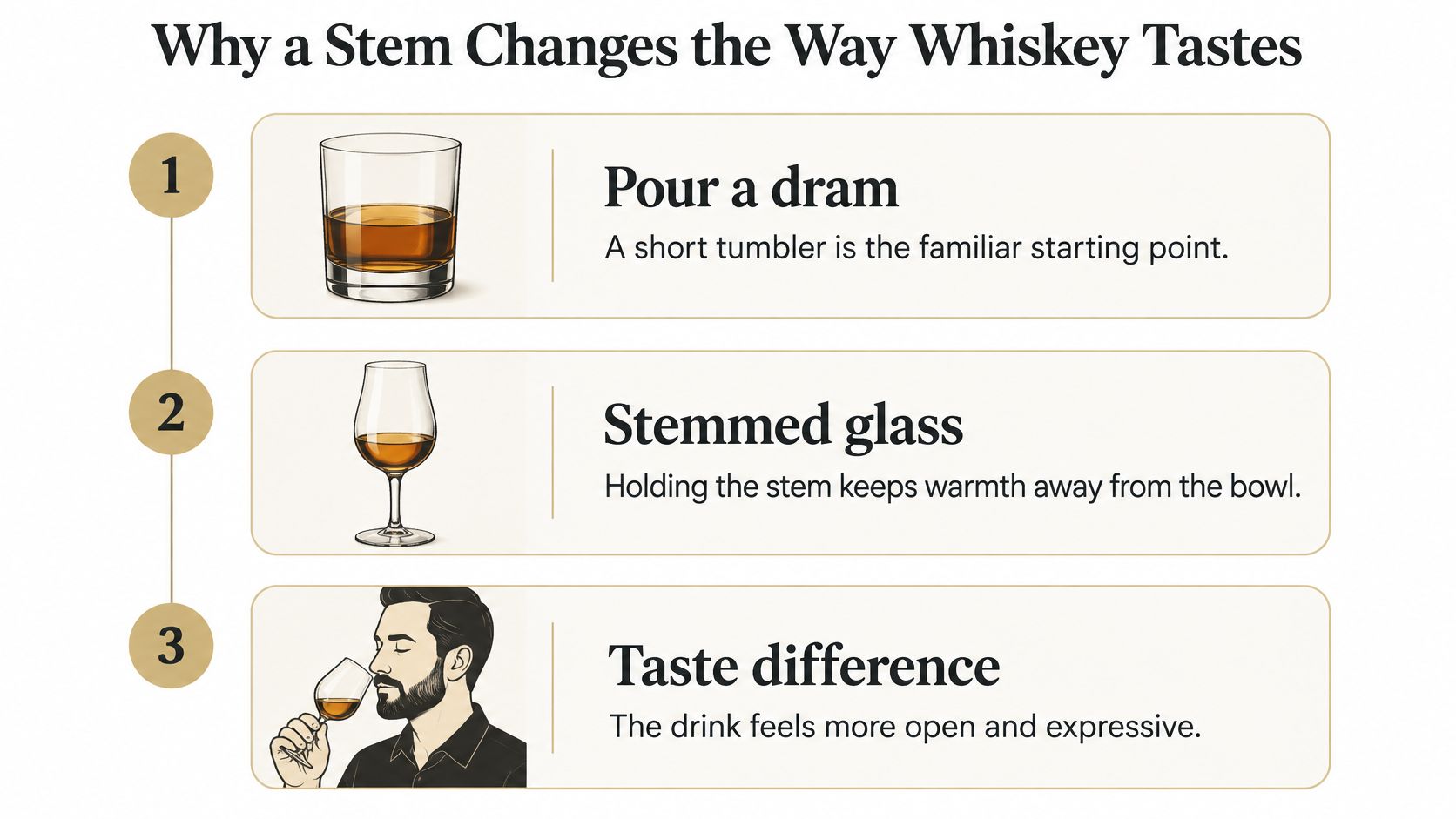
Why a Stem Changes the Way Whiskey Tastes
You pour a familiar whiskey into a short tumbler, take a sip, and wonder why it seems less expressive than you expected. The whiskey hasn't necessarily changed. The vessel may be changing how you encounter its aroma.
Aroma concentration and hand contact are separate design questions. The bowl and opening influence the first. The stem helps manage the second. Keeping those jobs separate makes it easier to judge a glass without assuming that any stemmed design must be better.
The bowl gathers aroma
A useful reference is ISO 3591, which specifies sensory-analysis glassware with an opening narrower than the bowl's widest point. This geometry concentrates volatile compounds above the liquid and directs them toward the nose. ISO-aligned dimensions include approximately 215 mL capacity, a 46 mm rim diameter, a 65 mm maximum bowl diameter, and 0.8 mm wall thickness, but these are an engineering benchmark, not a mandatory whiskey-glass specification, as described in the ISO sensory-analysis glass standard.
Think of the bowl as a room with a smaller doorway. The space above the whiskey matters because that's where aromas gather before you bring the opening toward your nose. Filling the glass too high removes useful headspace.
Practical rule: Choose a tasting glass for the space above the pour, not simply for how much liquid it can hold.
The stem separates your hand from the bowl
Holding a warm mug shows how directly your hand interacts with a vessel. With whiskey, the direction of heat transfer can run from your palm into the bowl. A stem gives your fingers somewhere else to rest.
That doesn't mean the stem refrigerates the drink or changes the whiskey itself. It offers a way to avoid unnecessary bowl contact while you assess a pour. The practical effects of handling and temperature are explored further in the care guidance below.
For a useful comparison, follow our guide to how to properly taste whiskey with a familiar bottle. Notice what you smell before deciding what you prefer. A different aroma presentation isn't automatically a better drinking experience.
From the Snifter to Modern Stemmed Designs
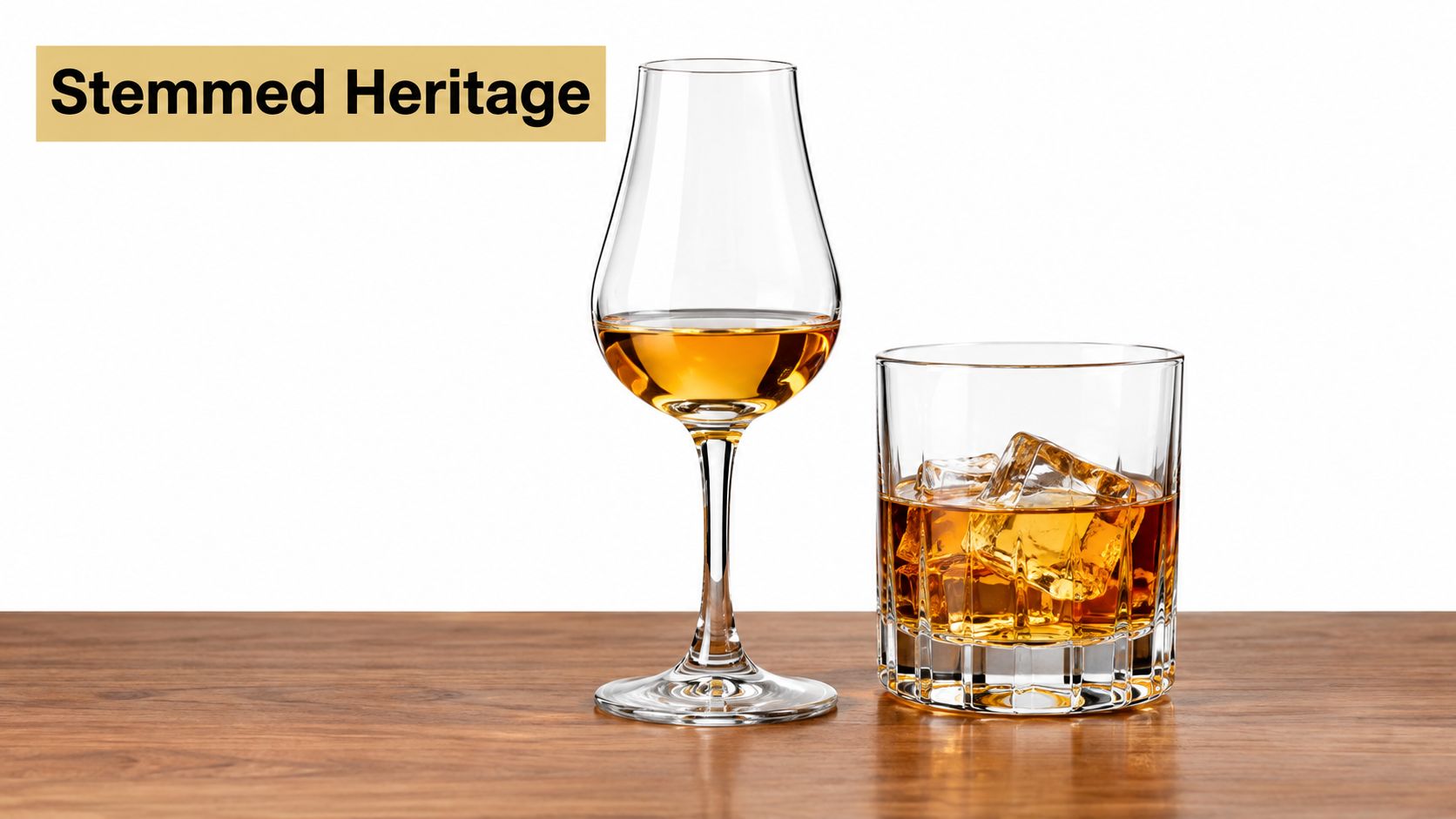
A rounded snifter can look like a formal alternative to an everyday tumbler. Its whiskey connection, however, isn't a recent styling exercise. The vocabulary around the glass reaches back into whiskey-service history.
The word snifter, associated with sniffing alcoholic drinks, is recorded in English from 1844. An 1875 usage referred to a full glass of toddy or whisky, while the specific meaning of a large, bulbous stemmed glass for alcohol is documented from 1932, according to the glassware history discussed by Primer.
A familiar silhouette with a whiskey connection
Those milestones tell a more useful story than a claim that someone invented the perfect whiskey glass. The name, the serving vocabulary, and the documented vessel shape developed across different moments. They shouldn't be collapsed into a single invention date.
The recognizable snifter has a short stem, broad rounded bowl, and narrower opening. Its heritage gives gift buyers something concrete to discuss beyond appearance. A recipient who enjoys traditional barware may appreciate that connection as much as the silhouette.
A heritage-inspired gift doesn't need an invented origin story. Its documented connection to whiskey is enough.
Turning history into a gift choice
For a wedding or housewarming gift, consider whether the recipient enjoys displaying barware, hosting tastings, or settling down with a familiar pour. A snifter-inspired piece can suit someone drawn to traditional forms. A more restrained tasting shape may suit someone who prefers purposeful equipment.
If you're comparing personalized silhouettes, Custom Mark whiskey glass options from Custom Mark provide a useful additional reference alongside stemmed designs. Compare the overall form before deciding where engraving belongs.
Our assortment is a good gifting option when you want to connect that design choice with a broader presentation. Glassware, a wood tray, or complementary accessories can make the gift feel considered without requiring an elaborate historical claim. Let the recipient's habits guide the purchase, and use heritage as supporting context rather than the entire reason to buy.
Choosing the Right Shape for Each Spirit
Choose by serving style before choosing by spirit name. Someone who drinks bourbon neat may need a different glass from someone who serves the same bourbon over a large cube. The label on the bottle doesn't settle the glassware question.
Comparative sensory research also cautions against treating all tasting glasses as equivalent. A tulip-shaped whisky glass produced stronger overall aroma than a snifter, while another engineered vessel performed better than both in the comparative glass-vessel aroma study. The useful conclusion is that bowl shape, rim diameter, and opening geometry may matter more than the stem alone.
Stemmed and Stemless Glass Options by Serving Style
| Glass Style | Aroma and Tasting Focus | Best Serving Style |
|---|---|---|
| Stemmed tulip or copita | A focused option for comparing aromas | Neat whiskey and deliberate tasting |
| Stemmed snifter | A rounded alternative for an aroma-led pour | Unhurried sipping of whiskey or brandy |
| Conventional tumbler | Less emphasis on concentrated nosing | Whiskey with ice, chilling stones, or cocktails |
Treat these as starting points, not restrictions. A recipient's preferred handling and serving routine should decide between otherwise suitable options.
Match the glass to the actual pour
For someone who compares Scotch, bourbon, or rye neat, I'd begin with a tulip or copita profile. Look for comfortable finger clearance and a foot that feels secure on the table. Don't assume a taller stem makes a glass more capable.
For a recipient who enjoys brandy as well as whiskey, a snifter is worth considering. Ask whether they enjoy its rounded shape and how they naturally hold it. Personal comfort matters when the gift is meant for regular use.
A tumbler is the more practical starting point for large cubes, substantial chilling stones, and relaxed cocktail service. Check the opening and bowl clearance instead of judging capacity from photographs.
- Balance: Consider the glass with the intended pour and accessories, not just empty.
- Cleaning access: Check whether the recipient can comfortably clean the bowl.
- Accessory fit: Don't force large stones through a narrow opening or let them crowd a delicate bowl.
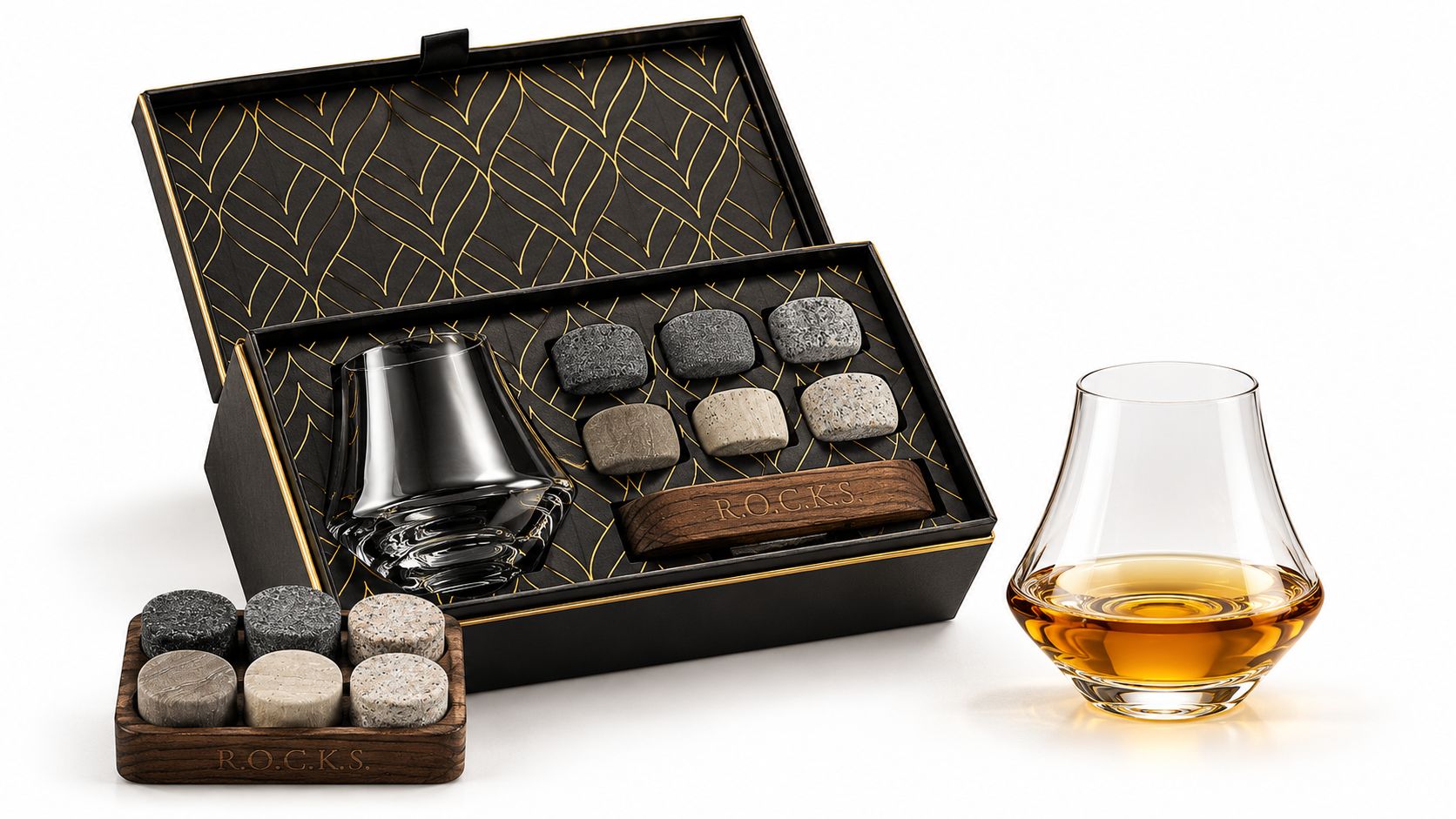
Our The Connoisseur's Set - Nosing Glass Edition pairs a crystal whiskey nosing glass with round solid granite stones that cool the drink without dilution from melting ice. It's a gift option for someone interested in nosing glassware and a non-diluting chilling method.
That pairing doesn't make every stone suitable for every stemmed glass. For a gift buyer, the sound approach is to compare the actual components and intended use. Our assortment works well because you can choose around the recipient's routine rather than forcing every drink into the same format.
Using, Chilling, and Caring for Stemmed Glasses
After a dinner party, a quick rinse that night keeps whiskey residue from drying on the glass. That small habit makes stemware easier to clean and ready for the next pour. A short care note can also help a recipient who usually uses a tumbler feel comfortable with a different glass.
Hold and set down with care
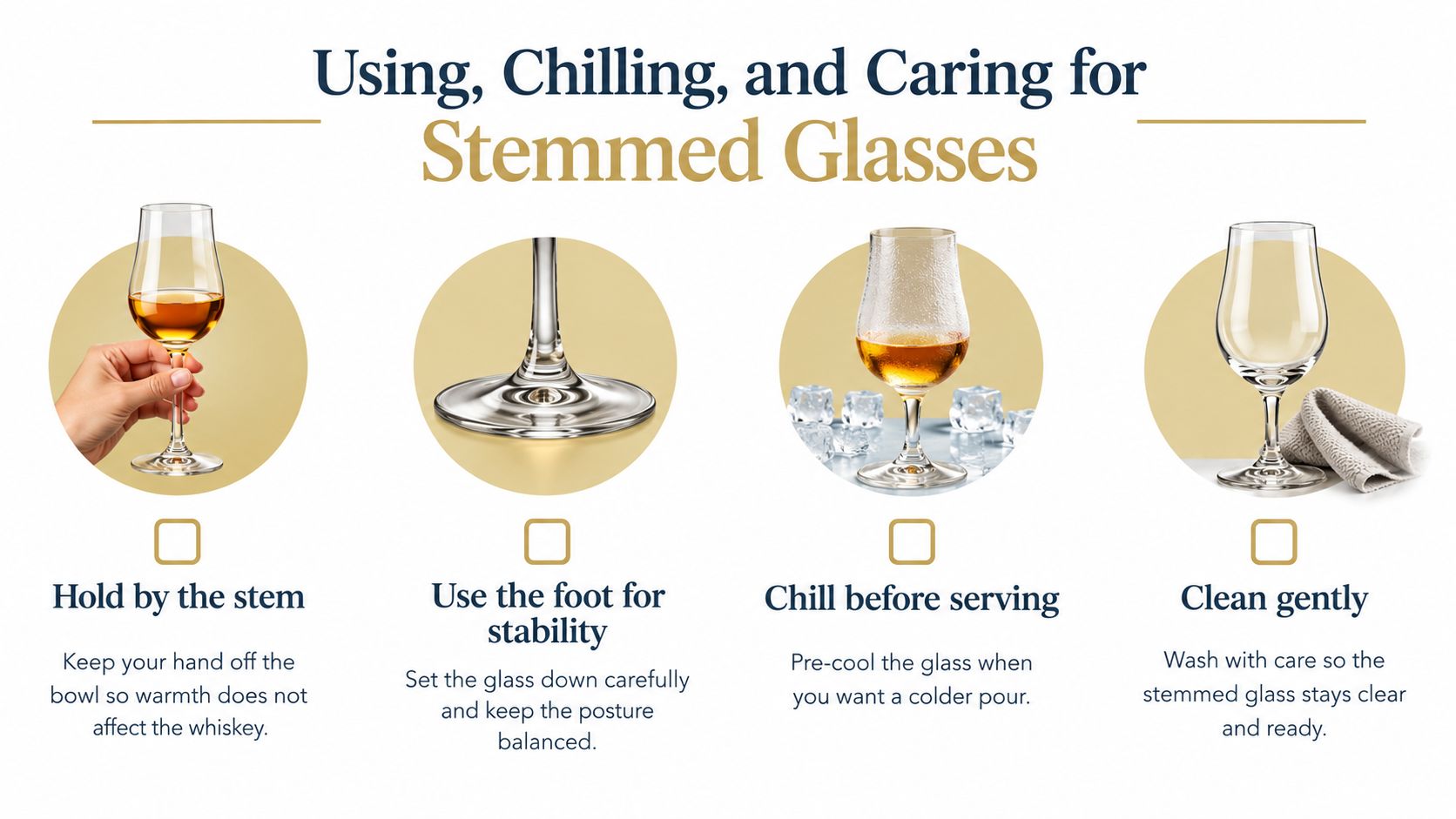
Hold the stem or foot to keep your hand from warming the pour during a neat tasting. Hold the bowl only when you want the whiskey to warm slightly, such as during a slow tasting of a cask-strength pour. A small temperature change can affect evaporation and the aromas you notice.
The GB/T tasting-glass specification lists a 55 ± 3 mm stem height, 9 ± 1 mm stem diameter, and 65 ± 5 mm base diameter for a tasting glass. These dimensions offer a practical reference: a stem around 55 mm high can keep a typical hand clear of the bowl, while a broader foot helps the glass sit securely. If the recipient often serves large cubes, check that the bowl has enough room rather than relying on stem height alone.
Set the foot on a clear, level surface, away from table edges and places where serving trays pass. A stemmed glass is easier to knock than a tumbler, so give it a little space.
Chill and clean according to the glass
For a colder pour, check the maker's instructions before chilling the glass. Some decorative or delicate stemware may not be suited to freezer use. For cocktails, ice, or generous pours, choose a shape with enough bowl room and a stable base for the serving style.
Gentle hand washing is the safest default, unless the manufacturer gives different instructions. Support the bowl as you wash it. Use a clean, lint-free cloth, and avoid forcing the cloth through a narrow opening. To dry the bowl, hold the foot still and turn only the cloth, so the stem does not take the twisting force.
Store the glass upright with space around its stem and rim. Engraved giftware needs the same careful handling, along with any finish-specific instructions from the maker. For personalized glasses, engraving on the foot, stem, or lower exterior zone keeps the rim and inside of the bowl clear for drinking and smelling the whiskey.
Before a pour, check for chips or residue and make sure there is room for any chilling accessory. During use, keep stones from knocking against the glass walls. After washing, leave space between stored glasses so neighboring rims cannot press together.
These simple steps help a recipient enjoy the glass without needing specialist knowledge. An infographic showing four steps for using and caring for stemmed whiskey glasses with clear instructions.
Personalized Stemmed Glasses as Thoughtful Gifts
For an anniversary, you could choose an attractive glass and stop there. Or you could choose a form your partner enjoys, add a meaningful date, and include a note about the evening you hope to share. The second approach makes your choice personal without requiring a larger gift.
That distinction has research support. A 2024 peer-reviewed study found average appreciation scores of 4.86 for customized gifts versus 4.00 for non-customized gifts, with a statistically significant difference of F(1,108) = 7.832 and p < 0.01, in its study of customized gift exchanges. This wasn't specifically a whiskey-glass test, so it supports personalization as a gifting approach rather than guaranteeing a response to any particular product.
Make the detail about the recipient
A name is straightforward, but it isn't your only option. A wedding date, shared place, or short phrase can be more meaningful when it connects to the occasion. Keep the wording something the recipient would enjoy seeing during ordinary use.
- Birthday gifts: Choose a name or brief message that feels personal rather than ceremonial.
- Wedding and anniversary gifts: Consider a shared date or coordinated engraving.
- Housewarming gifts: Match the presentation to the recipient's hosting style.
- Gifts for a husband or spirits enthusiast: Start with the glass they'll use, then personalize it.
Gift-buyer check: If you removed the engraving, would this still be the right glass for them?
Personalization should strengthen a suitable gift, not compensate for the wrong shape. Our glassware and engraved wood-tray options offer a practical way to balance both decisions.
Include a message, not just a monogram
The PPAI holiday-gift preference findings report that 77% of consumers consider it important for holiday gifts to reflect individual preferences, while 51% highly appreciate a personalized message. Those findings support paying attention to the note and presentation, not just the object.
A short message can explain why you chose the set: for weekend tastings, a new home, or evenings spent hosting friends. Avoid generic praise that could accompany any gift.
Our guide to a personalised whiskey glass set can help you compare customization ideas. Choose the meaning first, then decide whether it belongs on the glass, tray, or accompanying card.
Corporate Gifting With Stemmed Whiskey Glasses
A client thank-you, an employee milestone, and a company-event gift call for different choices. Start by grouping recipients by their relationship to the company and the reason for the gift. The stem can help match the glass to the occasion: a stemmed tasting glass suits a recipient who enjoys sampling whiskey, while a coordinated tray set may work better for a formal presentation.
The custom corporate-gifts market analysis estimates that employees and staff represented approximately 45.6% of the worldwide custom corporate-gifts market and identifies employee gifting as its largest application area in 2025. That gives buyers context for planning separate recipient groups and choosing a suitable style for each.
Match the presentation to the relationship
Reusable glassware can suit gifts connected with hosting and celebration, and it can be offered without alcohol. Our assortment includes displayable barware for those occasions. Check the recipient's preferences and organization's gift policy before choosing a set.
| Recipient or Occasion | Gift Direction | Personal Detail |
|---|---|---|
| Employee milestone | A personalized glass | Recipient name and milestone |
| Client appreciation | A glass-and-stone set | A restrained thank-you message |
| Executive recognition | A coordinated tray assortment | Individual engraving |
| Premium company event | Consistent barware presentation | Company logo at the base of the glass, with the event name and date printed on the tray card |
Pick one row for each recipient group, then confirm the engraving and budget before ordering the same set for everyone. A recipient's name can make an individual recognition gift feel considered. For an event, a logo at the base keeps branding visible without taking over the glass.
For procurement, the guide to buying whiskey glasses in bulk offers a starting point. Prepare recipient names, engraving text, delivery requirements, and approval responsibilities before placing an order.
Budget separately from tax treatment
Under IRS Publication 463 business-gift rules, the U.S. business-gift deduction is generally limited to $25 per recipient per tax year. The rule also covers certain indirect gifts intended for the personal benefit of particular individuals or a limited group.
The $25 limit applies to the deduction, so set the purchase budget separately and document the rationale for each recipient. Ask your accountant how the rules apply to your recipients, incidental costs, and gifting program.
- Approve the artwork: Review names, dates, and logo placement before production.
- Confirm suitability: Check recipient preferences and gift-acceptance rules.
- Plan delivery: Separate individual shipments from event distribution.
A well-matched glass and presentation make the gift feel appropriate to the relationship. Decide what suits each recipient before finalizing the order.
Choosing Your Next Stemmed Whiskey Glass
Start with a sentence about the recipient: “They compare whiskey neat,” “They prefer a chilled evening pour,” or “They enjoy hosting friends.” That sentence is more useful than a shopping filter marked premium.
You can then shortlist a shape that suits the habit, check the handling and care requirements, and decide whether personalization adds meaning. Don't buy accessories just to make the box look fuller. Each component should have a clear role.
Build a gift shortlist
For a spirits lover's bar cart, consider The Privilege Collection Reserve Glass Edition and The Privilege Collection Soleil Glass Edition as visual starting points. Compare their profiles and the crystal clarity that lets the whiskey's color remain part of the presentation. Check the product details rather than assuming either name tells you how the glass will perform.
Our assortment is a good gifting option because you can keep the choice focused on the person. A glass may be enough for a modest personal occasion. A coordinated presentation may better suit a wedding, client thank-you, or recognition event.
- Choose the habit: Identify the recipient's usual spirit and serving style.
- Compare the shapes: Look at the opening, bowl, foot, and handling clearance.
- Finish the gift: Add appropriate engraving or a specific written message.
Before ordering, compare your shortlisted shapes against the recipient's favorite pour. Choose the one you can explain in a simple sentence: “I picked this because it suits how you enjoy your whiskey.”
ROCKS offers whiskey chilling stones, barware, gift sets, and engraving on glassware and wood trays for personal and corporate occasions. Visit ROCKS Whiskey Chilling Stones to compare a tasting-focused gift with a chilled-sipping option, then choose the glass and personalization that fit your recipient.


