

Does a star on a glass tell you anything about how well it'll work as a gift, or only how it looks in a photograph? The useful questions are less obvious: how much clear glass remains, where a name can sit, and whether the recipient wants a display piece or an everyday tumbler.
Etched star glass can suit both personal celebrations and corporate recognition, but the motif needs to work with the glass rather than cover it indiscriminately. For gift seekers choosing from our barware assortment, the best starting point is the recipient's habits, followed by the pattern, personalization and care requirements.
What Etched Star Glass Is and Where the Pattern Comes From
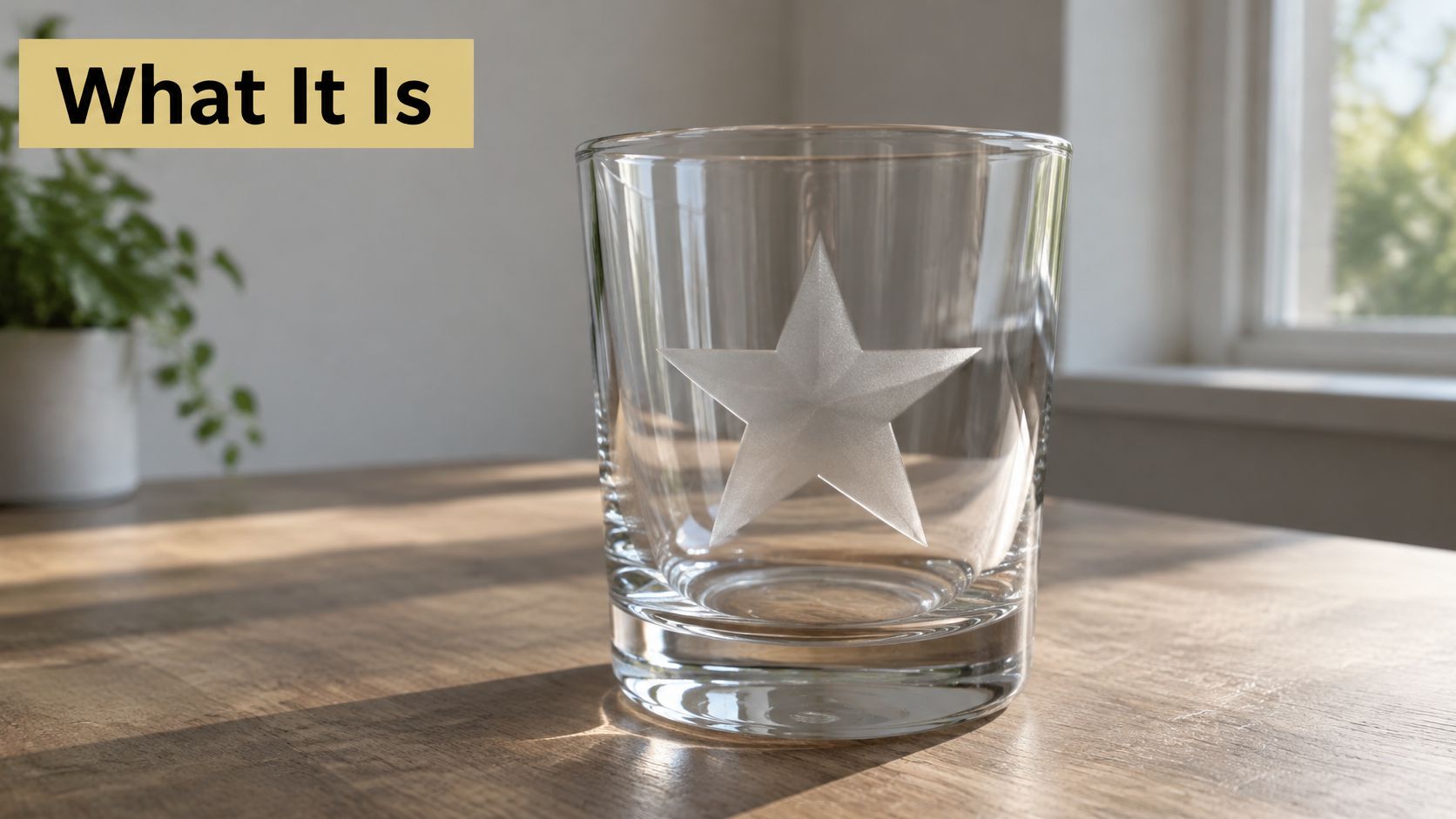
Set a clear tumbler beside a window and turn it slowly. A frosted star stays softly visible while the clear body reveals the table, the light and the drink inside. Etched star glass gets that contrast from treating selected parts of the surface, making the star translucent while leaving the surrounding glass transparent.
The distinction matters when buying a gift. Etching uses chemical or abrasive treatment to create frosting; wheel cutting removes glass in grooves that form facets. A frosted star scatters light, while a polished cut star creates sharper flashes as you turn the piece. Sellers sometimes group these looks together, so inspect close-up photographs rather than relying on the word star.
The heritage behind the sparkle
Star decoration belongs to a much older glassmaking vocabulary than contemporary personalized drinkware. The American Cut Glass Association's guide to star motifs connects the American Brilliant tradition with designs showcased at Philadelphia's 1876 Centennial Exposition, places the period from 1876 to about 1914–1917, and records John S. O'Connor's Parisian pattern patent for C. Dorflinger & Sons on May 4, 1886, design patent no. 16,676, followed by Edward J. Koch's documented use of hobstar on May 20, 1902, design patent no. 35,918.
Cutters arranged stars alongside diamonds, panels and rosettes to produce sparkle across polished surfaces. The hobstar became particularly associated with American patterns, although its ultimate origin remains uncertain. Historian R. J. Charleston connected elaborate star designs with Bohemian Biedermeier glass, an important reminder that American makers worked within an internationally influenced tradition.
Buying distinction: A heritage-inspired pattern isn't necessarily antique, and a star-shaped decoration isn't necessarily etched. Ask which process created the surface you're buying.
For a recipient who enjoys traditional decanters and formal entertaining, a faceted cut-star look can feel appropriate. Someone who prefers restrained tableware may appreciate a clean frosted motif instead. Neither technique is automatically better: choose the visual character that belongs in the recipient's home, then consider how the glass will accommodate their personalization.
Star Motif Styles Compared at a Glance
Star motif styles by look, occasion and personalization room
| Motif style | Visual look | Best occasion | Room for personalization |
|---|---|---|---|
| Single star | Minimal, one focal point | Milestone birthday, housewarming | Large clear area for a name or date |
| Constellation cluster | Scattered small stars | Wedding, anniversary | Moderate; avoid crowding initials between stars |
| Nautical star | Bold point, compass-like | Corporate achievement, retirement | Center or lower band for a short message |
| All-over repeated star | Dense decorative pattern | Bar cart display, gift set | Limited; use a small monogram only |
| Hobstar-style cut star | Faceted, vintage American | Heritage gift, collector | Low; suits the existing motif only |
Start with the occasion, not the most elaborate pattern. A single star gives a milestone birthday or housewarming gift an obvious focal point without dictating the recipient's entire table setting. It also allows a longer name to remain visually separate from the decoration.
A constellation cluster can suit a wedding or anniversary when the buyer wants a coordinated pair rather than identical monograms on otherwise plain glasses. Keep the arrangement intentional: scattered stars should frame the inscription, not force letters into awkward gaps.
Match the motif to the message
The nautical star offers a useful direction for retirement or achievement gifts, especially when the recipient has a genuine connection with travel, sailing or navigation. Don't assume every recipient will read it that way. A short recognition message makes the intended meaning clearer without requiring an oversized company logo.
An all-over repeated pattern puts decoration first. It can work well for a bar cart or a coordinated gift display, but it's a weaker choice when a substantial dedication is the main reason for ordering. A hobstar-style cut pattern is better treated as a finished composition than as a blank canvas for additional engraving.
Before approving a design, decide which element should attract attention first:
- The recipient's name: Choose a focal star with a generous unpatterned panel.
- The shared occasion: Consider a constellation with a discreet date beneath it.
- The glassmaking style: Let an intricate cut pattern remain the main feature.
Our gift assortment is most useful when the choice feels selected for the individual rather than decorated for decoration's sake. The more glass the stars cover, the less room remains for readable personalization. When the inscription matters most, choose a focal motif and preserve clear space around it.
How Etched Star Glass Is Made, Step by Step
A convincing etched star has a deliberate boundary, even frosting and a clean surrounding surface. Those qualities come from controlling the process, not just choosing attractive artwork. For a gift order, the maker must also reproduce the design consistently across curved glasses.
The National Glass Association's decorative-glass durability guidance explains that acid, caustic or abrasive treatments can produce a diffuse, frosted appearance. Glass composition, surface texture and exposure control matter because the finished contrast depends on how the chosen surface responds to treatment.
From glass blank to finished inscription
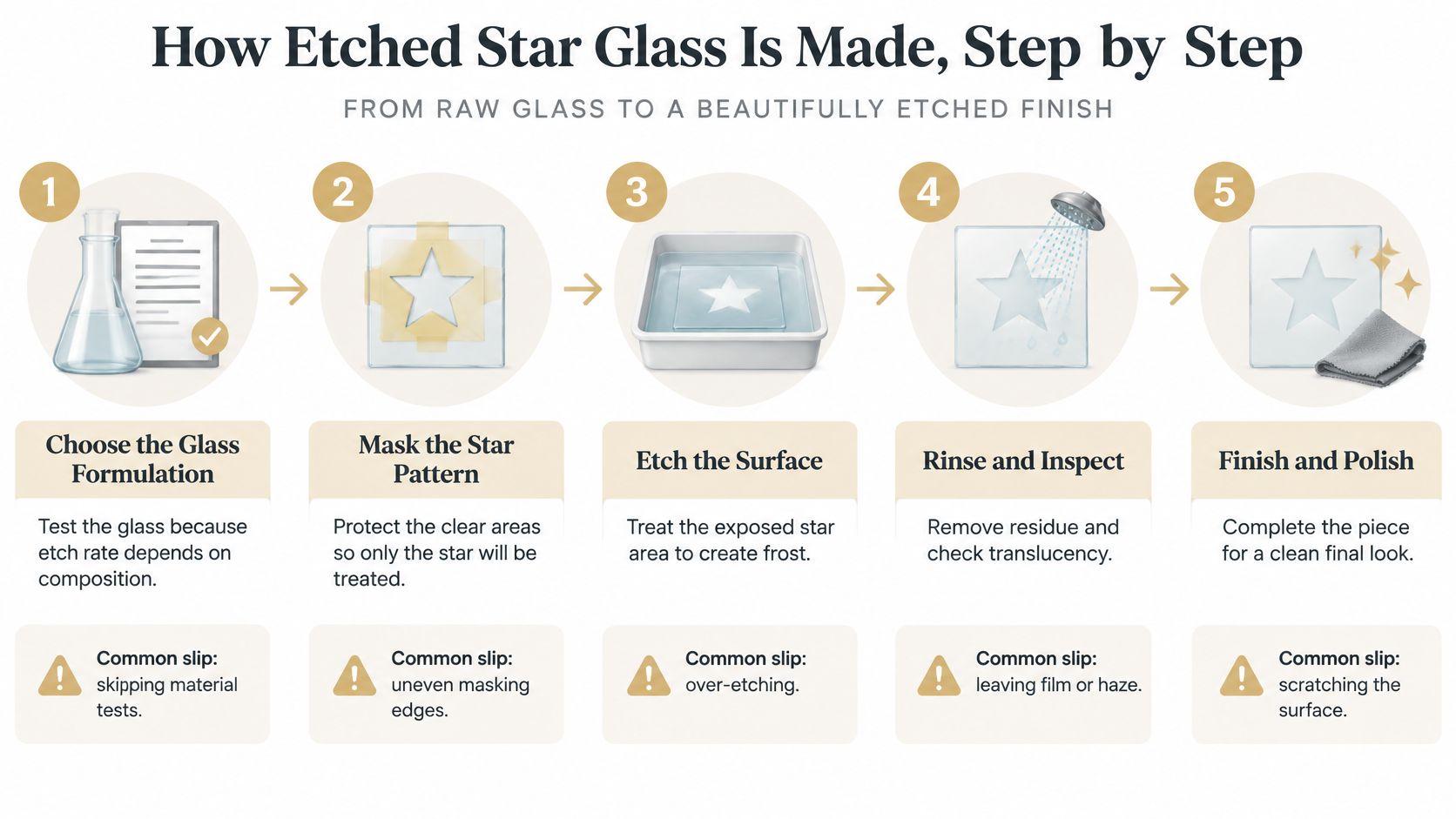
- Choose and test the glass formulation. The maker should trial the process on the exact glass intended for the order, because different compositions don't necessarily respond alike. The common mistake is transferring an established treatment directly to a different supplier's glass without testing its appearance and surface feel.
- Set the star size, spacing and position. A layout should establish the motif's relationship to the rim, base and proposed inscription, using a positioning guide or jig for repeat pieces. Artwork that looks balanced on a flat screen can appear crowded or distorted when wrapped around a tumbler.
- Apply the mask or resist. The maker protects the areas that must stay clear, exposing only the intended star shape. Poorly seated edges or inconsistent masking can leave fuzzy points, unwanted marks or mismatched outlines across a set.
- Treat the exposed surface under controlled conditions. The selected etching method needs a repeatable exposure or dwell time to achieve the approved frosting. Uneven or excessive treatment can change opacity and roughness, so a darker-looking star isn't automatically evidence of better workmanship.
- Rinse, clean and inspect the batch. The maker follows the treatment system's professional cleaning procedure, then examines dry pieces for residue, unwanted haze and inconsistent translucency. Inspecting only wet glass can make surface differences harder to notice.
- Add the approved personalization and check legibility. Names, initials or dates belong on accepted pieces, with the lettering positioned against the actual motif rather than an approximate template. The common slip is approving text in isolation without checking how it reads on the finished curved glass.
What buyers should inspect
This is a professional manufacturing overview, not a home acid-etching recipe. Industrial glass-etching chemicals require specialist facilities and controls; buyers can evaluate workmanship without attempting the process themselves.
Our guide to how glass engraving works helps distinguish the options when discussing a personalized gift. The finished piece should show crisp frosted stars, clear body glass and evenly placed lettering, with no unintended scratches or cloudy film. Don't expect every process to produce an identical texture, but do expect the approved pieces within an order to look deliberately coordinated.
Density, Durability and Visibility Trade-offs
A star doesn't carry a universal message. One recipient might see celebration, another navigation, and another a connection with traditional cut glass. Choose that association deliberately, especially for company gifts, where an unexplained symbol can feel less personal than a restrained inscription.
Pattern density changes the experience as much as the symbol does. Sparse decoration tends to feel discreet and leaves an uninterrupted view of whiskey color or cocktail layers. An all-over pattern can feel lively and decorative, but it adds visual interruptions when the recipient checks the fill level or photographs a drink.
Decoration without visual clutter
For corporate recognition, pair the motif with initials, a date or a short achievement line. That approach gives the recipient a reason to keep using the glass without making every drink feel like a branding exercise. A prominent central logo may suit event merchandise, but it isn't the only way to acknowledge the sender.
Textured finishes can offer tactile appeal, but an etched star isn't a guaranteed grip aid. The glassware design preference overview from Accio discusses interest in etched and other textured surfaces; the practical buying question remains whether the specific finish feels comfortable when the glass is wet.
Hold a sample as you would during use, not just by its base for inspection. A decorative texture should feel comfortable under the fingers, not sharp or distracting.
Surface geometry and wear
In a 2023 Journal of Architectural Engineering study, researchers comparing patterned acid-etched glass with unetched float glass found more digs and deeper flaws on raised ridges, the lowest fracture resistance under hard-body contact on ridges, and the lowest surface tensile strength after artificial ageing in the patterned glass with the greatest ridge proportion. This was architectural-glass research, not a drinkware trial, so it doesn't establish a tumbler's service life. It does justify paying attention to abrupt surface geometry.
Wear risk and care by glass area
| Glass area | Wear risk | Care guidance |
|---|---|---|
| Rim | High where a star sits near the edge | Keep motifs below the drinking edge |
| Base | Medium; knocks from stacking and racks | Choose rounded motif transitions and check stacking |
| Raised star ridges | Highest concern where sharp boundaries receive contact | Favor rounded star edges and avoid deep textures |
| Plain body between stars | Lowest pattern-related concern | Safest area for a name, initials or date |
These are placement priorities, not measured drinkware failure ratings. Keep deep decoration away from the drinking edge, and don't assume a heavy base makes a textured glass suitable for stacking.
Frosting can make fingerprints and condensation less conspicuous, but it can also make residue harder to spot. Inspect the glass dry against a light background, use a soft cleaning cloth, and avoid abrasive pads that could scratch adjacent clear areas. Etching alters the surface rather than adding a printed layer, but that alone doesn't establish dishwasher compatibility, especially when metallic or painted details are present.
Our dishwasher-safe glassware guide provides useful care context before gifting. Finish your assessment with a light test: the star should remain distinct, the clear areas should look clean, and the drink should still be easy to see.
Gift Ideas for Personal Occasions and Corporate Events
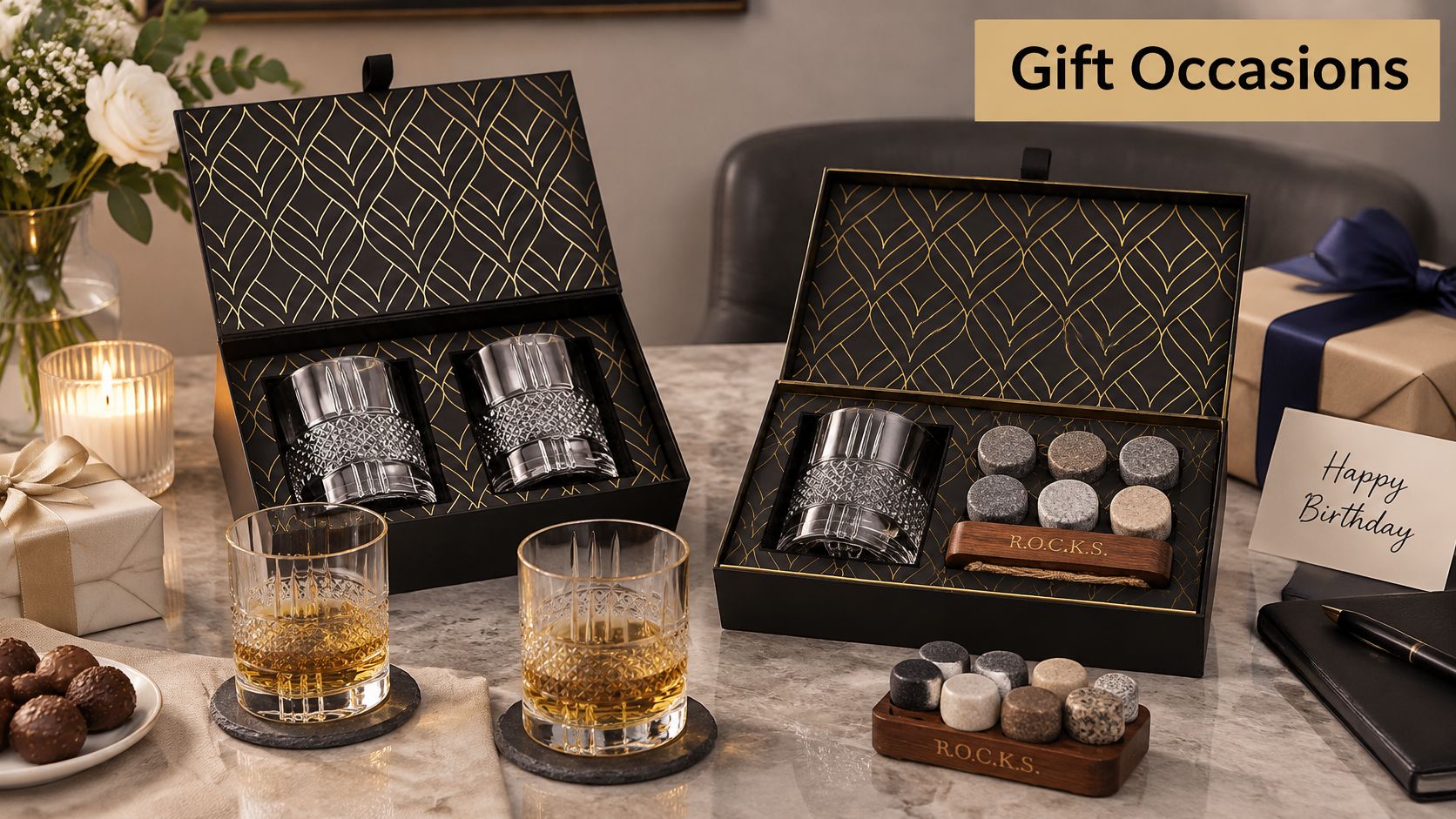
Birthdays, weddings, anniversaries, housewarmings and holidays all offer reasons to give star glassware, but the inscription should explain why this particular glass belongs to this particular person. A birthday gift might carry a first name and celebration date. A wedding pair can use coordinated initials, while a housewarming gift can feature a family name without permanently tying the glass to an address.
Personalization has a credible gifting rationale. In a 2019 OnePoll survey of 2,000 Americans, reported by Vistaprint, 66% said they'd be more likely to remember a personalized gift than a generic store-bought gift, 55% said they kept personalized gifts longer, and nearly 40% said they'd keep such a gift forever. Those responses describe preferences, not a guarantee that every engraved item will become a keepsake.
Build the gift around how they entertain
- Milestone birthday: Choose an individual glass with the recipient's familiar name rather than a formal title they never use.
- Wedding or anniversary: Coordinate the lettering across a pair, allowing each person's initials to remain distinct.
- Housewarming: Favor a versatile design that can sit comfortably beside existing drinkware.
- Holiday gift: Add a personal message on the accompanying card rather than squeezing seasonal wording onto the glass.
For wine-loving recipients, a bottle can complement the glassware without requiring matching decoration. McLaren Vale Cellars explains how to navigate custom wine bottle ordering, a useful resource when coordinating bottle labels and gift messages.
Make corporate recognition recipient-led
Client appreciation, employee recognition and premium company events need slightly different wording. A client gift can use the recipient's name and a discreet sender acknowledgment; an employee award can state the achievement directly. For an event, use a date only if it adds lasting relevance.
Our assortment is a good gifting option for both individual buyers and corporate teams because personalization can connect practical barware with a specific relationship. Our personalized corporate gift guide can help shape that decision. For larger orders, assess star size, treatment depth, placement and lettering legibility together, so the batch feels coordinated rather than merely similar.
Confirm Your Design and Order Engraved Star Glassware
Before ordering, turn the idea into a short approval checklist:
- Choose the occasion and motif. Identify the recipient and the intended message before selecting artwork.
- Approve the density. Decide whether the priority is everyday viewing, a prominent inscription or decorative display.
- Finalize the text. Check spelling, capitalization and dates, then locate the lettering on an appropriate plain area.
- Review a sample for batch work. Request confirmation of the motif placement and inscription appearance before authorizing production.
- Confirm care and commercial details. Establish cleaning instructions, current pricing, minimum order quantities and delivery requirements with us.
Use a sequence of brief, proof, sample approval, production and delivery. Approve the artwork and any required sample before production engraving begins, and agree the delivery requirements in advance.
Budget references and the right format
Price benchmarks for etched star glassware
| Source and item | Price (USD) | Notes |
|---|---|---|
| Etsy etched Star of David glass, single and customized | 14.99 single; 18.99 customized | 2025 listing |
| Etsy etched Star of David glass, customized | 18.99 | Same 2025 listing above |
| Edco laser-etched glass star award, one unit and bulk | 60.54 one unit; 40.29 each for 100 units | 2026 listing; award, not drinkware |
| Edco laser-etched glass star award, 100 units | 40.29 each | Same 2026 listing above; award, not drinkware |
| ROCKS etched star glassware | Confirm current quote | Confirm with the business |
These are historical listing references, not like-for-like quotations. The Star of David also carries a specific cultural and religious meaning and shouldn't be treated as interchangeable with a generic decorative star.
DataIntelo's personalized-gifts market analysis reports average customized-product premiums of 27%–35% over comparable non-customized products and estimates corporate gifting at approximately 18.4% of personalized-gift spending in 2025. Neither figure establishes the price of a particular glass.
Choose a confirmed gift option
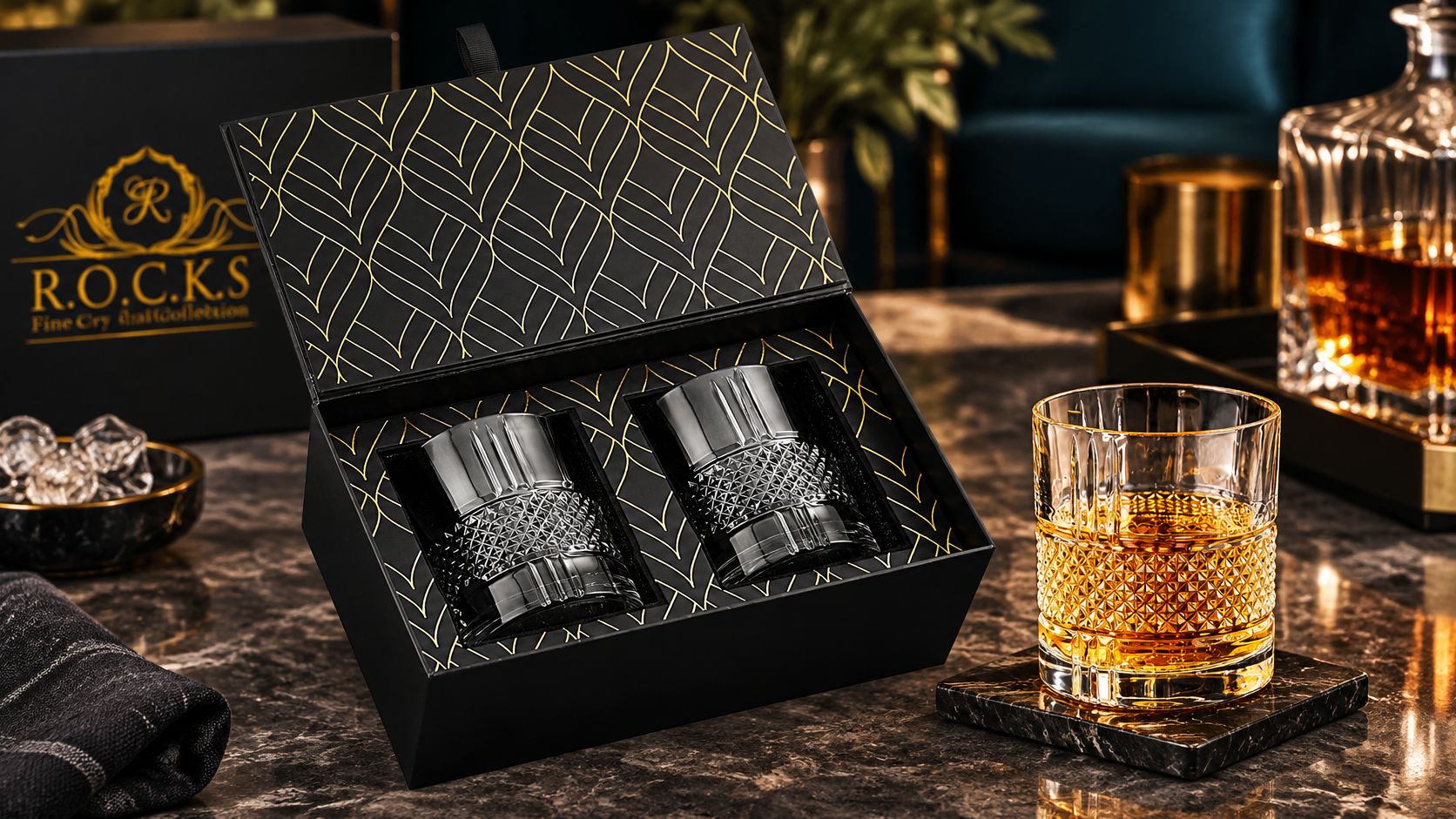
Our custom etched glasses are offered for weddings, events and special celebrations, with the glass chosen around your idea and design; engraving can include a name, initials or date. For comparison, The Privilege Collection - Reserve Glass Edition offers crystal whiskey tumblers described for their brilliance, clarity and presentation of spirit color, while the decanter in our Whiskey Decanter Gift Set has a star-cut pattern. These are distinct options, not confirmation that every glass accepts every motif.
If you're coordinating a mixed-material recognition gift, the guide to personalised titanium gifts from Everti offers useful context for considering an engraved metal companion piece. Keep the recipient's message consistent rather than repeating a large logo across every item.
ROCKS Whiskey Chilling Stones offers barware gifts and custom etched-glass projects for weddings, celebrations and corporate occasions, with glass engraving options such as names, initials and dates. Visit ROCKS Whiskey Chilling Stones with your preferred star style, inscription and order requirements so we can help you choose a suitable gift and confirm current customization options and pricing.


