


The usual advice is to buy black drinking glasses for their bold appearance and choose whichever set looks most expensive. That skips the decisions that matter: what makes the glass black, what the recipient drinks, and whether the finished piece is documented for food contact. A handsome gift should be useful after the wrapping comes off, not just impressive in a photograph.
Our assortment is a good gifting option when you choose around the recipient's habits rather than a color trend. Black glass drinking glasses can make an evening pour feel special, but clear glass remains the better tool when someone wants to examine the liquid itself.
Black Glass Finishes and What Each One Shows
Black glass is a family of finishes, not one material, so check the finish before the price. An opaque tumbler, a transparent smoke glass, and a clear glass with black decoration may look similar in a product photograph. In the hand, they show different amounts of the drink and need different care.
Start with the finish that suits the recipient's usual pour. For gifting, that's more useful than matching the darkest possible shade to a presentation box.
Black Glass Finishes Compared
| Finish | What you see | Wear risk | Best pour | Gift fit |
|---|---|---|---|---|
| Integral black glass | Opaque bowl; thin edge may show olive, amber, or purple | Color is in the glass, so edges do not peel | Neat dark spirits and bold cocktails | Everyday or client set meant to be reused |
| Smoke or transparent tint | Muted view of liquid color, ice, and dilution | Same as the base glass | Spirits when some color still matters | Recipient who tastes and also wants drama |
| Exterior coating or enamel | Solid black shell, often clearer glass inside | Scratches and lip wear on the applied layer | Party pours and photos if the finish is documented | Short-run events, not unverified vintage |
| Black decoration on clear glass | Drink stays visible; pattern or logo adds contrast | Print or enamel can wear, especially near the rim | Toasts, tastings, and garnished serves | Weddings, names, and logo client gifts |
These are buying categories, not promises that every product will perform identically. Integral color won't peel like an applied layer, but the glass can still chip or scratch. A transparent tint tells you how much you can see, not whether the vessel is suitable for hot drinks or a dishwasher.
For a reusable client gift, look beyond the front-facing photograph. Ask to see the inside, base, rim, and glass held against a light background. Those views help distinguish a dark body from a surface treatment and show whether the finish looks consistent where the recipient will hold and drink from it.
Why Black Can Have a Colored Edge
Many pieces sold as black aren't chemically pure black. Iron-rich raw materials or added colorants can produce a body that looks black in ordinary light while a thin edge reveals olive, amber, or purple.
An archaeological study of Iron Age black-glass beads examined 75 beads from Italy and Slovakia, linking their darkness to approximately 12% FeO introduced through deliberately selected dark sands. The researchers identified natron glass, probably made in Egypt, and wood-ash glass, probably produced in Europe. Even historically, a similar black appearance could come from different manufacturing traditions.
That doesn't mean an ancient formula describes a modern tumbler. It explains why a color name alone is a weak material specification. Don't assume that two products labeled black glass share the same composition.
A study of iron-based black glass and glass-ceramic systems describes how magnetite or mixed magnetite–hercynite particles can create the dark effect. Iron concentration, particle size, firing atmosphere, and firing sequence affect opacity, sheen, and visual uniformity. Those are material-specific findings, not proof that every commercial black drinking glass uses that process.
Buyer's rule: Choose the finish for the recipient's use, then judge the manufacturing quality. Darkness alone isn't a quality grade.
What to Ask Before Ordering
A gift seeker can use a short product inquiry. A corporate buyer should put the answers into the purchase specification so a later production batch matches the approved sample.
- Glass type: What is the underlying material, and what care or temperature restrictions apply?
- Coloring method: Is the black integral to the body, applied as a coating, or limited to decoration?
- Finished-piece documentation: Are food-contact papers available for the actual finished glass, including its print, enamel, or coating?
Our assortment is a good gifting fit when you make that selection deliberately. A thoughtful barware gift starts with a useful vessel, not just a striking silhouette.
Food-Contact Checks Before You Pour
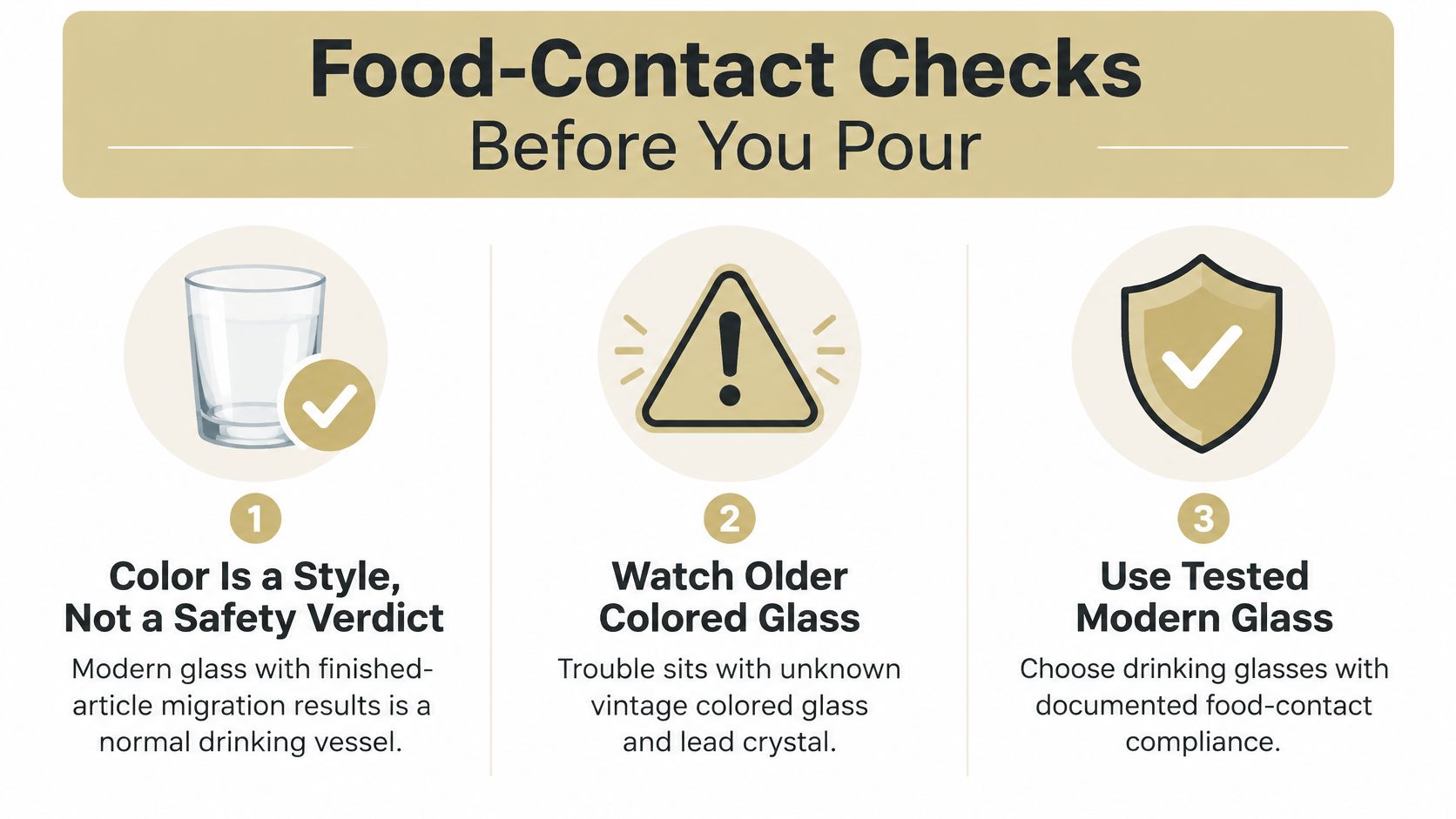
Treat color as a style, not a safety verdict. Modern glass with appropriate finished-article migration results can be a normal drinking vessel. An unknown vintage piece needs a different decision, even if its surface looks beautiful.
Use this order before buying a wedding gift, employee reward, or client set:
- Identify the material and finish. Separate ordinary drinking glass from lead crystal, painted glass, and pieces intended only for display.
- Check the finished article. Request the applicable food-contact standard, test method, and results, including any decoration.
- Match the intended use. Confirm suitability for the recipient's drinks and serving temperatures rather than assuming every vessel can handle everything.
What Useful Paperwork Looks Like
The Canadian Glazed Ceramics and Glassware Regulations set migration limits for decorative patterns within 20 mm of the rim, including 4 mg/L lead and 0.4 mg/L cadmium, and separate large-hollowware limits of 1.0 mg/L lead and 0.25 mg/L cadmium.
Migration limits to request in paperwork
| Test case | Lead | Cadmium |
|---|---|---|
| Decorative pattern within 20 mm of rim | 4 mg/L | 0.4 mg/L |
| Large hollowware category | 1.0 mg/L | 0.25 mg/L |
These are Canadian regulatory examples, not interchangeable limits for every glass in every market. The report should identify the relevant category and destination-market requirements. A general statement that a product is lead-free doesn't establish that an untested decorative layer complies.
Give Vintage Glass a Different Role
Interior Medicine's glass safety guide cautions that lead or cadmium can migrate from some colored or leaded glass, with heat, acidity, alcohol, and contact time increasing concern. It also warns that consumer test kits aren't reliable checks for glass.
Don't leave citrus drinks, cola, or spirits sitting for hours in an unverified old piece. Keep undocumented vintage black glass for display rather than making it someone's everyday drinking gift.
Inspect opaque vessels under bright light, too. A dark bowl can make a chipped lip or worn coating harder to notice; it doesn't prove the surface is sound. For gifting, our assortment is best considered through the same practical standard: choose the appropriate vessel, establish its intended use, and keep relevant documentation with the order.
Pick the Shape for the Pour
Choose the shape before choosing the black. A recipient who drinks a short whiskey serve needs a different vessel from someone who makes long, ice-filled cocktails. Our assortment is a good gifting option when you start with that familiar ritual.
Choose Around the Recipient's Drink
- Rocks glass: A short, substantial tumbler suits neat whiskey, an old fashioned, and other short stirred drinks. For an illustrative gift specification, you might compare an 8 to 10 oz format, then test the planned pour with the intended ice. Our guide to what a rocks glass is helps distinguish this shape from taller everyday tumblers.
- Coupe or cocktail bowl: For a hypothetical 5 to 7 oz choice, check that an espresso martini or an old fashioned served up leaves comfortable space below the rim. Foam and garnish become prominent against a dark bowl.
- Highball or tall tumbler: An illustrative 10 to 12 oz format can be a starting point for long drinks, but verify the actual recipe with ice. A smoke tint is a practical black-family choice when the recipient wants to see bubbles and the changing liquid level.
- Nosing or tasting glass: Choose a clear tulip shape for comparing whiskies. Don't select a capacity by appearance alone; check that the bowl gives the intended tasting measure room to move without approaching the rim.
Those capacities are examples for planning, not definitions of the shapes. For a corporate welcome, standardize the selected shape and capacity, then confirm that the event recipe fits before ordering.
A Clear Companion Can Make the Gift Better
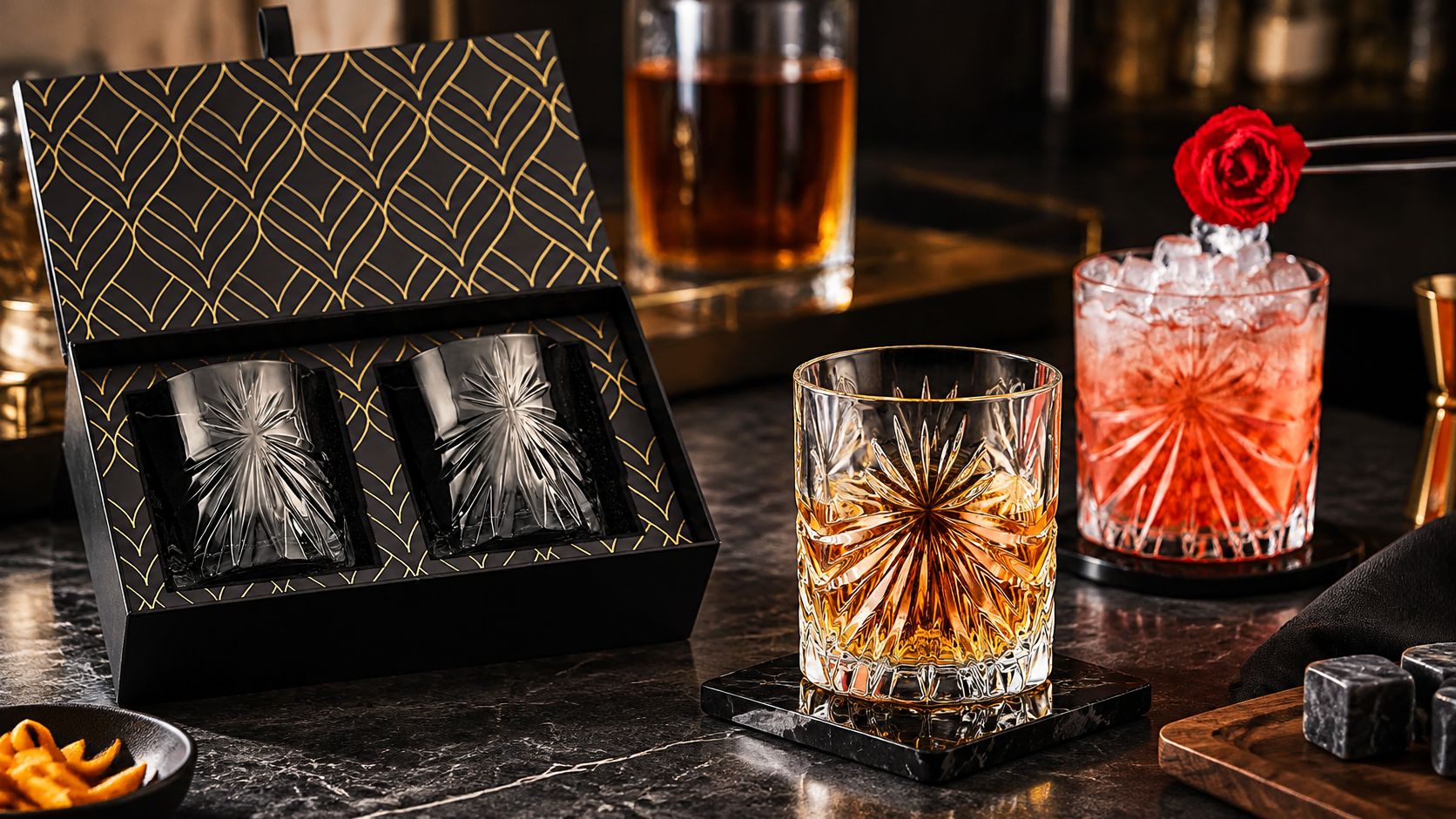
The Privilege Collection - Soleil Glass Edition provides a clear crystal tumbler option intended to highlight the color of scotch or bourbon. It's a useful gifting contrast to opaque barware when the recipient enjoys seeing the spirit.
For a beer-loving recipient, Carbon 6 Brewing Pty Ltd's guide lets you compare craft beer glass shapes. It's a useful reminder to choose drinkware around the beverage rather than treating every attractive glass as interchangeable.
Clarity Versus Drama Across Real Serves
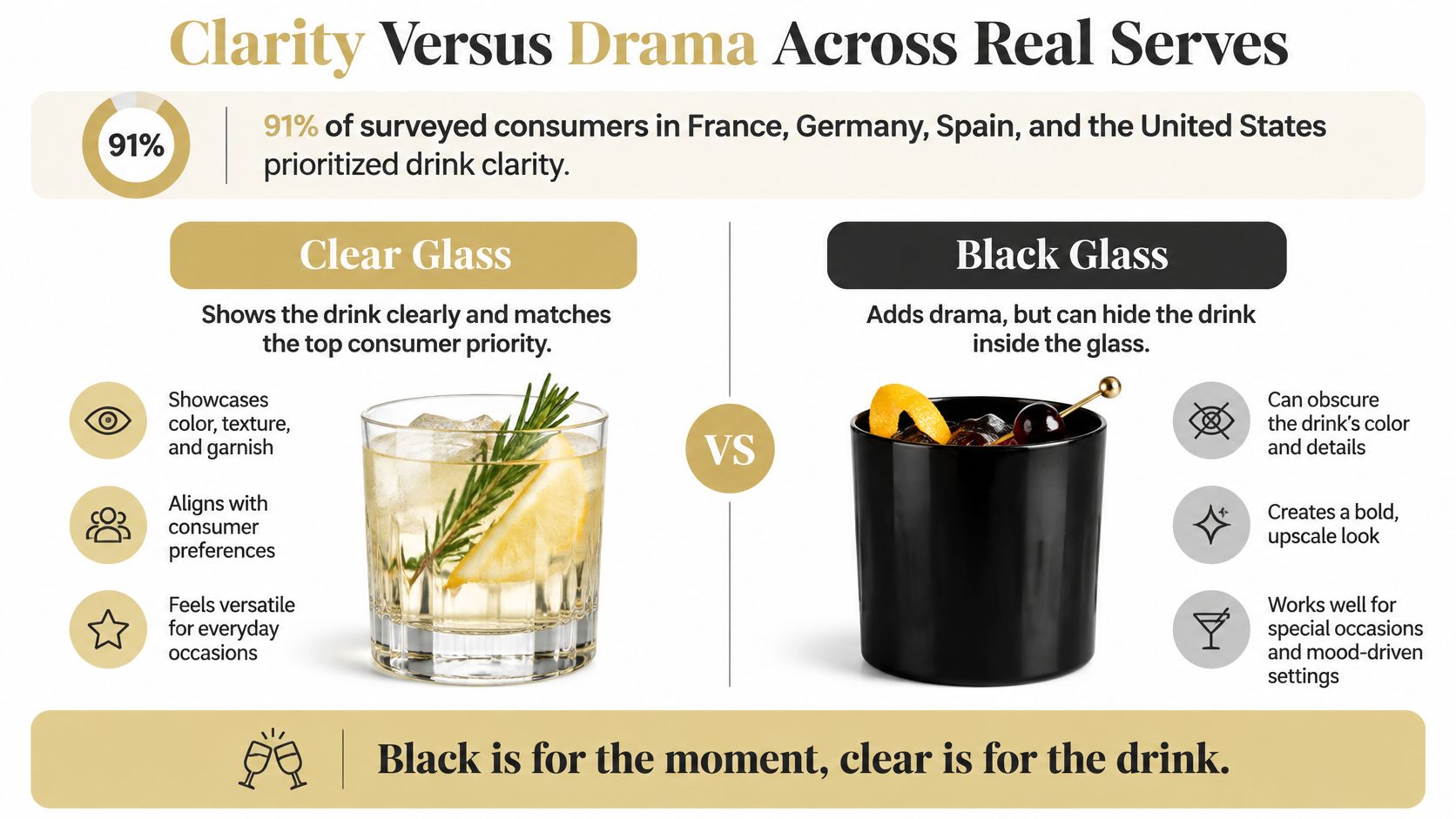
91% of surveyed consumers in France, Germany, Spain, and the United States prioritized drink clarity, according to consumer research cited in Grand View Research's glass drinkware market reporting. That's a meaningful counterweight to buying solely for appearance.
The practical rule is simple: black is for the moment, clear is for the liquid. Our assortment suits gifts built around hospitality, a favorite evening drink, or a personal celebration. A recipient whose hobby is evaluating spirits needs visibility as well as attractive presentation.
When the Presentation Helps
Neat bourbon or rye: A heavy black rocks glass gives a familiar evening pour a more deliberate presentation, but it hides the spirit's body color. A little amber may show near a translucent edge; don't expect that effect from every opaque vessel.
For a birthday or anniversary gift, that can be a sensible trade. Someone relaxing with a familiar bourbon may care more about the feel of the tumbler than comparing its hue against another pour.
An old fashioned: Black glass can give an orange peel or cocktail cherry a contrasting background, but it makes the liquid and submerged ice harder to inspect. Place the garnish where the recipient can see and smell it rather than burying the main visual detail below the rim.
An espresso martini: A dark bowl can frame the pale foam and coffee-bean garnish effectively, while hiding the body of the cocktail. That suits an occasion where the top of the drink is the presentation.
A cocktail-host gift works best when the chosen finish supports drinks the recipient already makes. Don't give a delicate stemmed format just because it photographs well if they prefer sturdy tumblers.
A good gift can be theatrical without pretending to be a technical tasting tool.
When Visibility Matters More
A long highball: Smoke tint is often the better compromise because the guest can still follow bubbles, ice, and the liquid level. Fully opaque black helps the table setting more than it helps someone examine the drink.
Comparative whiskey tasting: Clear glass wins because the drinker can compare color and clarity under the same lighting. An opaque vessel can remove visual cues deliberately, but that's a particular tasting exercise, not a replacement for ordinary visual assessment.
Bartender practice: Clear glass makes it easier to inspect the relationship between liquid, ice, and garnish. A dramatic presentation glass is a less useful sole gift for someone learning to reproduce serves consistently.
For a recipient who enjoys both hosting and evaluation, choose complementary roles rather than asking one vessel to do everything. The social glass can be expressive; the tasting glass should let the drinker see what they're assessing.
Make the Occasion Easy to Enjoy
For example, a dinner for eight guests might use four black tumblers for a shared after-dinner spirits service alongside a clear water carafe. That's a hosting scenario, not a rule about set size. Keep water visible and accessible, and don't rely on an opaque vessel to judge someone else's remaining pour.
For a wedding toast, a clear bowl with a black band, restrained decoration, or engraving lets the couple see the drink while keeping the design distinctive. The gift feels personal without requiring everyone to drink from a fully opaque vessel.
For a corporate welcome, serve a signature cocktail in matching glasses with a small name or event mark. Add a concise pour card with the recipe and a nonalcoholic alternative so recipients have a reason to use the gift at home.
That's where our assortment makes sense for gift seekers and company events: a practical object connected to a recognizable occasion. It's a weaker sole choice when the recipient's main pleasure is side-by-side visual evaluation.
How to Wash and Store Black Glasses
A black finish looks best when its sheen is even and the lip is intact. For a housewarming gift or employee reward, include care information that matches the actual material, not generic instructions copied from another tumbler.
The routine below is a conservative starting point. Specific manufacturer restrictions still govern crystal, coatings, enamel, and decorative printing.
A Gentle Care Routine
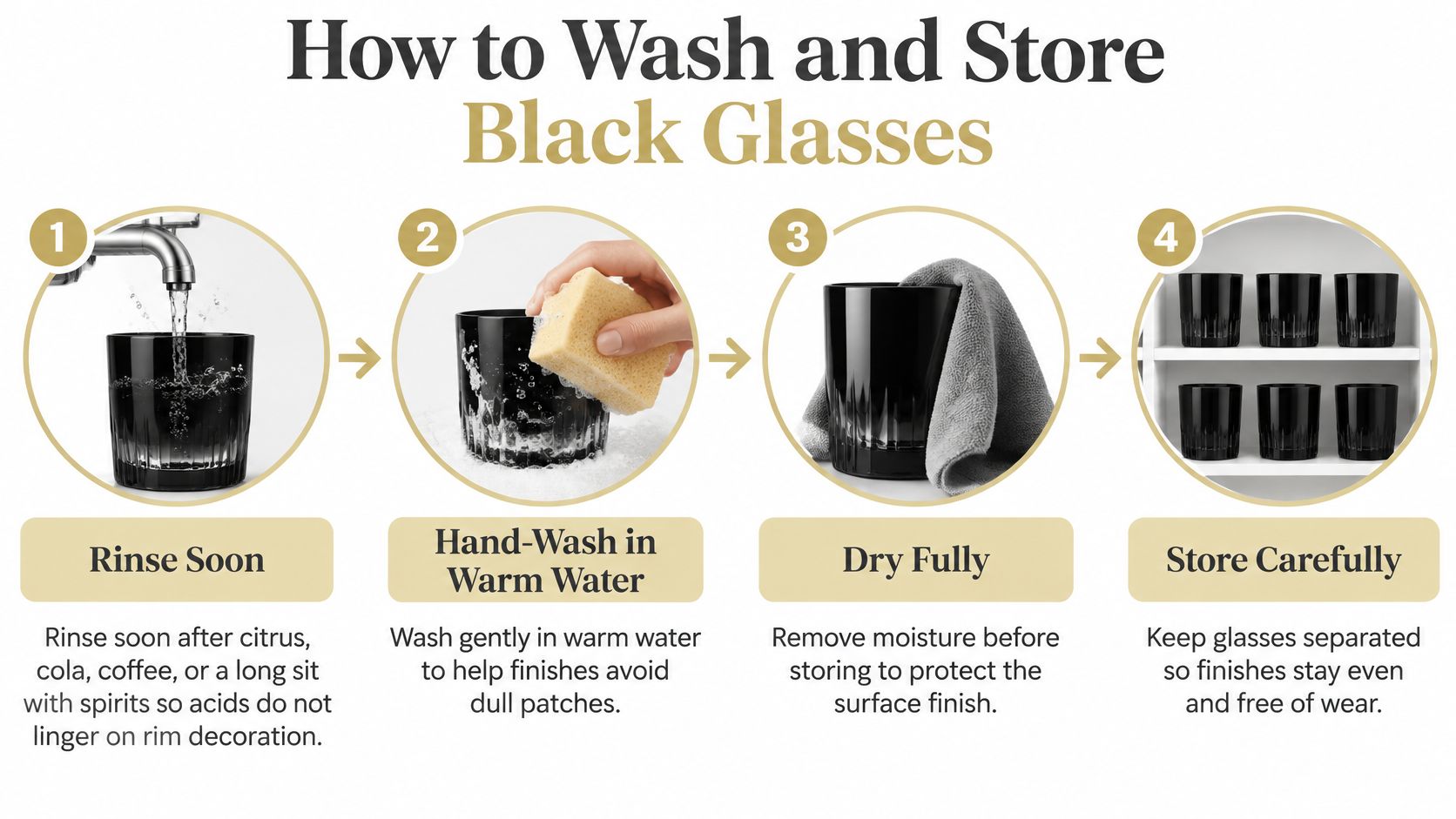
- Rinse soon after use. Remove citrus, cola, coffee, and leftover spirits rather than leaving residue around rim decoration. Prompt rinsing also reduces the scrubbing needed later.
- Hand-wash in warm water. Use mild dish soap and a soft sponge, supporting the bowl rather than twisting a stem. Skip scouring pads and powdered cleansers that can scratch glass or dull applied finishes.
- Use the dishwasher only when approved. If the maker identifies the finished piece as dishwasher-safe, choose a gentle cycle and position glasses so they don't knock together or against the rack. Our dishwasher-safe glassware guide helps frame the checks to make before machine washing.
- Dry promptly with a lint-free cloth. Water spots stand out as pale marks against black. Hold the vessel securely and polish gently rather than forcing the cloth into a narrow bowl.
- Store upright with separation. Leave space between glasses, or use soft dividers in a storage box, so rims and exterior finishes don't rub. Avoid stacking unless the glasses are specifically designed for it.
- Inspect before serving. Turn the lip and any printed areas under a bright light before a client dinner or family gathering. Remove chipped glasses from drinking service and stop using pieces with a flaking finish.
Keep Cleaning Products Appropriate
Avoid sudden temperature changes, such as pouring boiling water into a freezer-cold tumbler. Don't soak unverified vintage pieces in an attempt to restore them for drinking.
If you want to make your own glass cleaner, Fillaree offers a related household-cleaning resource. Treat household glass cleaning separately from washing a drinking vessel, and don't apply a homemade mixture to a coated or decorated piece without confirming compatibility.
Industry reporting on glass packaging describes glass as nonporous, impermeable, and neutral toward food and beverages. That material benefit doesn't remove the need to care for decoration, but it explains why a sound glass can serve whiskey, cocktails, or water without contributing its own flavor.
Our assortment is a useful gifting option for recipients with different drink preferences. Keeping the care guidance with the gift helps them preserve the finish rather than guess how to wash it.
Choose a Gift-Ready Set for the Occasion
Match the person, not the trend. A whiskey loyalist may prefer a substantial crystal tumbler they'll reuse, while a cocktail host may value a bowl that leaves the garnish visible. A client or employee program needs a consistent choice that feels considered across the recipient list.
Our assortment is a good gifting option because the selection can begin with those differences. For birthdays and anniversaries, EventUploader's suggestions can help you find meaningful presents for him, then narrow the choice around an actual interest rather than a generic gift category.
Make the Personal Detail Relevant
McKinsey research reported that 71% of consumers expect personalized interactions and 76% become frustrated when those expectations aren't met, as described in the Charlotte Observer's coverage of personalization and customization. Those findings concern customer expectations, not a guarantee that engraving makes every gift better.
Choose a detail the recipient will appreciate. We offer custom etched glasses for weddings, events, special celebrations, and similar projects, with the glass selected around the customer's idea and design. Names, initials, or a date can make the connection clear without overwhelming the vessel.
Choose the Set and Presentation Together
The Privilege Collection arrives gift-ready. The Admiral Glasses cost $39.99, and the Prestige Glasses cost $39.99, giving buyers concrete options to consider alongside the recipient's preferred serve. For presentation planning, our guide to a gift box for glassware helps connect the vessel with its packaging.
Before you order: Confirm the finish, confirm the relevant food-contact results, and confirm the set quantity against your recipient list.
For black glass drinking glasses, establish whether the color is integral or applied and whether any rim artwork is included in the finished-piece documentation. Then size the personalized, boxed selection to the occasion, whether that's a wedding, housewarming, employee reward, or client thank-you.
ROCKS Whiskey Chilling Stones offers whiskey chilling stones, crystal glassware, barware gift sets, and personalized engraving for gifts built around the recipient's favorite pour. Visit ROCKS Whiskey Chilling Stones to choose a gift-ready set or explore custom glassware for a celebration, client event, or employee appreciation gift.


