


Are you choosing whiskey stones for the coldest possible drink, or for a more controlled pour that preserves the whiskey's strength? That distinction matters more than the material label on the box. Soapstone and stainless steel can both chill whiskey without dilution, but they behave differently in the glass, and neither should be judged by marketing claims alone.
A good buying decision starts with the recipient's drinking habits, then considers cooling speed, handling, maintenance, presentation, and personalization. For gift seekers and corporate buyers, the right set should look premium, perform as promised, and fit naturally into a whiskey glass, bar cart, client gift, or event package.
The Dilemma of Choosing Whiskey Chilling Stones
A buyer walks into a barware shop looking for a whiskey gift. They see smooth soapstone cubes, polished stainless steel chillers, granite stones, engraved glasses, and attractive presentation boxes. The obvious question is, “Which material is better?” The more useful question is, “What kind of drinking experience will this gift create?”
A slow-sipping whiskey drinker may prefer a natural stone that delivers a gentle reduction in temperature without changing the drink's strength. Someone hosting regular gatherings may care more about quick chilling, easy cleaning, and a modern appearance. A corporate buyer has another concern altogether: the set must be attractive, practical, and suitable for personalization without making exaggerated promises about performance.
Whiskey stones are not a replacement for ice if the recipient expects a very cold drink. Ice provides stronger cooling because it absorbs heat as it warms and then continues absorbing energy while it melts. Stones offer a modest chill while keeping the whiskey undiluted, which is their real advantage. A large ice cube or sphere may be the better choice for someone who enjoys controlled dilution, while stones suit drinkers who want to preserve the original concentration.
A practical first comparison
| Buying priority | Soapstone | Stainless steel |
|---|---|---|
| Initial cooling response | Gradual | Faster heat transfer |
| Drinking style | Slow sipping and gentle chilling | Quicker chilling and frequent use |
| Appearance | Natural and textured | Modern and engineered |
| Weight | Lighter at equal volume | Heavier at equal volume |
| Maintenance decision | Ask about finish, sealing, and cleaning instructions | Check alloy, food-contact construction, and cleaning guidance |
| Gifting strength | Artisanal presentation | Contemporary premium feel |
The comparison becomes especially important when the stones are part of a gift set. A personalized whiskey glass and wood tray can make soapstone feel warm and handcrafted. Stainless steel can create a cleaner, more contemporary presentation for a client, employee, or event gift. Neither choice is automatically more thoughtful. The thoughtful choice matches the recipient.
Practical rule: Buy stones for the recipient's preferred drinking pace, not for the material name printed on the packaging.
For a broad gifting assortment, offer both styles where possible. That gives individual buyers a meaningful choice and lets corporate purchasers align the product with an event theme, brand identity, or recipient profile.
Understanding Cooling Performance and Thermal Properties
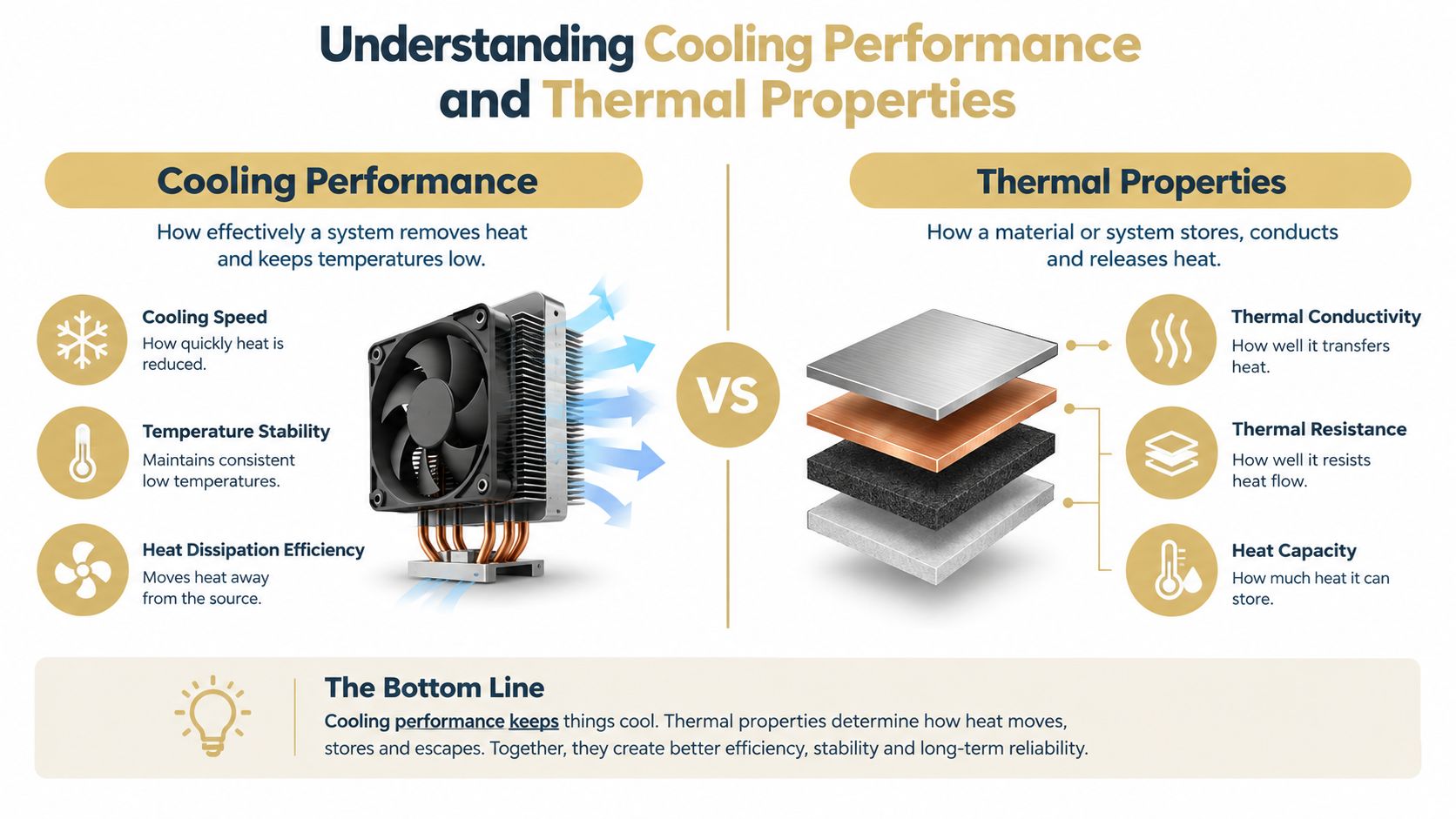
Which whiskey stone cools your drink the way you prefer? Stainless steel transfers heat quickly, while soapstone stores thermal energy and releases that cooling effect more gradually. For buyers, the useful question is response and drinking pace, not which material has the more impressive specification sheet.
A peer-reviewed 2023 study reported soapstone specific heat capacity of approximately 1.074 J/g·K at 20°C, density between 2.7 and 3.0 g/cm³, and thermal conductivity generally between 2.5 and 3.18 W/m·K. It also measured volumetric thermal capacity near 3.0 MJ/m³·K for one sample, supporting soapstone's ability to absorb and retain heat while transferring it at a slower rate. The peer-reviewed soapstone study provides the underlying material data.
A technical comparison lists 304 stainless steel thermal conductivity of 16.2 W/m·K from 0°C to 100°C and specific heat capacity of 0.500 J/g·K in that range. Against the soapstone values above, stainless steel conducts heat roughly 5 to 6 times more efficiently, while soapstone has more than twice the mass-specific heat capacity. That combination explains why steel often feels faster in the glass, while soapstone can deliver a steadier exchange.
Why conductivity isn't the whole story
Thermal conductivity describes how quickly heat moves through a material. It does not determine the final drink temperature by itself. Stone mass, surface area, beverage volume, starting temperature, freezer temperature, and volumetric heat capacity all affect the result.
A Finnish geotechnical assessment reported soapstone conductivity around 7.63 W/m·K and volumetric heat capacity around 4.34 MJ/m³·K. Its comparison listed 304 stainless steel at approximately 14.6 W/m·K conductivity, 502 J/kg·K specific heat, and 7,920 kg/m³ density, implying volumetric heat capacity of roughly 3.98 MJ/m³·K. The Finnish material assessment shows why the stone's composition and density can change the practical outcome.
The outcome is clear enough for purchasing. Steel usually produces the quicker initial response. Soapstone gives a slower, more gradual exchange, and its overall cooling effect can be comparable or greater when its composition and density provide strong thermal storage.
One whiskey stone comparison reported roughly 6 to 10°F of cooling for typical stones, compared with more than 22°F for a few ice cubes. In that test, steel cubes reached about 14.3°F, while soapstone reached about 6.2°F. Treat those figures as a test scenario, not a universal ranking, because serving conditions matter. The real-world whiskey stone comparison explains the practical limits and helps buyers set realistic expectations.
Choose stainless steel for a faster, more noticeable chill. Choose soapstone for a gentler pace and a natural, personalized gift presentation. The material should match the recipient's drinking style and the experience you want the gift to create.
For a separate natural-stone option, The Original Rocks contains six round solid granite stones, each with a different color and granite-style appearance, designed to cool spirits without watering them down. Granite has different properties from soapstone and stainless steel, so judge it as its own material choice rather than assuming all whiskey stones perform alike.
Durability, Taste Neutrality, and Maintenance
A whiskey stone earns its place in the glass through reliable care, neutral taste, and construction that holds up to repeated use. A polished gift set becomes clutter if it absorbs food aromas, lacks clear washing instructions, or is difficult to store.
Stainless steel usually gives buyers the easier maintenance routine. Its finished surface is non-porous and simple to rinse, but the label “steel” does not tell you enough. Check the alloy, confirm whether the chiller is solid or contains an insert, and look for a smooth food-contact surface. Construction matters as much as the material name.
What to verify before buying
U.S. food-contact rules under 21 CFR 117.40 call for equipment that can be cleaned, uses nontoxic and corrosion-resistant materials, is properly maintained, and limits contamination. Industry guidance identifies 304 stainless steel for general food contact. 316 or 316L suits environments with greater exposure to chlorides, acids, or other corrosive substances because molybdenum improves resistance to pitting and crevice corrosion. This food-contact guidance on stainless steel grades gives buyers a practical checklist for assessing steel quality.
Soapstone needs a different inspection. The product description should state the stone's finish, whether it is sealed, and how the maker expects it to be washed and dried. Natural stone varies in porosity and composition by quarry, so do not assume every soapstone set handles aromas or moisture in the same way.
Taste neutrality depends on both the material and the routine. A properly finished stone or food-contact steel chiller should not contribute a strong flavor. Repeated use with smoky cocktails, sweet liqueurs, or heavily spiced drinks still creates a cleaning problem. Keep stones dedicated to whiskey when possible, especially in a gift set intended for tasting.
This guide to what whiskey stones are made of helps buyers compare material choices before purchasing. Follow the maker's instructions, rinse thoroughly, remove detergent residue, and let natural stone dry fully before storage. For stainless steel, verify that dishwasher cleaning is permitted instead of guessing.
For a personalized gift, include the care instructions with the set. That small addition protects the stone's taste neutrality and finish while making the present easier to use from the first pour. It matters even more when the material is natural stone or the steel construction is not obvious.
Best Use Cases and Ideal Scenarios
The right choice depends on what happens after the gift is opened. A stainless steel set suits a recipient who wants a quick response, uses chilling stones often, and prefers a clean contemporary look. Soapstone suits someone who values natural texture, a quieter ritual, and gradual cooling during a measured pour.
Choose stainless steel for active use
Stainless steel makes sense for frequent entertaining, casual gatherings, and situations where the recipient doesn't want a delicate-feeling accessory. It has a heavier presence in the glass, transfers heat quickly, and pairs well with modern drinkware, polished trays, and corporate branding.
It also works well when the gift must survive repeated handling. Outdoor hosts, hospitality teams, and event organizers may appreciate a durable material, but they still need to protect glassware from impact. A loose chiller dropped into thin crystal can cause damage regardless of the material.
Choose soapstone for a slower ritual
Soapstone is the better fit for a drinker who enjoys a natural, tactile barware collection. It complements a decanter, traditional whiskey tumbler, leather accessories, and warm wood presentation. The slower thermal exchange supports a gentler style of chilling rather than a dramatic temperature change.
That makes it particularly suitable for a birthday gift, housewarming present, anniversary package, or client appreciation set aimed at someone who already has a considered home bar. Pairing the stones with a personalized glass or tray gives the recipient a complete ritual instead of another anonymous accessory.

Match the set to the drinker
Use this decision filter before selecting a product:
- Fast response: Choose stainless steel when the recipient values a quicker initial chill.
- Natural presentation: Choose soapstone when texture, mineral character, and handcrafted appearance matter more than speed.
- Low-maintenance gifting: Choose a clearly specified steel product with straightforward cleaning instructions.
- Personal storytelling: Choose natural stone when the gift should feel individual and visually distinctive.
- Corporate consistency: Choose the material that works with the company's preferred glassware, engraving style, packaging, and event setting.
Be honest about the limits. Stones deliver a modest temperature reduction, not the same cooling power as melting ice. That honesty helps a gift feel more premium because the recipient knows what to expect.
The Gift-Giving Advantage and Personalization and Presentation
A whiskey stone set earns its place as a gift when it feels selected rather than generic. The material creates the first impression, but the glass, tray, packaging, and personalization determine whether the recipient remembers it.
Soapstone brings a natural, artisanal look. Stainless steel gives a sharper, more contemporary impression. Both can work in a gift assortment that includes whiskey glasses, a decanter, a presentation tray, or other bar accessories. The best combination depends on the audience. A private birthday gift can feel warm and personal, while a corporate client gift may need a restrained finish that reflects the company brand.
Personalization adds the relationship
Engraving a name, date, initials, company mark, or event message turns a reusable barware set into a reminder of the relationship behind the gift. A wood tray creates a broad surface for branding, while a whiskey glass can carry a more discreet personal detail. The customization should support the recipient's use of the item, not overwhelm the design.
This matters for more than birthdays. A personalized set can suit a wedding, housewarming, employee milestone, holiday campaign, client appreciation program, prospect meeting, or company event. Buyers looking for thoughtful ideas across different occasions can use the gifts occasions journal as a planning resource when matching presentation and message to the event.
Why corporate buyers should specify the details
Corporate gifting teams shouldn't purchase “metal whiskey stones” or “natural stones” without asking for the material and construction. A professional order should identify the steel grade where applicable, food-contact suitability, cleaning guidance, personalization method, and packaging format. Those details reduce surprises when gifts go to clients, executives, employees, or event attendees.
Personalization also has measurable relevance in corporate gifting. One industry estimate reports that approximately 65% of corporate-gift recipients prefer customized or experiential gifts, while another estimates that corporate gifting represents about 29% of personalized-gift consumption. These estimates vary by source and methodology, but they support offering customizable barware rather than relying only on generic drink accessories. The corporate gifting estimates provide that market context.
A strong assortment can include soapstone or stainless steel chillers, engraved whiskey glasses, and a coordinated tray. That combination gives an individual buyer a polished present and gives a corporate buyer a repeatable format for branded gifting. The personalization options described in this whiskey stones personalization guide can help buyers think beyond the stone itself and plan the complete presentation.
How to Choose the Right Whiskey Stones for You
Start with the recipient, not the specification sheet. A product can have impressive thermal numbers and still be the wrong gift if the user wants a gentle, natural ritual while you selected a heavy steel chiller for speed.
Step 1 Identify the expected drinking experience
Ask what the recipient wants from a chilled whiskey. If they want the fastest initial cooling without dilution, stainless steel is the direct choice. If they want a subtle chill and enjoy natural materials, soapstone is more appropriate.
Don't promise an ice-like result. Existing comparisons show that stone performance varies with whiskey volume, stone mass, starting temperature, freezer conditions, geometry, and contact time. A buyer who expects a very cold drink may be happier with a large ice cube or sphere, while someone protecting the original strength of a pour may prefer reusable stones.
Step 2 Compare the material on equal terms
Thermal conductivity alone doesn't settle the decision. Stainless steel usually transfers heat faster, while soapstone can offer meaningful thermal storage depending on its composition and density. Equal stone volume can also produce a different weight because representative soapstone density is approximately 2.7 g/cm³, compared with about 7.9 g/cm³ for stainless steel, making equal-volume steel stones nearly three times heavier. The materials database comparison supports that density difference and the associated design trade-off.
For a glass gift, weight affects handling and perceived feel. A heavier steel set can feel substantial and compact. Soapstone is lighter at equal volume and often gives the presentation a more organic character. Neither is universally superior.
Step 3 Inspect food-contact and care information
For stainless steel, look for an identified alloy and a smooth, cleanable finish. Ask whether the stones are solid, hollow, coated, or built around an internal insert. A product description that only says “metal” leaves too much unanswered.
For soapstone, check whether the surface is finished or sealed, how it should be washed, and whether the manufacturer gives storage instructions. Natural stone shouldn't be treated as interchangeable with decorative rock. It needs to be clearly intended for drink service.
Step 4 Decide how much customization matters
Personalization should influence the product choice early, especially for corporate orders. Check whether engraving is available on the glass, tray, box, or another component. A subtle company mark may suit a client gift, while initials or a date may work better for a birthday or wedding present.
Think about the full package:
- Personal gift: Pair natural stone with a personalized glass or warm wood tray for a relaxed, individual presentation.
- Corporate client gift: Use a refined set with discreet branding and clear product specifications.
- Employee or event gift: Choose a consistent package that can carry a company message without looking like disposable promotional merchandise.
- Whiskey enthusiast gift: Add a glass designed for nosing or tasting so the stones support a complete drinking ritual.
Step 5 Test before making a large purchase
If you're buying for a corporate program, test the exact product rather than relying on a general material claim. Freeze the stones under the intended conditions, use the planned pour size, and record the beverage temperature at 1-, 5-, and 10-minute intervals. Compare equal stone volume and equal starting temperature, as recommended in the available thermal assessment. The testing framework for fair stone comparisons helps separate product performance from inconsistent setup.
Use the same glass, whiskey volume, freezer, and contact conditions for every sample. The result won't predict every recipient's experience, but it will give a corporate buyer a defensible basis for selecting a product and describing it accurately.
Quick comparison for final selection
| Feature | Soapstone | Stainless steel |
|---|---|---|
| Cooling character | Gradual and gentle | Faster initial heat transfer |
| Thermal profile | Higher mass-specific heat capacity in the reported study | Higher conductivity and higher density |
| Weight at equal volume | Lighter | Nearly three times heavier than representative soapstone |
| Visual character | Natural, mineral, and textured | Sleek, uniform, and engineered |
| Care questions | Finish, sealing, porosity, washing, and drying | Alloy, construction, coating, and dishwasher guidance |
| Best recipient | Slow-sipping whiskey fan who values natural materials | Frequent user who wants quick response and easy upkeep |
| Gift presentation | Pairs naturally with wood, decanters, and traditional glassware | Suits modern glassware, polished trays, and restrained branding |
| Main warning | Don't assume every stone has the same thermal behavior | Don't buy without clear grade and food-contact details |
My recommendation is simple. Choose stainless steel for speed, repeated use, and a modern corporate presentation. Choose soapstone for natural character, slower chilling, and a more personal gift experience. If the recipient expects a properly cold whiskey, skip both and choose large-format ice instead. If preserving the original strength matters most, a well-specified stone set remains a sensible gift.
ROCKS Whiskey Chilling Stones offers reusable whiskey chilling stones and barware suited to personal gifts, client appreciation, employee rewards, and company events. Visit ROCKS Whiskey Chilling Stones to explore gift-ready options and consider pairing the stones with personalized glassware or a wood tray.


