


You're standing at a client's anniversary dinner, a birthday celebration, or a holiday gathering, and the gift still feels unresolved. A bottle of whiskey is thoughtful, but familiar. A standard decanter is useful, though it may not feel personal enough for the occasion. Then you find a crackle glass decanter, with a frosted web of fine fractures that catches the light and turns a familiar barware item into something worth displaying.
That combination of artistry and purpose makes crackle glass especially appealing to whiskey enthusiasts, discerning gift buyers, and corporate teams choosing presents for clients or employees. It can hold a spirit for serving, but its real strength is emotional. It tells the recipient that you chose an object with character, craftsmanship, and a place in the home.
What Makes a Crackle Glass Decanter Special
The first impression often comes before the stopper is lifted. A recipient opens the box and sees a vessel whose surface looks almost icy, with delicate lines spreading across the glass like a frozen stream. As whiskey catches the light inside, the pattern adds depth without hiding the amber color. The decanter becomes part of the room, not just a container waiting inside a cabinet.
That visual effect comes from the glass itself. Crackle glass has a deliberately fractured surface pattern, usually created during production rather than painted or etched onto the finished object. The result is tactile as well as visual. Run your fingers over the surface and you feel a subtle texture that distinguishes the piece from smooth, mass-produced barware.
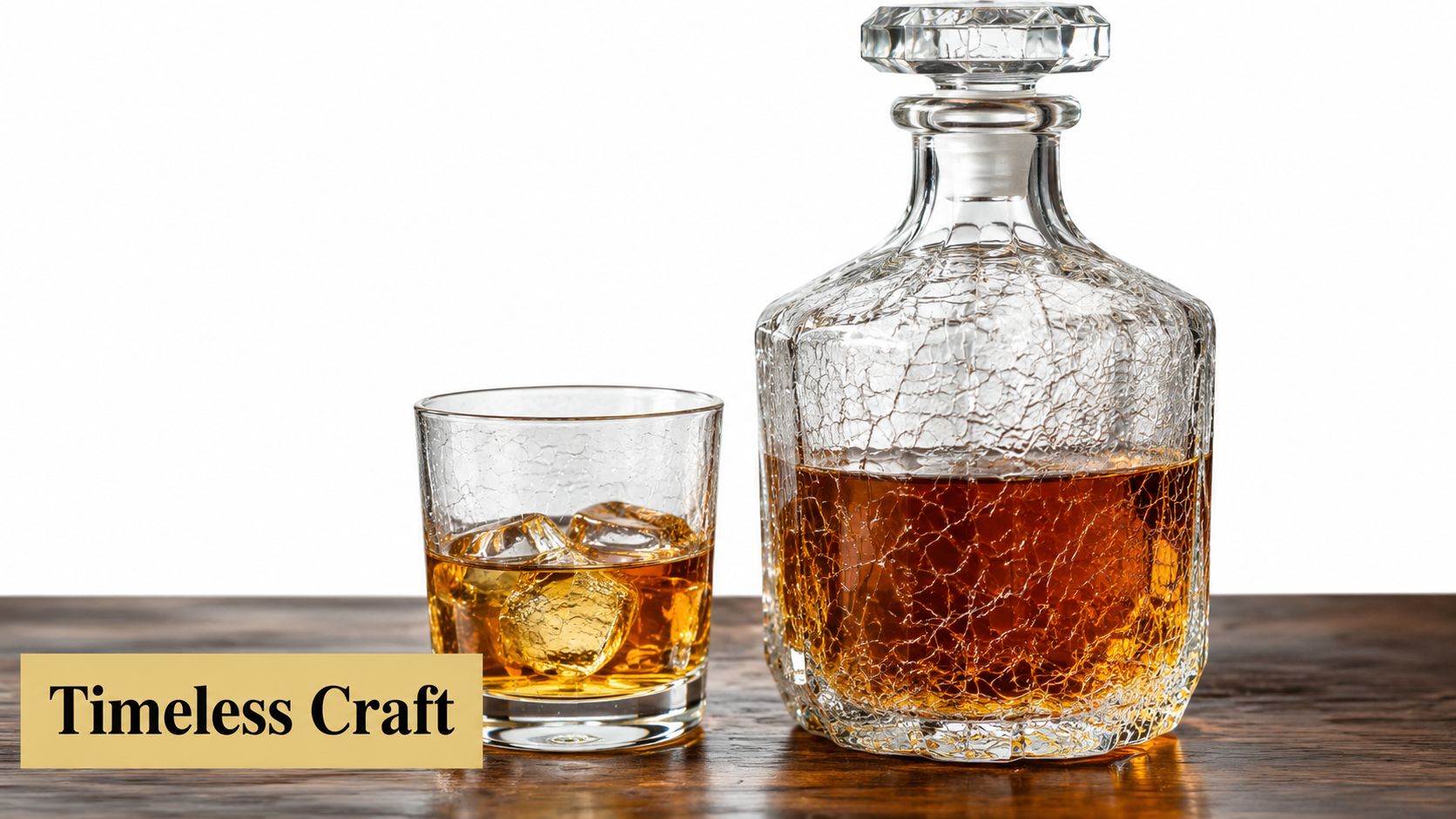
For a whiskey lover, that texture changes the ritual of serving. Pouring a bourbon or scotch from a crackle glass decanter slows the moment down. The recipient notices the silhouette, the reflections, and the way the liquid moves through the vessel. A thoughtful gift buyer gets more than functional barware. They give the recipient a conversation piece that can remain on a bar cart, sideboard, or drinks table between occasions.
The useful distinction: a crackle glass decanter is both a serving vessel and a decorative object. Its value doesn't depend only on how often it holds whiskey.
The design also makes the item flexible across gifting situations. For a private birthday or anniversary, it can feel intimate and distinctive. For a corporate event, it communicates polish without requiring the giver to know the recipient's exact whiskey preference. If the assortment includes complementary whiskey glasses or chilling accessories, the decanter can become the visual centerpiece of a broader gift.
Those planning a tasting or food-and-drink experience may also appreciate the educational resources available through the Girard Winery homepage, which offers useful context for people interested in serving and enjoying wine. For whiskey-specific guidance, the article on why use a whiskey decanter helps explain how decanting fits into a considered home-bar ritual.
The Craft Behind Crackle Glass Creation
A crackle glass decanter begins with a controlled conflict between heat and cold. Artisans shape hot, blown glass, then briefly plunge it into cold water. The sudden temperature change causes the outer layer to contract faster than the warmer interior, producing a network of fine fractures near the surface.
The process resembles the way a thin layer of ice can split when conditions change quickly, although glassmaking requires far greater control. The fractures aren't random damage in a finished product. They form at a deliberate stage, while the material remains hot enough to be worked again.
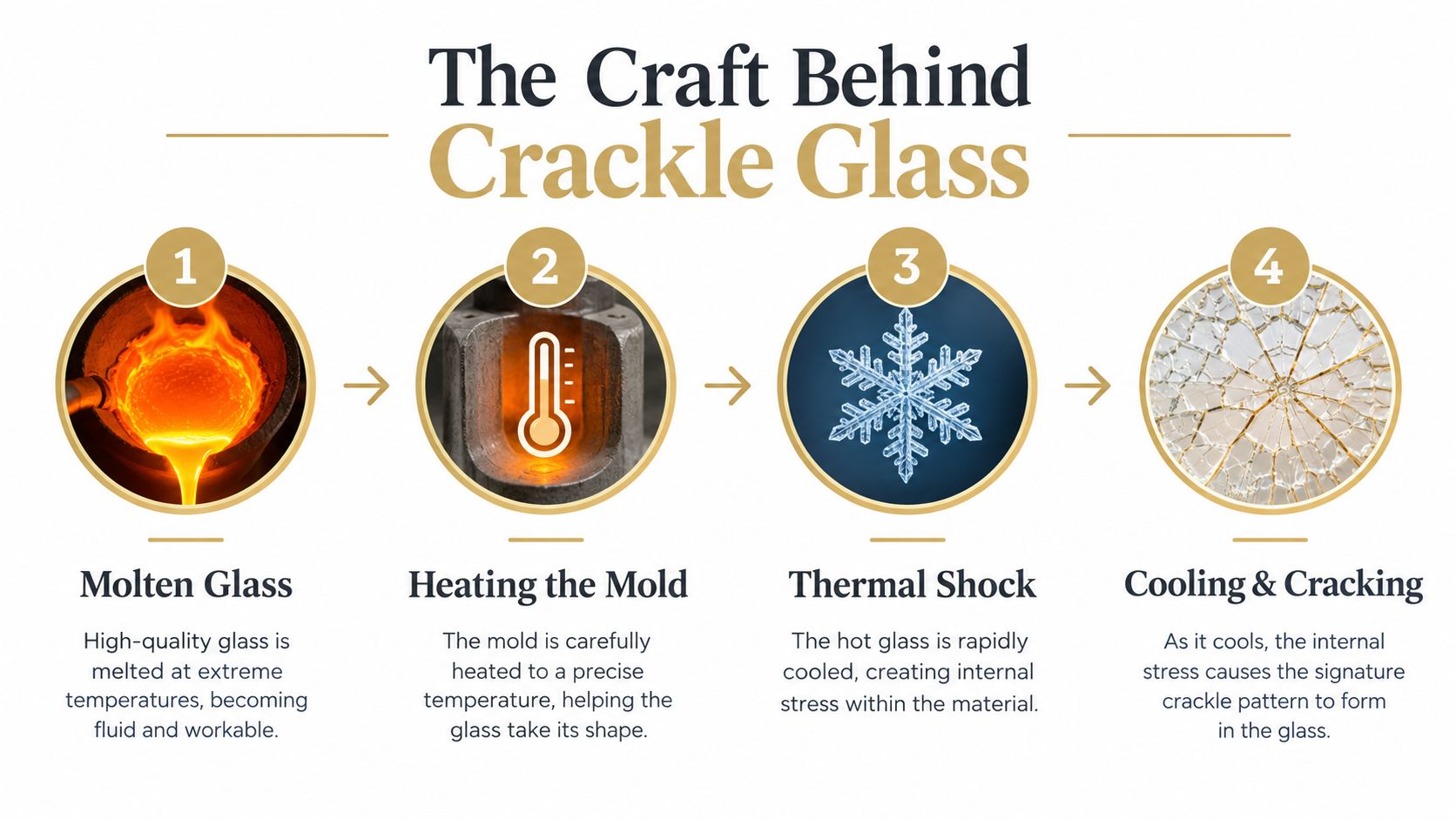
A simplified view of the method looks like this:
- Shape the hot glass: The maker blows or forms the initial vessel while the glass is workable.
- Create thermal shock: The hot piece enters cold water briefly, generating the fine crackle pattern.
- Reheat the surface: The glass returns to heat so the fractures can be incorporated rather than left as sharp, exposed fissures.
- Finish the form: The maker blows or molds the piece into its final shape, preserving the pattern while improving structural stability.
The technical explanation matters because it clarifies a common misunderstanding. Crackle glass is not just glass that has been damaged and put on sale. Proper reheating seals the cracks within or near the surface and reduces the risk associated with sharper fissures. If the maker doesn't reheat the piece adequately, the glass can retain more hazardous surface fractures and become more vulnerable to breakage. The thermal-shock sequence is described in detail by Glass Encyclopedia's explanation of crackle glass.
Subtle variation is part of the appeal. The density and movement of the crackle pattern can differ from one piece to another because the material responds to timing, temperature, shaping, and handling. That variation gives a gifted decanter the character of a crafted object rather than the uniform appearance of a factory-perfect container.
How the process affects the finished gift
The pattern can make the glass appear softly frosted from a distance, while close inspection reveals a more intricate network of lines. Light breaks across those lines, so the decanter can look different in daylight, under warm lamps, or beside a candlelit dinner. A buyer choosing a gift isn't only selecting a shape. They're selecting the way an object will behave in a room.
That same appreciation for clarity and craftsmanship appears in The Privilege Collection, Soleil Glass Edition, whose crystal whiskey tumblers are described as highlighting the rich color of scotch or bourbon with brilliance and clarity. Used alongside a crackle glass decanter, glasses with a clear, refined profile can let the whiskey remain the visual focus while the decanter supplies texture and presence.
A Brief History of Crackled Glass Excellence
The story of crackle glass begins in 16th-century Venice, where artisans discovered that plunging hot glass into cold water could create fine surface fractures. They then reheated the piece and shaped it by hand-blowing or molding, sealing the cracks into the finished form. That early technique established the essential relationship between thermal shock, visual texture, and controlled craftsmanship. The historical account is documented in this overview of crackle glass production and origins.
A recipient holding a modern crackle glass decanter is therefore holding more than a decorative pattern. They are encountering a technique with a long lineage, one that developed through an understanding of how glass responds under pressure. The visible fractures become evidence of process. They suggest that the maker had to manage heat, timing, and shape rather than just apply a surface decoration after production.
The form also has a separate serving history. Decanters themselves date back to the late 17th century, and by the mid-19th century they had become highly popular as refined vessels for serving drinks. That history helps explain why a decanter carries such a strong sense of occasion. It has long been associated with hospitality, presentation, and the careful handling of a valued beverage.
From Venetian technique to American production
In the United States, crackle glass manufacturing expanded in the early 1900s. Multiple states produced it from the 1930s through the 1970s, and production was still taking place in West Virginia as of 2010, according to the historical reference above. These details place American crackle glass within a broader decorative-glass tradition rather than treating it as a passing novelty.
The category became especially visible during the decorative-glass boom that followed the Second World War. Crackle glass appeared in Blenko's catalog beginning in 1946, and its strongest popularity extended from the late 1920s through the early 1960s, with the two decades after World War II identified as a peak period in the category's history. This account appears in the WorthPoint dictionary entry on crackle glass.
That history gives gift buyers a useful lens. A crackle glass decanter can suit someone who collects vintage-inspired objects, appreciates American glassmaking, or wants a bar accessory with a story. It doesn't need to be an antique to feel connected to that heritage. The technique, appearance, and serving tradition do much of the storytelling.
Caring for Your Crackle Glass Decanter
A crackle glass decanter deserves careful handling, but care doesn't need to be complicated. The safest routine is simple: wash it by hand in warm soapy water, rinse it thoroughly, and dry it with a soft cloth. Crystal-care guidance from Dudley Museums' glass collection warns that crystal shouldn't go into a dishwasher because heat and detergents can damage the surface.
The crackle texture makes gentle cleaning especially important. A rough brush or abrasive pad can catch on the textured areas, while sudden temperature changes can place unnecessary stress on glass. Hold the decanter securely around its body, rather than gripping only the neck or stopper, and keep it away from hard sink surfaces while washing.
A practical cleaning routine
- Use warm water: Avoid extreme temperature changes, particularly when the decanter has recently held a cold or warm liquid.
- Choose mild soap: A gentle dish soap is appropriate for routine cleaning. Don't use abrasive powders or scouring tools.
- Clean the neck carefully: A narrow opening may need a soft, flexible brush that won't scrape the interior.
- Dry completely: Let the decanter drain upside down on a tea towel or over a rack if its shape allows it, following the handling guidance from this specialist wine-glass care guide.
- Store it safely: Keep the decanter upright once dry, with enough space around it to prevent contact with other glassware.
Practical rule: use a crackle glass decanter for serving, not as a long-term storage bottle.
That rule matters most when the decanter is made from lead crystal or a similar decorative crystal. Health Canada's guidance on lead crystalware explains that lead can transfer into drinks, with the risk increasing as contact time becomes longer. Official guidance recommends using lead crystalware for special occasions, avoiding overnight storage, and washing it by hand. If you're unsure whether a particular decanter contains lead, check its product information or ask the maker before storing any liquid in it.
Alcohol type doesn't remove the need for caution. The most sensible approach is to pour the drink shortly before serving, enjoy the presentation, and empty the vessel afterward. For more cleaning detail, see this guide on how to clean a whiskey decanter.
Why Crackle Glass Decanters Make Exceptional Gifts
The strongest reason to choose a crackle glass decanter is that it performs two roles at once. It serves whiskey when the occasion calls for it, then remains useful as a display object when the gathering ends. That balance makes it more versatile than a purely decorative present and more memorable than ordinary utility barware.
Gift seekers can use the format for birthdays, anniversaries, housewarmings, weddings, and milestone celebrations. A whiskey enthusiast may appreciate the ritual of pouring from a distinctive vessel, while someone with a carefully styled home bar may value the surface pattern and sculptural silhouette even when no drink is being served.
The opportunity is particularly strong for corporate buyers. A decanter can work as a client appreciation gift, an employee reward, a holiday present, or part of an event package. It feels substantial without requiring a company to choose a specific spirit for every recipient. Packaging, a handwritten message, or coordinated glassware can also turn the item into a more personal expression of thanks.
Match the gift to the occasion
| Occasion | Why the format works |
|---|---|
| Client appreciation | The decanter feels polished and display-worthy, while remaining connected to hospitality. |
| Wedding or anniversary | It represents shared occasions and can become part of the couple's home bar. |
| Holiday gifting | Its visual impact suits seasonal entertaining and presentation-focused campaigns. |
| Employee recognition | It offers a lasting object rather than a short-lived consumable reward. |
| Home-bar upgrade | The recipient gets a serving piece that also adds texture and personality to the room. |
Recent category research identifies premiumization, minimalist design, recycled glass, and multifunctional barware as important market drivers. It also describes decanter demand as concentrated in holiday and event-driven bursts rather than evenly distributed weekly demand, according to SaleHoo's decanter trend report. For a corporate gifting team, that supports planning around seasonal campaigns, client milestones, and scheduled events rather than treating the item as an undifferentiated stock purchase.
There are practical considerations. Glass requires careful transport, and a textured handmade appearance may come with a higher price than basic smooth barware. Those points don't weaken the gift proposition, but they should shape the buying decision. Choose secure packaging, communicate the hand-washing requirement, and position the decanter as a special-use serving accessory rather than an everyday storage container.
For buyers comparing a single decanter with a broader presentation, personalized whiskey decanter sets offer another way to think about the gift. The key is to match the contents and presentation to the recipient, the occasion, and the level of personalization expected.
The Lasting Appeal of Crackle Glass in Modern Gifting
A crackle glass decanter stands out because its value develops in layers. First comes the visual impact, then the story of thermal-shock craftsmanship, and finally the experience of using it during a shared meal or tasting. A strong gift doesn't need to be loud. It needs to remain interesting after the wrapping has been removed.
That makes the decanter a natural anchor for a curated barware gift. Pair it with whiskey glasses that show the color of the drink, whiskey stones for recipients who prefer chilling without dilution, or a personalized presentation that marks the occasion. The pieces don't have to compete. The decanter supplies the display presence, while the accompanying accessories support the serving ritual.
For buyers who want to coordinate the glassware around a complete hospitality setting, the Simply Hospitality bar glassware range provides a useful reference point for complementary whiskey glasses. Corporate purchasers can build from the same principle by selecting a consistent presentation for clients, event guests, or employee rewards, while adjusting the message or packaging for each audience.
A collectible character with practical limits
The secondary market shows why some buyers see crackle glass as more than ordinary barware. A marketplace listing for Blenko crackle glass decanters shows prices starting at $165 and reaching $1,185, with an average around $295, as reported by 1stDibs' Blenko crackle glass decanter listings. Those figures describe a particular marketplace listing, not a guaranteed value for every piece, but the wide range reflects the category's collectible appeal.
For a gift buyer, that appeal can make the object feel more meaningful than a disposable present. It may become part of a home bar, appear at future celebrations, or remind the recipient of the person or company that gave it. The best choices still require attention to construction, packaging, care instructions, and whether the recipient will enjoy display-oriented barware.
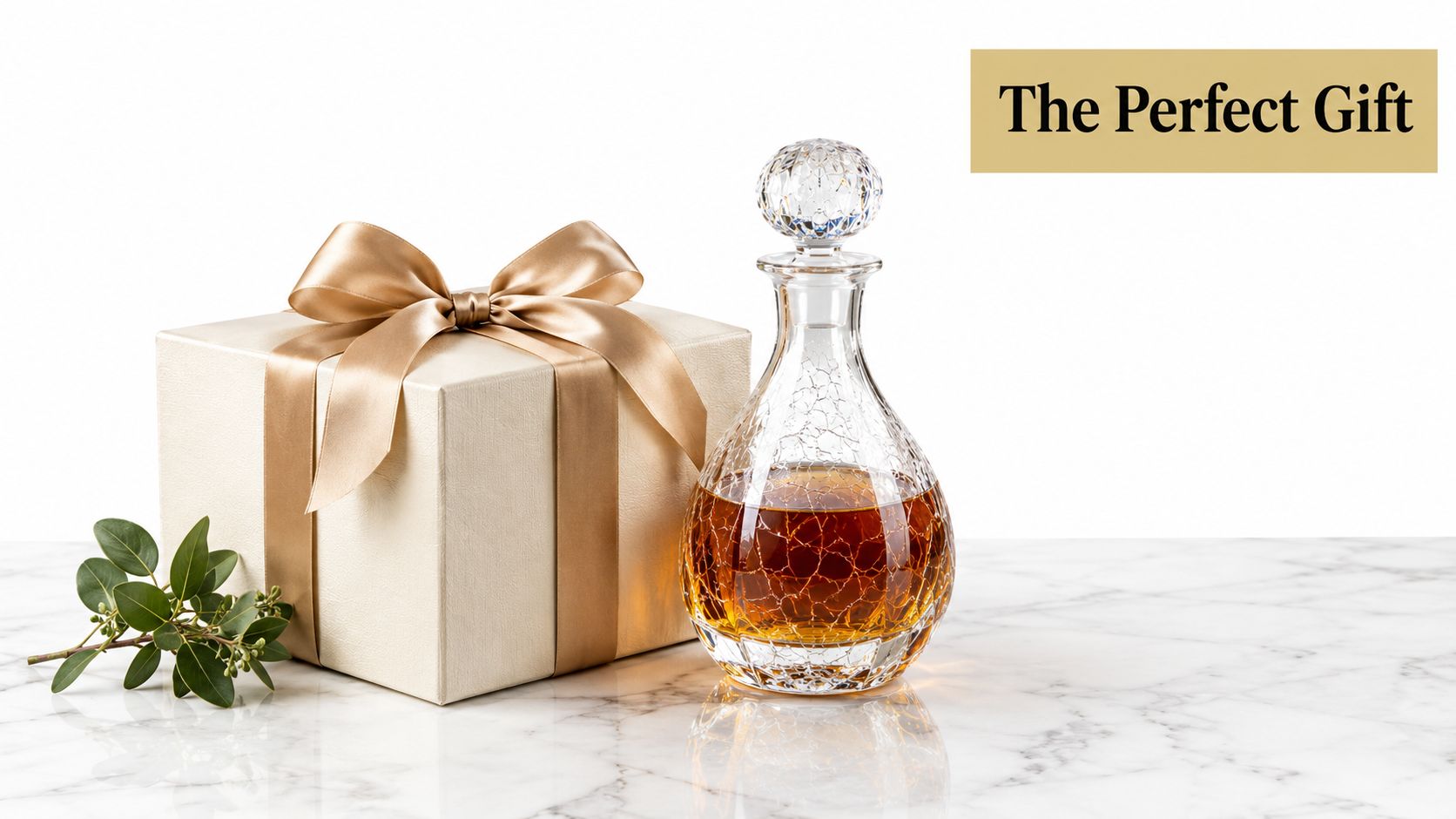
A well-chosen crackle glass decanter can therefore serve several audiences without losing its identity. Whiskey enthusiasts receive a more theatrical serving ritual. Gift seekers find a present with aesthetic and emotional weight. Corporate buyers gain a professional object that can represent appreciation without feeling generic.
If you're selecting gifts for an upcoming event, choose the decanter first, confirm the care guidance, then decide whether glasses, chilling accessories, engraving, or a message will complete the presentation. For a personal celebration, focus on the recipient's home and taste. For corporate orders, plan packaging and delivery carefully so every piece arrives ready to make the intended impression.
ROCKS Whiskey Chilling Stones offers whiskey chilling stones, whiskey glasses, cigar accessories, gift sets, and other barware for spirits lovers and corporate gifting programs. Visit ROCKS Whiskey Chilling Stones to explore gift options that complement a crackle glass decanter and create a more complete whiskey presentation.


