


You're holding a glass that's a little too warm. You add ice, take a sip, and it's right. Ten minutes later it's watery and thin. That small frustration explains why whiskey stones and glass choices belong together.
You're not really choosing between cold and warm. You're choosing between temperature and dilution, and your glass changes what you smell while that choice plays out. Once you see those two moving parts, the advice gets simple, and so does buying a set as a gift.
What Whiskey Stones Are and How They Work
You watch an ice cube in whiskey. It shrinks. It softens at the edges. Your drink gets colder, but it also gets more water.
A whiskey stone does the same job a different way. It's a solid piece you freeze first, then place in the glass. It pulls heat from the whiskey. It doesn't melt into it.
Think of ice as a sponge that dissolves as it works. Think of a stone as a heavy metal spoon in hot soup. The spoon pulls warmth from the soup until both settle at the same temperature. Then it stops helping.
A Modern Tool, Not an Old Tradition
Whiskey stones aren't an ancient ritual. The first widely documented commercial version appeared in the United States in 2007, when Andrew Hellman and Teroforma sold chilled soapstone cubes. The idea responded to a plain problem. Melting ice adds water, lowers alcohol concentration, and changes flavor balance over time.
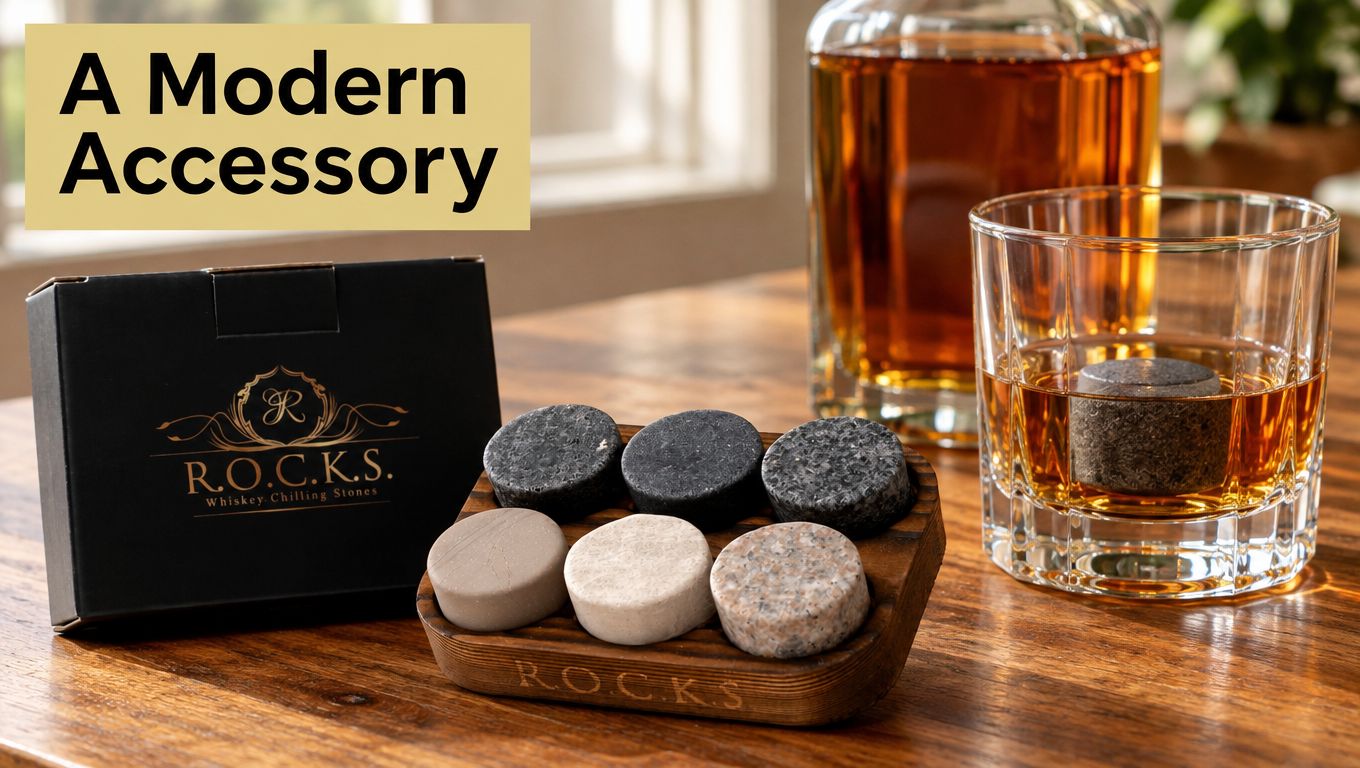
Soapstone made sense for an early version. It packs a lot of mass into a small cube. A glossary entry on whiskey stone materials and density reports soapstone at about 2.98 grams per cubic centimeter with specific heat near 0.98 kilojoules per kilogram per kelvin. That density is more than three times that of ice in the same source. In plain terms, a small stone still carries weight, and weight is what holds the cold.
A stone cools until it matches your drink. It can't keep going the way melting ice can.
Why the Chill Is Finite
Ice cools while it melts. That melting phase keeps absorbing heat. A stone has no phase change, so it cools only until stone and whiskey approach the same temperature.
That limit isn't a flaw. It's the design. Stones give you controlled, moderate chilling without changing the volume in your glass. They suit a neat pour when you want the edge off the warmth, not a drink that tastes like it's from the fridge.
Preparation matters too. Stones need a long freeze before they're ready, which we'll cover in the routine below. If you're curious about materials before you buy, our guide on what whiskey stones are made of walks through the options in plain language. For gift seekers, that modern origin helps. You're giving a contemporary bar tool with a clear purpose, not a novelty with no job to do.
Whiskey Stones Versus Ice and Neat Pours
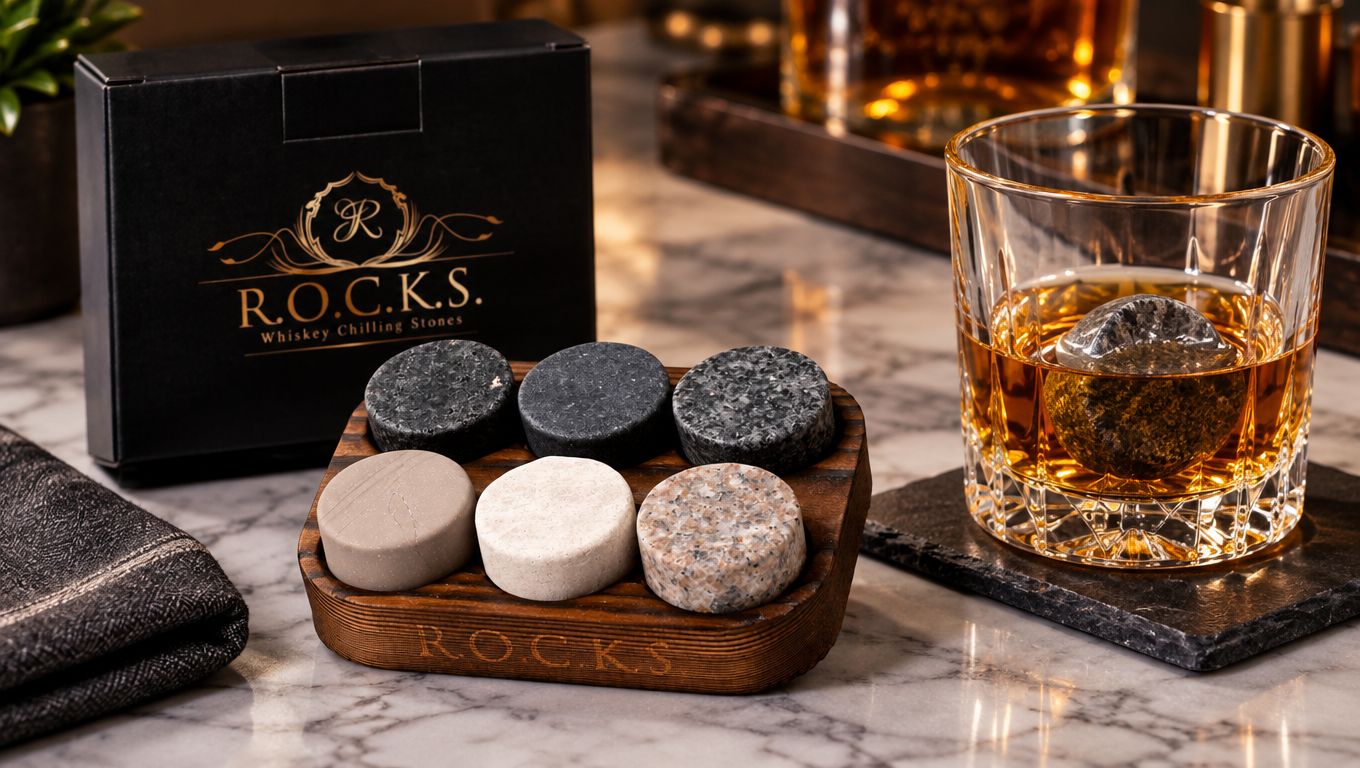
Set out the same whiskey three ways: neat at room temperature, over ice, and with stones. Each glass gives you a different balance of temperature and dilution. A neat pour keeps its original composition, while ice cools it and gradually adds water. Stones chill the pour without adding meltwater.
A neat sip can feel direct, with the whiskey's alcohol warmth and flavors intact. Ice cools faster and further, which some drinkers prefer, though its meltwater changes the drink over time. Stones offer a gentler chill and keep the amount of water steady.
What the Numbers Show
In a reported test with 60 mL of whiskey starting at 22°C, three pre-frozen soapstone stones brought the pour to 14.2°C at three minutes. A single ice cube cooled it to 7.1°C in under 90 seconds.
Cooling Results for a 60 mL Pour Starting at 22°C, as reported in the test above
| Method | Temperature at Three Minutes | Temperature at Five Minutes | Dilution |
|---|---|---|---|
| Three soapstone stones | 14.2°C | 13.8°C | None from melting |
| One 25 g ice cube | 7.1°C in under 90 seconds | 8.4°C | About 1.8% at five minutes |
The comparison is a choice of priorities. Ice gets the drink colder, while stones preserve its composition. Like choosing a cool breeze over a cold shower, the right option depends on how much chill you want.
Dilution Changes More Than Strength
Water can soften alcohol's burn and bring forward flavors that were harder to notice. Add too much, though, and a whiskey's distinctive character can become less clear. Whisky dilution research noting samples stayed distinguishable through roughly 20% dilution also reports that greater dilution obscured identifying characteristics. Adding water drop by drop gives you more control than leaving ice to melt.
For a look at whiskey composition beyond the home bar, ETHRA Ingredients bulk whiskey options show how formulated whiskey is presented for bulk buyers. At home, the choice is simpler: add water yourself, let ice add it gradually, or use stones to chill without dilution.
The Original Rocks are round, solid granite stones made to cool spirits without watering them down. They suit drinkers who want a moderate chill and steady flavor. If you prefer a colder pour that changes as it sits, ice is the better fit.
Choosing the Right Glass for Your Whiskey Stones
Pour the same single malt into two glasses, and the aroma can seem different. A broad bowl with a narrower opening gathers aroma and guides it toward your nose. A wide tumbler leaves more space for aroma to disperse, while making room for stones and an easy, casual sip.
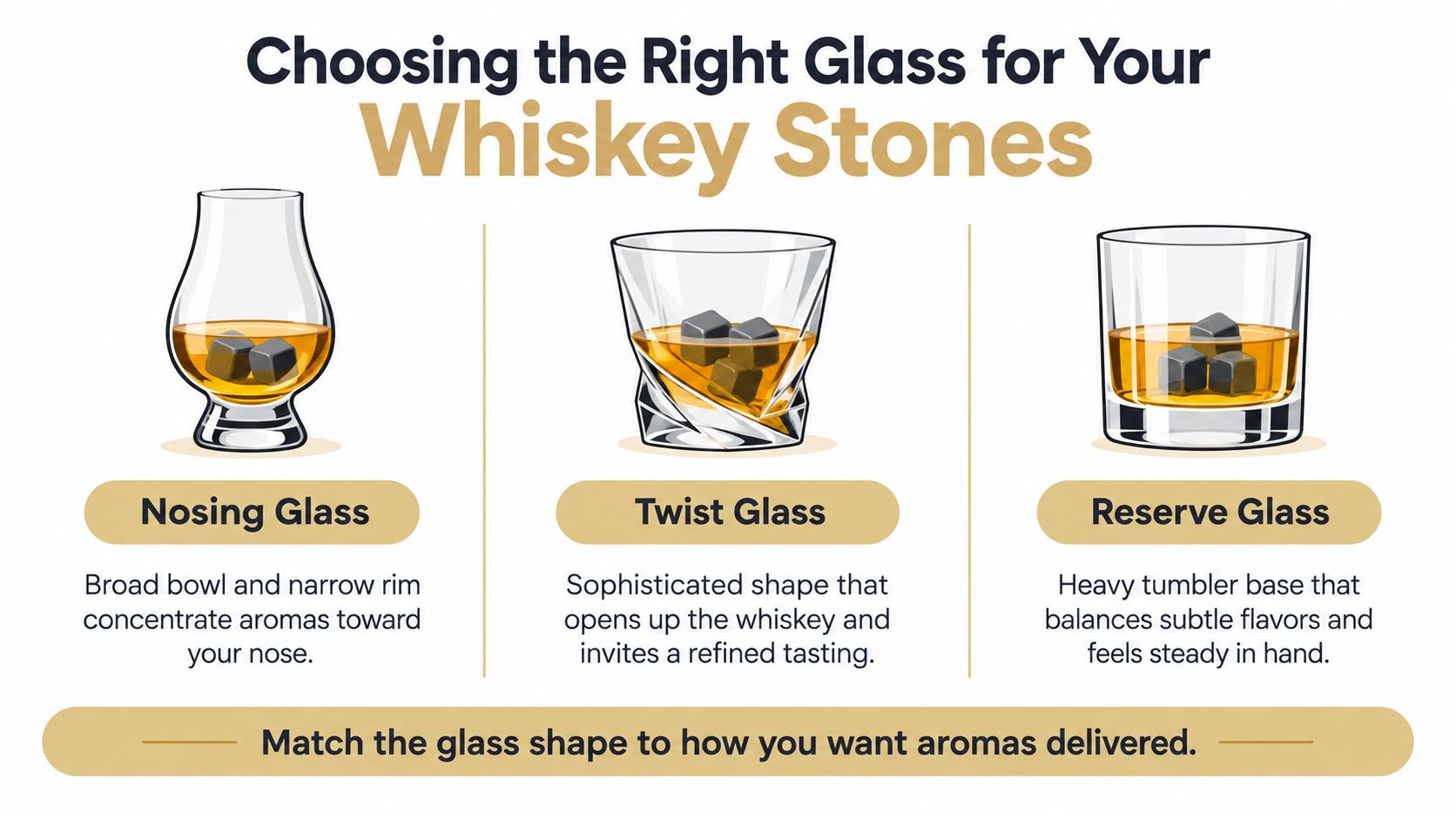
Match the Glass to the Job
- Nosing glass: Choose this for comparing single malts side by side. Its narrower opening concentrates aroma, making differences easier to notice.
- Twist glass: Choose this for a focused tasting that still feels relaxed at the table.
- Heavy rocks glass: Choose this for casual sipping. Its stable base leaves room for stones and is less easy to tip.
The chilling method also shapes the glass choice. Stones cool whiskey without adding water; ice cools it while melting into the drink. An illustrative energy balance for cooling a 30 mL pour from 20°C to 5°C corresponds to roughly 4.6 g of melted ice if ice supplies the cooling. A small temperature drop can still bring some dilution.
A published analysis identifying 18–22°C as an optimal range for evaluating whiskey places aroma-focused tasting above fridge-cold temperatures. If you want a gentle chill and concentrated aromas, pair stones with a nosing glass. For a more relaxed pour, use a rocks glass and accept a looser aroma focus.
Why Pairing Stones and Glass Works as a Gift
Glass shape can be compared under repeatable conditions. In one spirits-aroma study using 45 mL pours across three vessel types, samples were covered, swirled three to four times, and evaluated after 5–10 seconds. Keeping those steps consistent helps tasters compare aroma impressions.
The Connoisseur's Set - Nosing Glass Edition pairs round solid granite stones with a crystal nosing glass. It suits a recipient who wants to compare aromas across pours while keeping dilution out of the tasting. A Twist Glass Edition offers a different ritual for the same kind of tasting. For a broader tasting table, pair whiskey with snacks or explore olive oil for plant-based cheese pairings. For more help matching glass shape to your preferred tasting style, see this guide to best whiskey tasting glasses.
How to Use Whiskey Stones Step by Step
Good results come from a dull routine done well. Freeze fully. Pour moderately. Wait briefly. Sip and adjust.
Rush any part and you'll blame the stones. Usually the stones weren't cold enough, or the pour was too large for them to move.
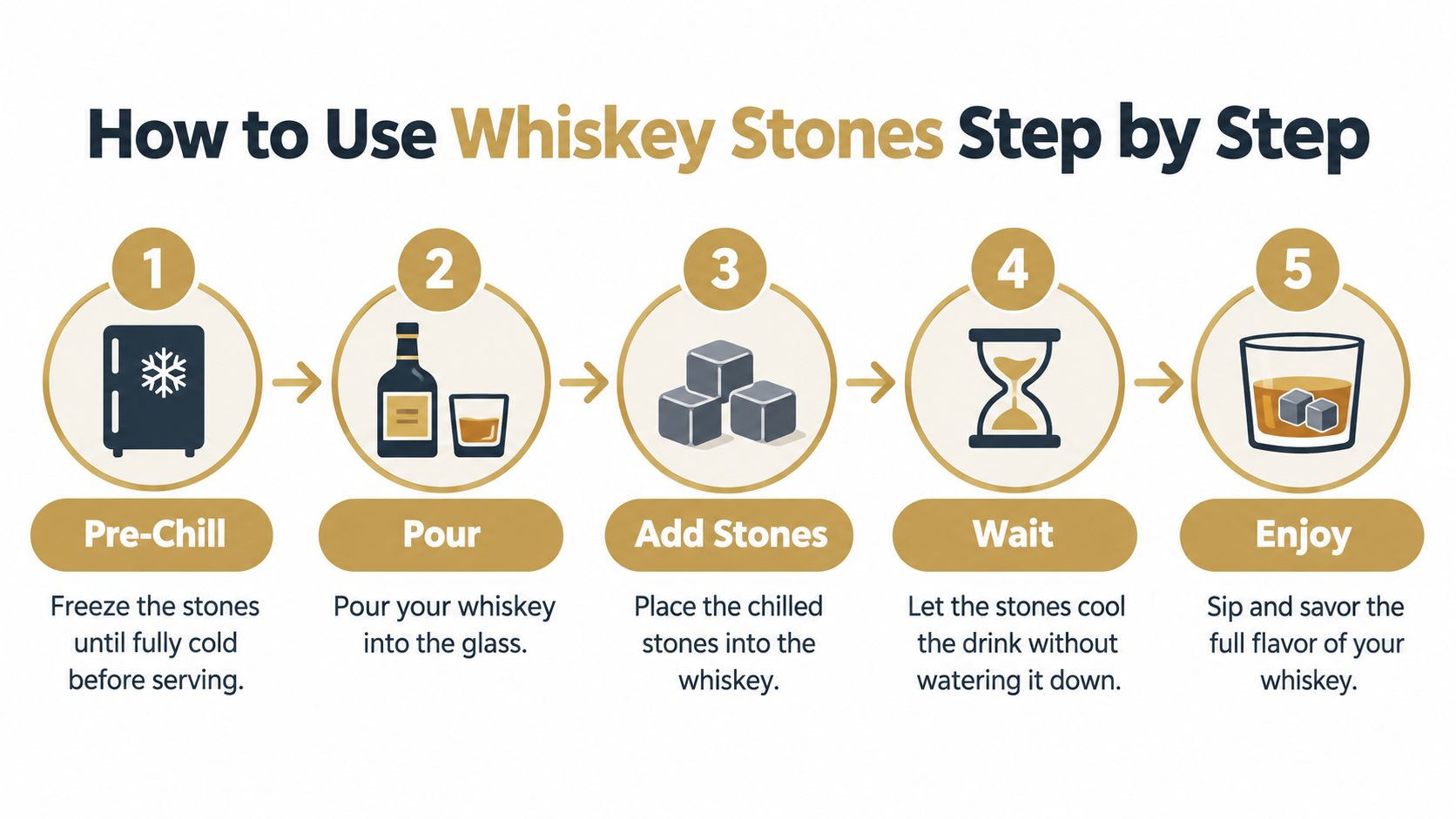
The Routine
- Pre-chill thoroughly: Standard stones generally require at least four hours in a freezer before use. Keep a set frozen so you're not waiting on guests.
- Pour a moderate amount: Don't overfill the glass. A higher stone-to-liquid ratio gives you a bigger temperature change.
- Place stones gently: Lower them in instead of dropping them. You'll protect the glass and avoid splashing.
- Wait a few minutes: Give heat time to move from whiskey into stone. Swirl once if you like, then taste.
- Sip and note the result: Too warm next time? Add another stone or pour a little less.
Set a Realistic Expectation
In a separate report with three stones frozen at −18°C in a 60 mL pour at 22°C, the drink fell by only 5.2°C to about 16.8°C. It didn't reach an ice-cold 4°C. That's normal stone behavior, not a failed set.
Physics explains the ceiling. Published measurements in a soapstone thermal properties paper reporting conductivity of 2.5–4.9 W·m⁻¹·K⁻¹ also place specific heat near 0.91–1.07 J·g⁻¹·K⁻¹ and density near 2.7–3.0 g·cm⁻³. Finite mass plus modest specific heat means finite cooling. More contact area helps heat move faster, but it can't create cold that isn't stored.
Practical rule: Use several fully frozen stones with a modest pour. Expect a gentle drop, not a frozen drink.
Try a small home test. Use the same whiskey, same volume, and identical glasses. Taste one neat and one with stones at timed intervals. You'll learn your preference faster than any universal claim can teach you.
Cleaning and Caring for Stones and Glassware
Care is where good sets stay good. It isn't glamorous. It decides whether your next pour tastes clean or faintly like last month's freezer.
Gift recipients and corporate buyers need this part most. A beautiful set that picks up odors or chips at the rim stops feeling premium quickly.
Stones Need Washing and Full Drying
Wash stones according to the instructions supplied with your set after each use. Dry them completely before you freeze them again. Store them away from strongly scented foods so they don't carry stray smells into a drink.
- Wash promptly: Rinse away spirit residue before it dries on the surface.
- Dry fully: Moisture left behind can freeze stones together and dull your routine.
- Store separately: Keep stones in their pouch, tray, or container rather than loose beside open food.
- Inspect regularly: Replace damaged pieces instead of serving guests with a cracked stone.
A smooth, nonporous surface helps here. It limits liquid absorption and makes cleaning more predictable from one use to the next. Porous or rough pieces demand extra attention because they can hold residue longer.
Glassware Needs a Neutral Finish
Wash glasses so no fragrance residue remains. Scented detergent film can sit right where aroma should be. Check rims for chips before you pour, especially in hospitality or event settings where glasses move fast.
Avoid sudden temperature swings with thin glass. Don't take a frosty glass straight to very hot water. Let it settle first, then wash it gently.
Temperature also changes perception in ways cleanliness can't fix. Research in the Journal of the Institute of Brewing on whisky perception at different serving temperatures found a musty TCA aroma was perceived significantly higher at 5°C than at 20°C, while alcohol burn was strongest at 40°C. So no dilution doesn't mean no sensory change. A colder pour can feel smoother yet reveal an off note more clearly.
Build a closing routine. Wash, dry, inspect, store. Your next pour starts clean, and your stones are already waiting in the freezer.
Gift Ideas for Whiskey Lovers and Corporate Buyers
A colleague hosts friends but rarely discusses favorite bottles. Barware makes a thoughtful gift in that situation because it supports their own choice of whiskey and serving style.
Occasions Where a Stone and Glass Set Fits
- Birthdays and husband gifts: A glass with chilling stones and a storage tray gives the recipient a complete serving set.
- Housewarmings and weddings: Reusable barware can sit on the shelf and come out when guests visit.
- Client appreciation: A barware gift avoids choosing alcohol while still appealing to someone who enjoys spirits.
- Employee rewards and company events: Matching sets create a consistent gift across a team while remaining useful at home.
For corporate orders, engraved glassware or a marked wood tray can add a name, date, or company logo. The set contents also shape the gift: a glass, stones, and tray make a more complete presentation than a single accessory. Buyers weighing options for different audiences can explore these unique corporate gift ideas for whiskey lovers.
A short card can explain the set's purpose without telling the recipient how to drink: “These stones gently chill your whiskey while keeping added water to a minimum.” That note sets a clear expectation and leaves the serving choice to them.
A themed bundle can suit the recipient's hobbies, too. For a golfer who enjoys hosting after a round, pair the barware with bold apparel for post-round gatherings. The glass and stones remain practical, while the added item makes the gift feel personal. For a company event, engraving and coordinated set contents can make the presentation feel considered before the first pour.
Choosing Your Next Step with Whiskey Stones and Glass
A whiskey served beside a glass of melting ice changes as you sip. A whiskey with stones stays closer to its original strength. Choose between those experiences first, then match the glass to the pour.
A Short Decision Path
- Undiluted and gently chilled: Choose stones. For a small pour, a narrower glass leaves less room for the stones to crowd the whiskey. For a larger pour, a solid rocks glass gives the drink and stones more space.
- Aroma first: Keep the pour modest and use a glass that lets you bring the whiskey close to your nose. Chill lightly so the cold does not distract from the aromas.
- Deep cold first: Choose ice. As it melts, it cools and dilutes the whiskey, changing the drink over time.
- Gift first: Look for a set with the pieces and care guidance the recipient needs. Personalization can make it more suited to the occasion.
A useful sizing rule is simple: the glass should hold the pour comfortably, with enough room for stones without making a small serving look lost. For a gift, consider who will use it, whether the set feels complete, and whether engraving suits the occasion. Corporate buyers can also check that the same choice works across the intended recipients.
Put One Pour to the Test
Try the same whiskey with stones and with ice at home. Keep the pour size and glass the same, taste both at similar intervals, and note which one you would choose again. It is a small test, like comparing two routes by driving them yourself.
There is no single best serving method. The right choice depends on whether you want a steadier flavor or gradual dilution, how much whiskey you pour, and how quickly you drink it. Stones suit a pour when gentle chilling matters more than meltwater.
Browse the whiskey stone and glassware gift sets, compare the editions with your preferred pour size, and choose one that suits how you drink. ROCKS Whiskey Chilling Stones offers crystal glassware, chilling stones, personalized sets, and engraving options for birthdays, weddings, client gifts, and company events. To choose a set, visit ROCKS Whiskey Chilling Stones and select the edition that fits your pour.


