


At its core, whiskey is a spirit born from fermented grain mash and matured in wooden barrels. That’s the simple version. But within that definition lies a world of complexity, all built on three non-negotiable foundations: the grain, the distillation, and the aging. Getting a handle on these is the first step to really speaking the language of whiskey, and the key to selecting a truly impressive gift.
The Three Pillars Defining Every Whiskey
So, what really makes a whiskey a whiskey? It's not just a casual agreement; there are strict rules. Around the world, a spirit can only earn the name "whiskey" if it begins with fermented grain, is distilled, and then spends mandatory time aging in wooden casks.
This global standard is what separates whiskey from other spirits and fuels a massive market valued at over USD 77 billion. Think of it as a foundational recipe. If you mess with the core ingredients—swap the grain for sugarcane, for instance—you’ve made rum. If you skip the barrel aging, you’re left with something closer to a neutral spirit like vodka. The real magic happens when those three specific steps come together.
To put it simply, these are the non-negotiables that give every bottle of whiskey its identity.
Whiskey's Core Identity at a Glance
| Defining Element | Requirement | Why It Matters for Flavor |
|---|---|---|
| Grain Mash | Made from 100% fermented grains (corn, rye, wheat, barley, etc.). | The grain blend is the spirit's DNA, setting the stage for sweet, spicy, or malty notes. |
| Distillation | The fermented mash is heated to separate alcohol from water. | This step concentrates the alcohol and refines the spirit, removing harsh elements. |
| Aging | Must be aged in wooden barrels (often oak). | This is where the magic happens—the wood imparts color, complexity, and signature flavors like vanilla, caramel, and spice. |
Without these three elements working in harmony, you simply don't have whiskey.
Why This Matters for Gift Giving
Understanding this process isn’t just for whiskey nerds—it makes you a much better gift-giver. When you choose a whiskey-themed gift, you’re not just handing someone a bottle. You’re acknowledging a tradition of patience, craftsmanship, and artistry. It shows a level of thought that resonates, especially in a corporate setting.
A great whiskey gift acknowledges the meticulous process behind the spirit. It's a nod to the time, skill, and resources invested in creating something exceptional, making it a powerful gesture of respect and appreciation.
This knowledge helps you think beyond the bottle. You can start choosing complementary items that honor the spirit, like an elegant decanter or our signature whiskey chilling stones, both of which make exceptional gifts for clients or colleagues. It’s about building a complete experience.
For anyone looking to dig deeper into the nuances, we've broken down the key differences between bourbon and whiskey in our detailed guide. Knowing these fundamentals is what turns a simple present into a thoughtful, curated gift for any client, colleague, or friend.
The Soul of Whiskey Begins with Grain
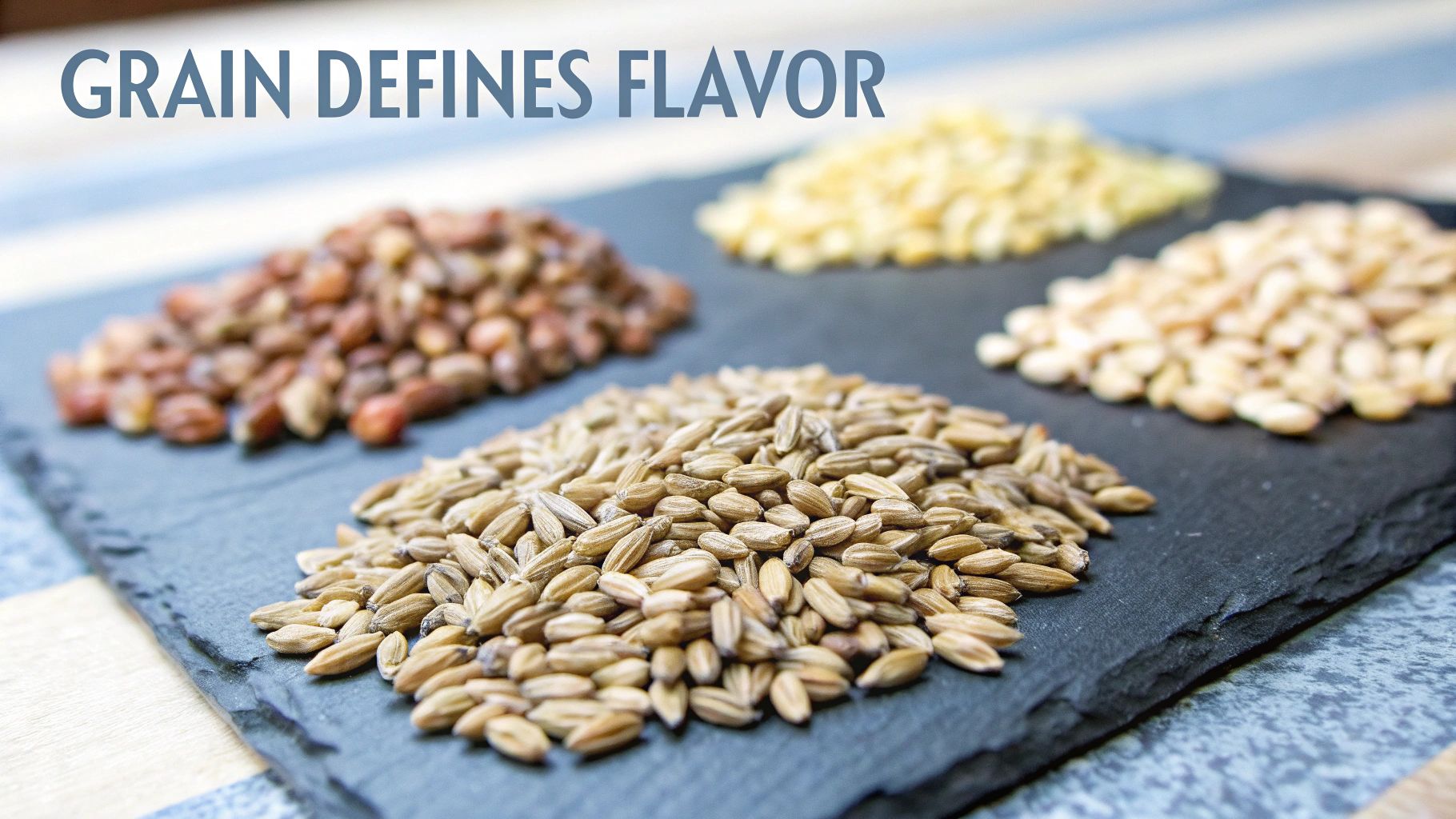
Every bottle of whiskey, no matter how old or rare, starts its life as a humble pile of grain. This isn’t just some random ingredient; it’s the DNA of the spirit. The specific grain a distiller chooses is arguably the most critical decision they make, setting the entire flavor journey in motion.
Think of it like a chef choosing between different types of flour to bake bread. The grain choice dictates the fundamental character before any other part of the magic happens. It’s what separates whiskey from spirits made from things like grapes (brandy) or sugarcane (rum).
The Building Blocks of Flavor
The type of grain used has a massive, direct impact on how a whiskey tastes. Each one brings its own unique personality to the party, which is why the world’s major whiskey styles are so distinct.
- Corn: This is the heart of American Bourbon, known for its distinct sweetness. A whiskey with a lot of corn in its recipe will almost always be smoother and sweeter, with those classic vanilla and caramel notes.
- Malted Barley: You can’t have Scotch without malted barley. It’s the soul of the spirit, delivering rich, complex flavors that can range from a biscuity, nutty character all the way to the smoky, peaty notes so many people love.
- Rye: Looking for spice? Rye is your answer. Whiskies that lead with rye are known for their bold, peppery kick and a drier finish, often packed with cinnamon and nutmeg flavors.
- Wheat: For a softer, gentler profile, distillers lean on wheat. It creates a beautifully smooth, mellow whiskey with a sweet, almost bready character, often with hints of honey.
Knowing this completely changes how you select a gift. For a corporate client with a bold personality, a rye whiskey gift set hits the mark. But for someone who prefers subtle, malty notes, you’d be better off with a set of high-quality nosing glasses to help them explore a fine Scotch. Our assortment offers the perfect complement for every style.
The grain is the whiskey's origin story. Understanding whether a whiskey is corn-sweet, barley-rich, or rye-spicy allows you to choose a gift that aligns perfectly with the recipient's personal taste.
From Grain to Mash
Once the grains are chosen, they’re put through a process called mashing. It’s basically like making a giant, complex porridge. The grains are milled down and mixed with hot water in a huge vessel. The goal is simple but absolutely critical: to get the starches in the grain to break down and convert into fermentable sugars.
This sugary, soupy liquid, now called the "mash" or "wort," is the lifeblood for the next step—fermentation. Distillers are masters of this process, tweaking temperatures and timing to influence exactly which sugars are pulled out, giving them yet another layer of control over the final flavor.
When you understand this first crucial step, you start to really appreciate the craft. It’s why a premium whiskey, born from carefully selected grains, deserves more than just a quick pour. Presenting that bottle in a sophisticated decanter set or with a pair of our premium whiskey stones shows you respect the entire journey. It turns a good gift for a client or event into a truly memorable one.
From Grain Soup to Potent Spirit: Fermentation and Distillation
Once the mash is prepared, we’ve essentially got a sweet, grainy porridge. Now the real magic happens. This is where a simple grain "tea" starts its journey to becoming the spirit we know and love, and it all begins with fermentation.
We introduce yeast into the sugary liquid (now called "wort"), and these microscopic workhorses go to town. They feast on all that sugar, converting it into two key things: alcohol and carbon dioxide. This process creates what's affectionately known as a "distiller's beer" or "wash"—a flavorful, low-alcohol brew. The specific strain of yeast a distiller chooses is a huge decision; some add fruity notes, others floral or spicy ones, layering in complexity before the spirit even sees a still.
The Art of Purification in a Still
With our distiller's beer ready, it's time for distillation. Think of this as the purification stage—the moment a distiller carefully separates the essence of the spirit from everything else. It's less about creating flavor and more about concentrating and refining the flavors that already exist.
The wash is heated in a large copper vessel called a still. Since alcohol has a lower boiling point than water, it turns to vapor first. This alcohol-rich vapor rises, travels through the still, and is then cooled, condensing it back into a liquid. The result? A much stronger, purer spirit called "new make" or "white dog."
This careful, deliberate process is what separates a fine spirit from the rest. Understanding the craft involved elevates a whiskey gift set from a simple product to a genuine token of appreciation—perfect for showing a corporate client or a friend that you value quality and tradition.
Distillation is where a distiller truly makes their mark. By making precise cuts—deciding exactly which parts of the vapor to keep and which to discard—they literally shape the soul of the spirit before it ever touches a single drop of wood.
How the Still's Shape Defines the Spirit
You can tell a lot about a whiskey just by looking at the still it came from. The shape and design aren't just for show; they have a massive impact on the final character of the spirit.
-
Pot Stills: These are the classic, onion-shaped copper stills you see in old Scottish distilleries. They work in batches and usually require at least two distillations. This less "efficient" method actually allows more of the original grain character and flavorful oils to carry over, creating the rich, full-bodied spirits we associate with Scotch and Irish whiskeys.
-
Column Stills: Also known as Coffey or continuous stills, these towering columns look more industrial because they are. They can run continuously, producing a much lighter, smoother, and cleaner spirit with incredible efficiency. This style is the backbone of most Bourbon and other American whiskeys.
The choice of still is one of the most fundamental decisions a distiller makes. It’s this kind of technical precision that helps define a whiskey's regional identity. For example, the law dictates that bourbon must be distilled to no more than 160 proof to ensure plenty of flavor from the mash makes it into the final spirit.
This commitment to craft is driving incredible growth in the industry, with global whiskey sales projected to skyrocket from USD 118.5 billion in 2025 to USD 345.7 billion by 2035. You can dig deeper into the whiskey trends shaping the future to see just how much this spirit is booming. It's this appreciation for detail that makes our collection of whiskey accessories the perfect gift for any corporate event or discerning client who respects fine craftsmanship.
How Wooden Barrels Build Character and Flavor
This is where the magic happens. Aging is the true alchemy of whiskey making, and it's non-negotiable. By law, a spirit simply cannot be called whiskey unless it has spent time maturing inside a wooden barrel. This isn't just storage; it's an active, transformative partnership between the raw spirit and the wood that holds it.
Think of the barrel as a slow cooker. Over months and, more often, years, this patient process mellows the harsh edges of the new-make spirit and weaves in layers of rich, complex flavors. The wood is porous, allowing the whiskey to breathe. It interacts with the air outside the cask while slowly evaporating—a romantic process famously known as the "angel's share."
The Wood Makes the Whiskey
The barrel is responsible for a huge chunk of a whiskey's final flavor profile, and believe it or not, 100% of its color. A crystal-clear spirit goes into the cask, and after years of intimate contact with the wood, it emerges with that beautiful amber hue we all know. The distinct character and rich color of whiskey often come from this very process; these deep 'Oak Brown' shades can even inspire collections of other fine goods, as seen when you explore the rich hues inspired by oak.
This transformation is what makes whiskey such a prestigious gift. It represents an investment of time, patience, and pure craftsmanship. When you gift a well-aged whiskey, especially alongside accessories like our polished whiskey chilling stones that preserve its intricate profile, you're showing a deep appreciation for this artistry.
Aging is the magical heartbeat of whiskey, transforming raw spirit into liquid gold through years in oak barrels—a non-negotiable criterion that defines its character worldwide. No aging? No whiskey.
This critical step also fuels a massive economic engine. The global whiskey market hit USD 75.1 billion in 2025 and is projected to climb to USD 118.1 billion by 2034, driven largely by our love for the complex profiles that only maturation can create.
A Deliberate Choice of Cask
The type of barrel a distiller chooses is a deliberate, high-stakes decision. Each one imparts a unique signature on the final product, which is a key part of what makes one whiskey so different from the next.
- New American Oak: This is the go-to for Bourbon, which requires it by law. These barrels are heavily charred on the inside, a process that caramelizes the wood sugars and imparts those classic flavors of vanilla, caramel, and a hint of smoke.
- Used European Oak: Often having previously held sherry or port, these casks are beloved by Scotch and other world whiskies for the fruity, nutty, and spicy notes they contribute. The previous liquid occupant leaves its ghost behind, adding yet another layer of depth.
- Re-Used American Barrels: Many Irish and Canadian whiskies are aged in used bourbon barrels. This results in a much softer, more subtle oak influence that lets the spirit's own character shine through.
Understanding this final, crucial step helps you select corporate gifts with real confidence. It shows you recognize that the bottle you're giving isn't just a spirit—it's a story of time, wood, and patient transformation. Pairing it with one of our elegant gift sets elevates the entire gesture.
A Tour of the World's Major Whiskey Styles
Now that we have a handle on how whiskey is made—grain, fermentation, distillation, and aging—we can jump into the fun part: exploring the world's most iconic styles. While they all follow the same basic playbook, each region puts its own legally protected spin on the final product.
Think of it like this: they're all part of the same global family, but each member has a completely different personality shaped by where they grew up.
Knowing the difference between these styles is your secret weapon for giving a truly memorable gift. It’s the difference between just handing over a bottle and presenting a thoughtful, personal experience. For a client who loves big, sweet flavors, a quality Bourbon is a home run. For a colleague with a taste for something more subtle, a classic Irish whiskey will hit the spot.
Major Whiskey Styles Compared
To get a quick lay of the land, here’s a simple breakdown of the big players. This little cheat sheet compares the key rules and typical flavors you'll find in the world's most popular whiskeys.
| Whiskey Style | Country of Origin | Primary Grain Requirement | Aging Requirement | Common Flavor Profile |
|---|---|---|---|---|
| Bourbon | United States | At least 51% corn | New, charred oak containers | Sweet, caramel, vanilla, oak |
| Scotch Whisky | Scotland | Malted barley (other grains allowed) | Oak casks for 3+ years | Varies widely: smoky, peaty, floral, fruity, rich |
| Irish Whiskey | Ireland | Varies; often uses malted & unmalted barley | Oak casks for 3+ years | Smooth, light, honey, fruit, gentle spice |
| Rye Whiskey | United States | At least 51% rye | New, charred oak containers | Spicy, peppery, dried fruit, cinnamon |
This table is just a starting point, of course. The real joy is in discovering the incredible nuances within each style, but it gives you a solid foundation for making a great choice for your next corporate or personal gift.
Bourbon: America's Native Spirit
Bourbon is as American as it gets, and its production is governed by a strict set of laws that guarantee its signature rich, sweet profile.
To legally be called Bourbon, a whiskey must meet a few key criteria:
- It has to be made from a grain mixture, or "mash bill," that is at least 51% corn. That high corn content is the source of Bourbon's classic sweetness and deep notes of caramel and vanilla.
- It must be aged in brand-new, charred oak containers. This is a big one. Because the barrel has never been used before, it imparts a massive amount of flavor and that beautiful amber color in a relatively short time.
- It's distilled to no more than 160 proof (80% ABV) and can't be bottled at less than 80 proof (40% ABV).
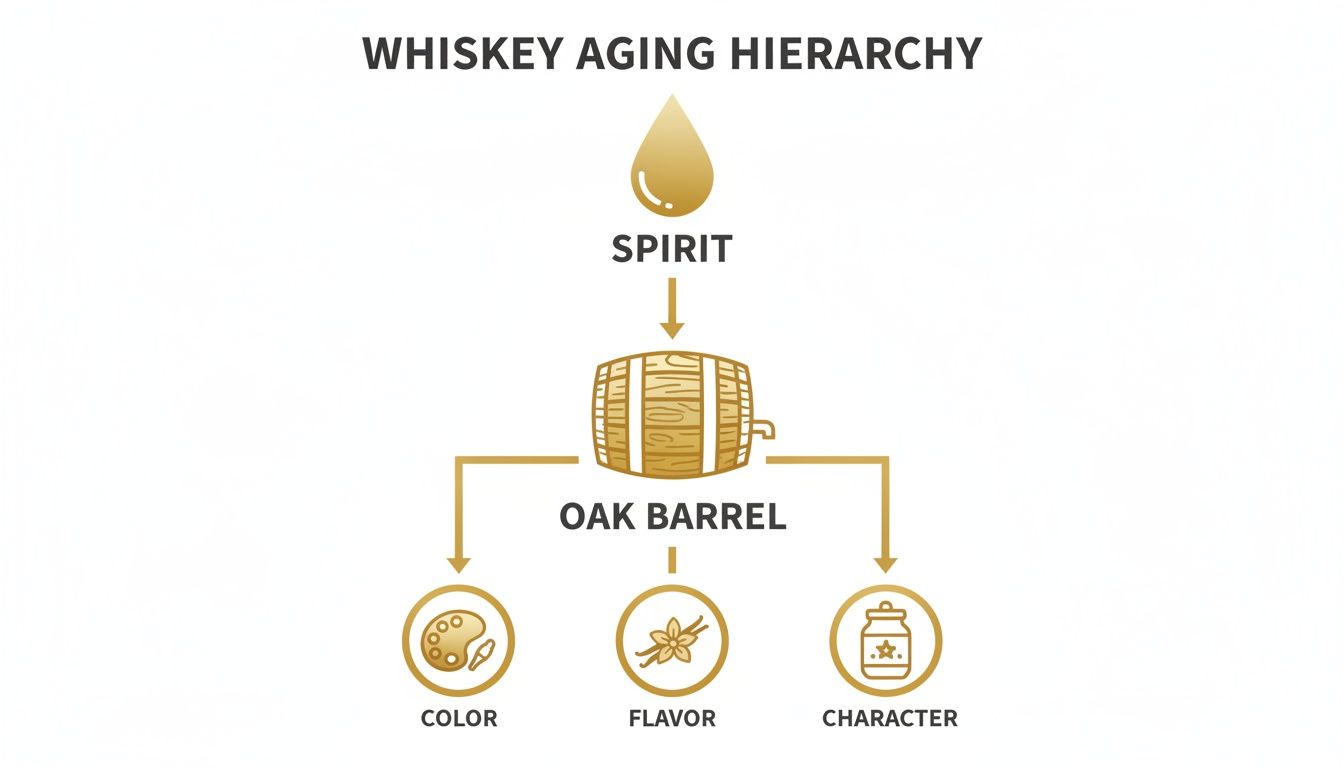
As you can see, the barrel isn't just a holding tank; it’s an essential ingredient, working its magic to transform that raw spirit into the complex whiskey we all know and love.
Scotch Whisky: Scotland's Pride
A trip across the pond brings us to Scotch whisky, a spirit that is Scotland in a glass. The rules here are just as strict, but they produce a completely different kind of spirit. To wear the "Scotch" label, a whisky must be made in Scotland from water and malted barley (other whole grains can be used, too) and aged in oak casks for a minimum of three years.
From the light, grassy notes of a Lowland malt to the intense, smoky punch of an Islay peated whisky, Scotch offers one of the most diverse flavor spectrums you'll ever find. It’s a category that keeps on giving.
Irish Whiskey: The Smooth Sibling
Known for being exceptionally smooth and easy-drinking, Irish whiskey has its own proud traditions. It must be distilled and aged on the island of Ireland for at least three years. The secret to its approachable character often comes down to one extra step: it's typically triple-distilled, unlike Scotch, which is usually distilled twice.
That third distillation creates a lighter, cleaner spirit, making it a fantastic starting point for anyone new to whiskey and a wonderfully versatile choice for gifting.
Rye Whiskey: America's Spicy Classic
Last but not least, we have Rye—America’s original whiskey, which has made a massive comeback. Like its cousin Bourbon, it must be made from a mash bill of at least 51% rye grain. That's where it gets its signature personality.
All that rye gives the whiskey a fantastic spicy, peppery kick, often with hints of cinnamon and nutmeg. It's the bold, assertive member of the American whiskey family.
Getting familiar with these global players is the key to giving a gift that really lands. If you want to dive even deeper, our guide explaining the different types of whiskey has you covered. A carefully chosen bottle, especially when paired with a sharp decanter or our premium chilling stones, creates an impressive gift they won't soon forget.
Choosing and Presenting the Perfect Whiskey Gift
Now that you have a real handle on what separates one whiskey from another, you can start thinking about sharing that experience. The right presentation can turn a great bottle into an unforgettable gift, whether it’s for a key client, a company event, or a close friend. A fine whiskey, after all, deserves a little ceremony.
It’s all in the details. Serving it in the right glass opens up the aroma, while chilling it without watering it down preserves the complex character the distiller worked so hard to create. This is where quality accessories don’t just complement the gift—they complete it.
Elevate the Gifting Experience
This is exactly why we created ROCKS Whiskey Chilling Stones. They bring a spirit down to the perfect sipping temperature without diluting a single drop, keeping the whiskey’s character intact from the first taste to the last. They’re a game-changer for anyone who enjoys a quality pour.
A well-chosen gift set—complete with premium glasses and chilling stones—is a powerful statement. It shows you understand and value true quality, transforming a simple bottle into a complete, memorable experience that resonates with whiskey lovers and newcomers alike.
A great whiskey can be one of many thoughtful tokens of appreciation for any occasion, but a full set shows you went the extra mile. If you’re looking for that perfect present for a corporate partner or a personal celebration, our guide to the best whiskey gift sets is full of inspiration.
Our wide selection of barware makes it easy to find the right fit for any gesture. From an elegant decanter for a personal milestone to a full setup for a team celebration, we have options to ensure your gift is as sophisticated as it is appreciated.
A Few Common Whiskey Questions
You've got the basics down, but a few questions always pop up when you're digging into the world of whiskey. Let's clear them up so you can feel totally confident, whether you're buying for yourself or choosing the perfect corporate gift.
Is All Bourbon Whiskey, but Not All Whiskey Is Bourbon?
That’s exactly right. Think of "whiskey" as the main category, like "cars." Under that umbrella, you have specific models with their own rules, like "Ford Mustang" or "Porsche 911."
Bourbon is one of those specific models—an American classic with a strict legal recipe. To be called bourbon, it has to be made from at least 51% corn and aged in brand-new, charred oak barrels. But the whiskey family is huge, with other famous members like Scotch, Rye, and Irish whiskey, each playing by its own set of rules. That’s what gives them all such unique personalities.
What's the Difference Between "Whisky" and "Whiskey"?
It's all about geography. The spelling is a tiny clue that tells you where the spirit was born—a neat little detail to share when you're giving a gift.
- Whiskey (with the "e") is the calling card for spirits from Ireland and the United States.
- Whisky (no "e") is how they spell it in Scotland, Canada, and Japan.
At the end of the day, the spelling is just a regional accent. The heart of the spirit—a grain-based spirit aged in wood—is the same.
Why Do Experts Say to Avoid Regular Ice in Good Whiskey?
Sure, ice makes your drink cold, but it comes at a steep price: dilution. As that regular ice melts, it waters down the spirit, muting all the subtle, complex flavors the distillers worked so hard to create. You end up with a ghost of the original drink.
This is where whiskey chilling stones come in. They're the perfect solution for a chilled drink without the compromise. They cool the spirit right down while keeping its true character intact, from the very first sip to the last.
That's why our chilling stones make such a thoughtful addition to any whiskey gift. You’re giving the recipient the chance to enjoy their spirit exactly as it was meant to be tasted, showing true consideration for both them and the whiskey itself.
For a gift that truly honors the craft of whiskey making, explore the full collection of chilling stones, glasses, and decanter sets at ROCKS. Discover the perfect present for any client or occasion at https://www.rockscs.com.


