

You've been asked to choose a gift for a company event, client program, or year-end package, and the usual options all create problems. Branded apparel gets the sizing wrong, gadgets need setup and support, and generic promotional items often disappear into a drawer. Personalized pint beer glasses offer a more useful middle ground, combining a familiar barware format with branding that can feel considered rather than intrusive.
For corporate buyers, the decision isn't just which logo to print. You need to choose the right glass format, confirm the regional capacity, select a decoration method that can survive the intended washing routine, and establish a clear artwork and delivery process. The assortment of personalized barware available through specialist suppliers makes pint glasses a strong gifting option for employee appreciation, client recognition, company events, and branded gift sets.
Why Personalized Pint Beer Glasses Are Corporate Gift Gold
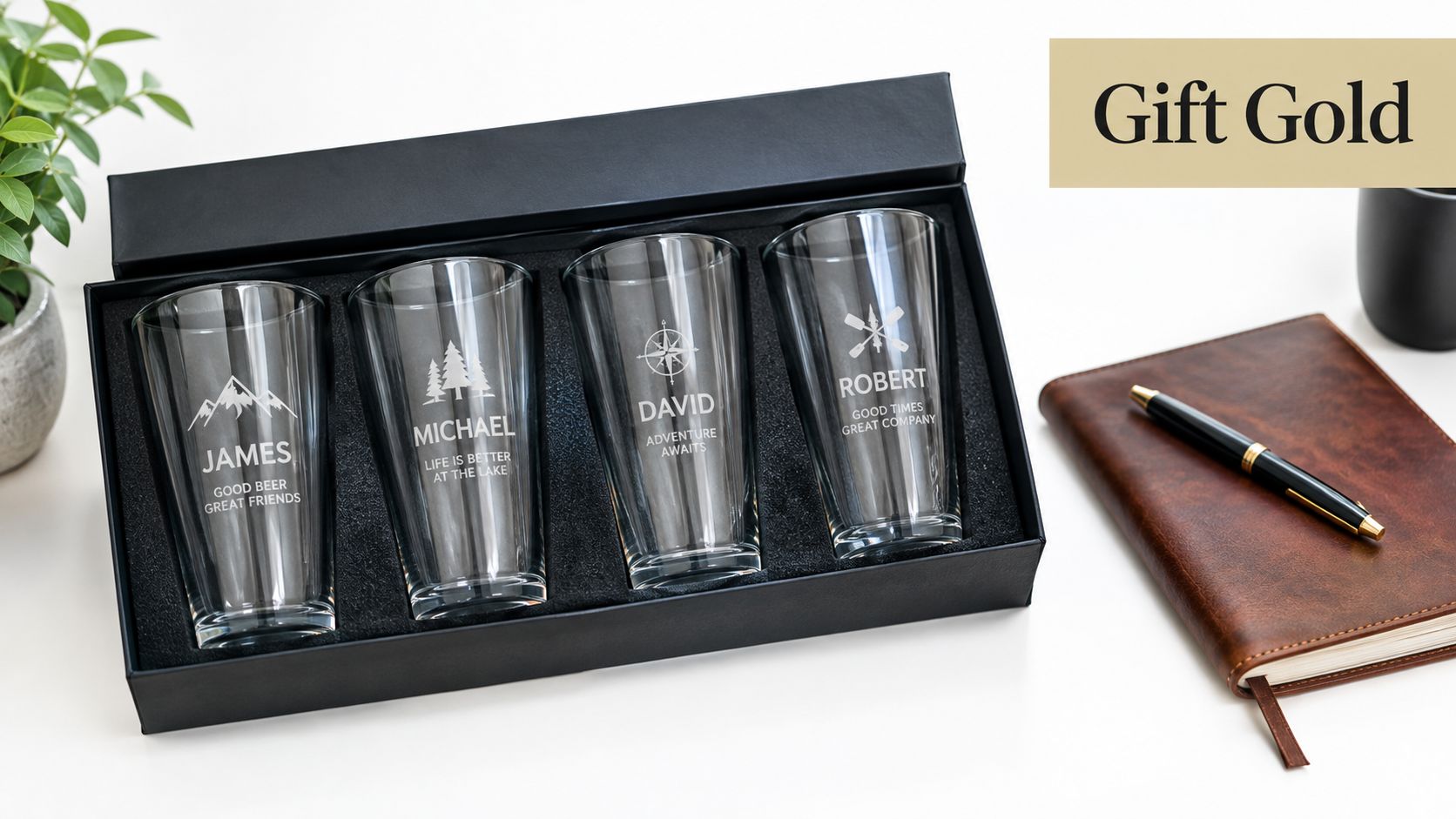
A client opens a year-end package and finds a glass engraved with their name, while the buyer needs assurance that every unit can be produced, packed, and delivered on schedule. That balance makes personalized pint beer glasses practical corporate gifts. The format is familiar, and the decoration gives the item a specific connection to the recipient or event.
The branded glassware market was estimated at $13.58 billion in 2025, with personalization and rapid customization identified as growth drivers in market analysis of branded glassware. For procurement teams, the useful takeaway is straightforward: branded drinkware can remain visible in daily use rather than becoming short-lived event merchandise.
A useful gift with a personal signal
A glass can carry a company mark without making the recipient feel like a walking advertisement. Small engraving, a restrained logo, a team name, an event date, or an individual's name generally feels more considered than a large promotional imprint. The recipient can use it at dinner, during a weekend gathering, or at home, which gives the gift a place in ordinary routines.
The product also works for mixed audiences. Beer drinkers can use it as intended, while others may choose it for soft drinks, cocktails, water, or casual entertaining. That flexibility reduces the risk of ordering a gift that appeals only to a narrow recipient group.
Practical rule: Choose a glass people would buy for themselves, then add branding with restraint.
Procurement details still determine whether the gift succeeds. Confirm the minimum order quantity before finalizing the recipient list, and request a production schedule that includes artwork approval, decoration, quality checks, packing, and shipping. A low unit price offers little value if the supplier cannot meet the event date. Ask which personalization method is rated for commercial dishwashing, particularly when the glasses will be used in offices, hospitality venues, or shared event spaces.
The wider drinkware market was estimated at USD 38.06 billion in 2025 and is projected to reach USD 54.93 billion by 2034, with personalized prints identified as a growth driver in the cited drinkware market report. That supports a practical role for personalized pint glasses as functional branded assets, not just presentation pieces.
They suit client gifts, employee recognition, event attendance programs, and business-partner packages. They can stand alone or sit alongside premium barware, provided the artwork workflow and delivery requirements are settled before ordering.
Understanding Pint Glass Formats and Sizes
Before approving artwork, confirm which pint format your supplier is offering. “Pint glass” can describe several shapes, and the differences affect capacity, print area, handling, and the drinking experience.
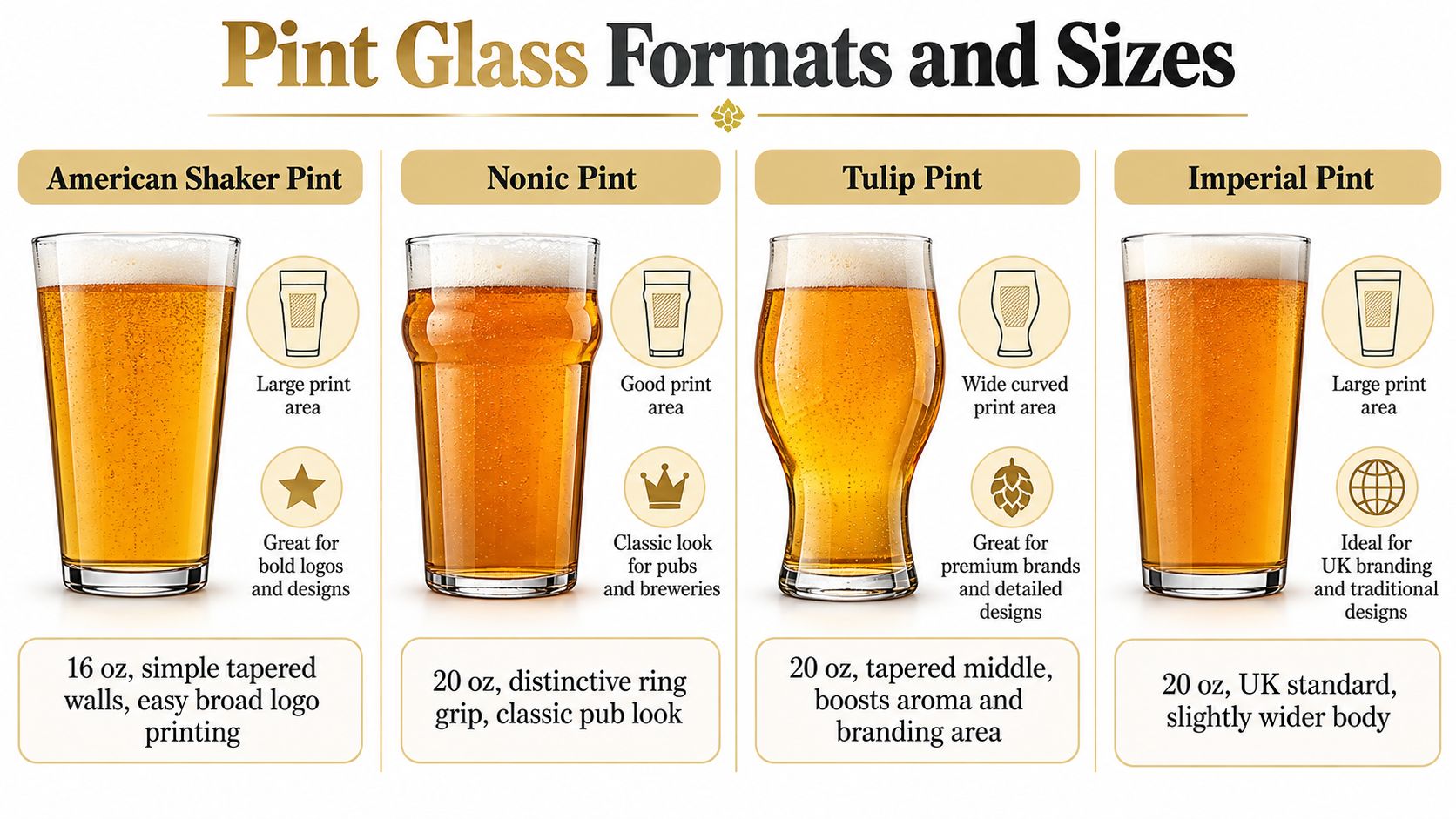
The straight-sided shaker pint remains a familiar workhorse. Its broad, uncomplicated surface gives designers a generous area for a logo or message, and its shape stacks efficiently in many hospitality settings. Nonic and tulip formats introduce more structure. A nonic glass has a pronounced ring that improves grip and gives the vessel a classic pub appearance, while a tulip profile narrows through the middle and opens toward the rim, creating a more distinctive silhouette.
Capacity also varies by market. The U.K. imperial pint is fixed at 568 mL, while the U.S. liquid pint is 473 mL, or 16 U.S. fluid ounces, according to the history and measurement overview of the pint glass. That difference matters when you're ordering for recipients in different regions or shipping a branded program internationally.
Shape affects more than appearance
Glass geometry can influence foam performance. A benchmark recorded 227 seconds of foam life for a 45 mm-rim IPA glass, compared with 115 seconds for a 62 mm shaker pint at 4°C, in testing of beer-glass geometry. That comparison doesn't mean a shaker pint is automatically a poor gift. It shows that rim diameter changes the experience, especially for recipients who care about aroma, head retention, and presentation.
Wall thickness creates another trade-off. Thinner walls can cool faster, but they may also accelerate bubble collapse. The practical choice is a balance between the desired drinking experience, the available branding area, thermal mass, and the expected handling conditions.
Match the format to the audience
Choose a shaker pint when broad logo placement, recognizability, and efficient packing matter most. Select a nonic or tulip shape when the gift should feel more distinctive or pub-inspired. For a U.K.-focused program, verify that the capacity matches the expected imperial format rather than assuming a U.S. pint will be suitable.
Always ask for the exact dimensions before preparing artwork. A design that looks balanced on a straight-sided glass can appear cramped on a curved profile, and a wraparound logo may lose legibility where the glass narrows.
Choosing the Right Personalization Method
Decoration method determines whether the glass remains attractive after repeated use. The cheapest-looking option at approval stage can become the most expensive choice if the branding fades before the gifting program has delivered its value.
Laser etching and sandblasting are the strongest choices for repeated commercial use because the design becomes part of the glass surface rather than sitting on top of it. That makes the decoration resistant to peeling, fading, and wash-off during repeated commercial washing, according to the comparison of beer-glass decoration methods.
Match the process to the washing routine
Use laser etching when you want a precise, restrained finish for names, logos, coordinates, dates, or line-based artwork. Sandblasting creates a similar permanent relationship with the glass and can produce a strong frosted effect, though the supplier should confirm how well the process suits the chosen shape and artwork detail.
Fired ceramic-frit decoration sits behind those methods for durability but remains a practical option when color or a more visible printed treatment matters. The cited source reports that fired ceramic-frit decoration withstands at least 500 dishwasher cycles, making it suitable for many regular-use gifting programs.
UV-cured and low-temperature organic inks offer more flexibility for colorful or detailed designs, but they're significantly less durable. They're better suited to handwashing and lighter-use gifts than to glasses expected to pass through commercial dishwashers every day.
| Method | Best fit | Main trade-off |
|---|---|---|
| Laser etching | Premium gifts, names, logos, frequent use | Limited color treatment |
| Sandblasting | Frosted branding and bold surface effects | Requires careful artwork and handling |
| Ceramic frit | Color branding and moderate-to-heavy use | Production may be less flexible |
| UV or organic ink | Detailed, colorful designs and handwashed gifts | Lower resistance to repeated washing |
For a practical starting point, review examples of engravable pint glasses and compare the finish with your recipients' likely use. A sales team taking glasses to client dinners needs a different durability standard from a small executive gift intended for occasional home use.
Procurement checkpoint: Ask the supplier to state the decoration method and care guidance on the quotation, not only on the product page.
Design Ideas That Actually Get Used
A glass becomes a good gift when the recipient wants to keep it within reach. The strongest corporate designs usually preserve the object's identity as barware instead of covering it with promotional messaging.
Start with the use context. A client gift may call for a discreet logo and clean typography. A team-building event can support a bolder illustration, a shared phrase, or a milestone date. Wedding gifts for employees or couples often work well with names and a date in a classic typeface. The design should feel connected to the occasion without becoming so specific that the glass loses usefulness afterward.
Keep the branding legible
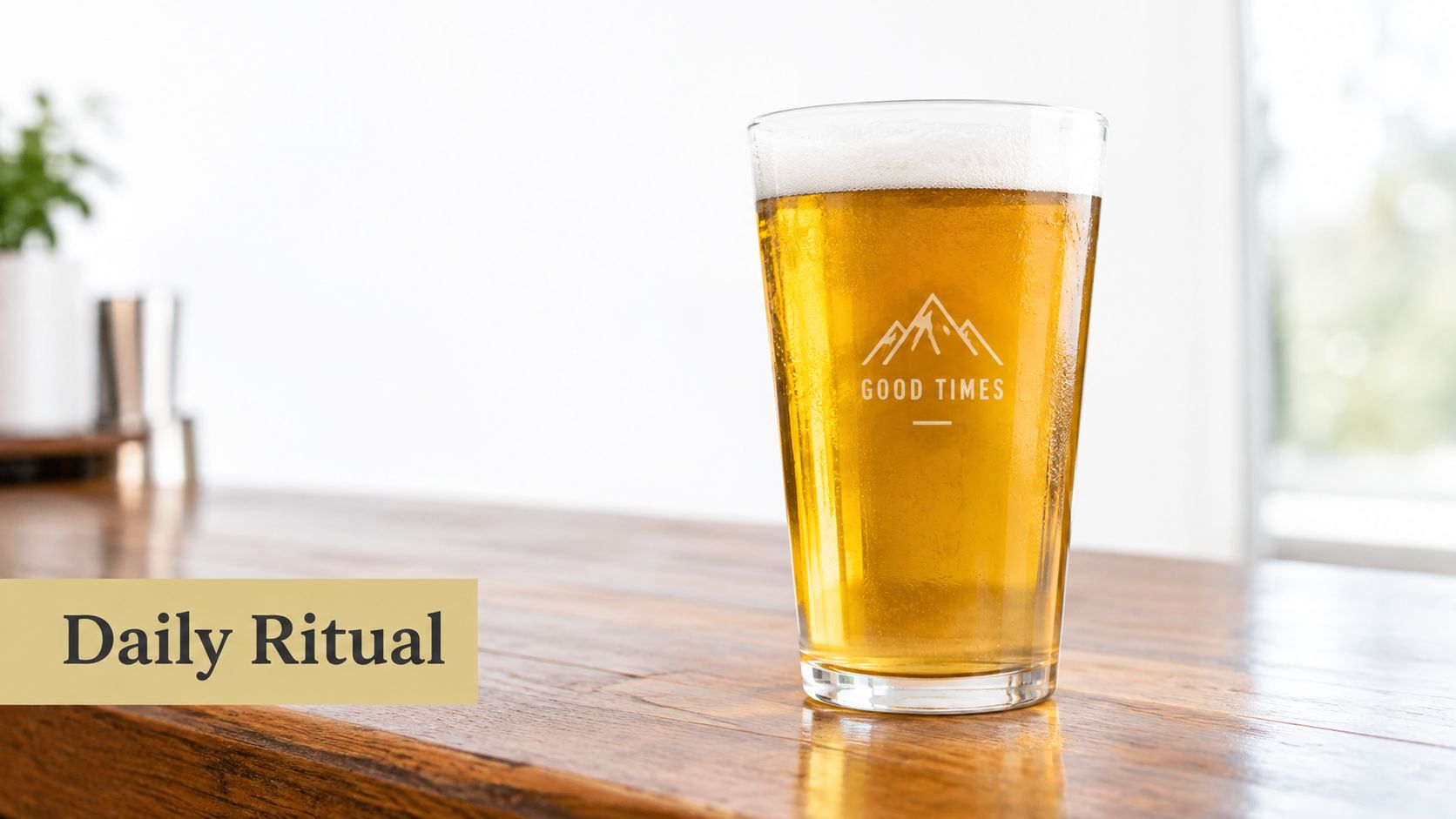
Minimalist branding tends to age better than crowded artwork. A single-color etching, a small emblem, or a name placed in a considered position can communicate more quality than several competing elements. The glass should still look attractive when it contains no drink and when it sits on a table among other objects.
A practical artwork checklist helps prevent avoidable delays:
- Use vector artwork: Supply clean logo files so the production team can scale lines and preserve detail.
- Limit tiny features: Fine text and intricate marks may disappear when etched or printed on a curved surface.
- Confirm placement: Ask whether the design sits on one side, both sides, or wraps around the glass.
- Review contrast: Frosted decoration, transparent print, and colored ink create different levels of visibility.
- Approve a proof: Check proportions, spelling, names, and the relationship between artwork and glass shape.
Functional innovation is appearing in the wider beer-glass category, including temperature-sensitive coatings and embedded sensors, but those features can introduce extra cost and care requirements. For most corporate programs, a well-made glass with durable, restrained customization creates a more dependable impression than a novelty feature that complicates use.
A reliable design makes the glass feel personal first and promotional second.
Pint Glasses Versus Other Corporate Gift Categories
Corporate gifting often involves a choice between visibility and usefulness. Consumables can create an immediate experience but disappear quickly. Electronics can look impressive but may require setup, charging, compatibility checks, or technical support. Apparel offers branding space but introduces personal preferences and sizing issues.
Pint glasses occupy a useful middle position. They arrive ready to use, require no software, and can carry a brand without dominating the object. Their everyday function also gives them a better chance of staying in the recipient's home or entertaining space.
Industry guidance on barware gifts for employees positions personalized pint and beer glasses for employee appreciation, holiday gifting, branded gift sets, weddings, parties, and company events. The same source identifies team-building outings, summer parties, and project wrap-ups as suitable occasions because the glasses are broadly liked and inexpensive to produce in volume.
Compare the practical fit
| Gift category | Strength | Common procurement concern |
|---|---|---|
| Pint glass | Useful, displayable, and easy to personalize | Breakage protection and decoration durability |
| Apparel | Strong brand visibility | Sizing, style preference, and leftover stock |
| Electronics | Perceived technical value | Setup, compatibility, and support |
| Consumables | Immediate enjoyment | Short-lived brand exposure and dietary preferences |
| Novelty items | Event energy and humor | Limited long-term use |
A personalized glass also works across recipient groups. Beer drinkers may use it regularly, while cocktail fans, whisky enthusiasts, and people who prefer soft drinks can still appreciate the glass as part of a home bar or entertaining collection. That flexibility is especially useful when a company needs one gift format for employees, clients, and event guests.
For a coordinated barware package, a beer mug set can complement pint glasses when the event calls for a more substantial presentation. Suppliers also offer bulk and wholesale formats, so corporate buyers can build a consistent program without sourcing every item from a different vendor.
Ordering Guide for Corporate Buyers
The smoothest orders begin with questions that have nothing to do with the logo. Before requesting a quote, define the recipient count, destination, event date, glass format, decoration method, packaging requirement, and acceptable substitutions. That information lets a supplier identify constraints early instead of discovering them after artwork approval.
Confirm the commercial details
Minimum order quantities vary by supplier and process. Laser etching often supports smaller runs than ceramic-frit screening, which can make it appropriate for executive gifts or a focused client list. Larger company programs may benefit from a printed process if the design requires color and the supplier can maintain consistent output across the order.
Turnaround also depends on complexity, quantity, proof approval, packaging, and delivery location. Don't treat an event date as the production deadline. Build time for artwork revisions, sample review, packing, transit, and a small allowance for damaged units or address corrections.
Use a written checklist:
- Request the MOQ: Confirm the minimum quantity for the exact glass and decoration method.
- Ask for a production schedule: Separate proofing, production, packing, and shipping stages.
- Send usable artwork: Provide the file formats and brand specifications the supplier requests.
- Approve a digital proof: Check spelling, logo proportions, print position, and personalization data.
- Order a sample when possible: Inspect the actual glass, finish, weight, and decoration before the full run.
- Clarify care instructions: Get dishwasher guidance in writing for the finished product.
A neutral provider describes its personalised glasses as dishwasher-safe and suitable for corporate events, weddings, wine tastings, and promotional gifts in its glassware range. That's useful positioning, but buyers should still confirm the specific decoration method and care instructions for the model they're ordering.
Packaging deserves equal attention. Individual boxes, presentation sleeves, or gift sets can protect the glass and make distribution easier, while mixed shipments need clear labeling if recipients receive different names or designs. A supplier offering custom barware glasses may also help you coordinate a broader gift package instead of treating the pint glass as an isolated item.
Making the Right Choice for Your Next Gift Program
Choose the glass and decoration method around the program's use, audience, and repeat-order needs. A client appreciation gift may call for a refined tulip or nonic shape with subtle engraving. A summer company event may suit a shaker pint with a bold event mark. A multi-location rollout needs consistent artwork, repeatable decoration, clear packaging, and a blank that the supplier can source again.
Familiarity helps the product earn continued use. Recipients generally understand a pint glass immediately, so the branded item can move from an event table to a home bar without requiring instructions. That practical familiarity matters more to a gift program than historical provenance.
Make the decision with four checks
- Recipient fit: Does the shape and capacity suit the people receiving it?
- Usage fit: Will the glass be used at home, handwashed, or exposed to commercial dishwashing?
- Brand fit: Does the decoration reinforce the organization without overwhelming the glass?
- Procurement fit: Can the supplier meet the MOQ, proofing, packaging, and delivery requirements?
A 500-unit program that reorders in Q4 should specify the glass blank and decoration method in the first purchase order. That gives the supplier a clear reference for the second run and reduces the risk of mismatched glassware, finishes, or artwork.
Custom pint and beer glasses are available in bulk and wholesale formats for business events and corporate gifting, including employee recognition, client appreciation, and multi-location merchandise programs through their glassware selection.
That combination of utility and personalization can keep the glass in regular use instead of leaving it as short-lived promotional merchandise. It also supports coordinated packages for whisky fans, cocktail enthusiasts, employees, or valued clients. ROCKS Whiskey Chilling Stones offers personalized and engraved barware, including whiskey glasses, chilling stones, and gift sets that can complement a customized pint glass program. Explore ROCKS Whiskey Chilling Stones for corporate gifting options and premium barware packages.


