

You're looking at someone's bar cart, trying to work out what they'd enjoy receiving. There's already a favourite bottle, a few glasses and perhaps a cocktail shaker. Would chilling stones be useful, or would a decanter, engraved tray or better glass make the more thoughtful gift?
The easiest way to choose whisky drinking accessories is to stop shopping by appearance and start with the recipient's usual pour. Accessories control temperature, dilution, aroma or presentation. Our gifting assortment is a good fit when you match those functions to a real habit, whether you're buying for a partner's birthday or a roomful of clients.
Which Whisky Drinking Accessory Fits
A gift earns its place when it suits the recipient's regular way of serving whisky. A quick look at their usual pour can guide the choice: whether they reach for ice, pause to smell the drink, or set out glasses for guests.
Whisky drinking accessories by habit and gift use
| Accessory | Best habit | What it changes | Strong gift moment |
|---|---|---|---|
| Chilling stones | Neat pour, dislikes melting ice | Cools with almost no dilution | Birthday or husband gift for a straight drinker |
| Nosing or tulip glass | Slow aroma tasting | Concentrates aroma; can also concentrate ethanol | Connoisseur or anniversary gift |
| Heavy tumbler | Bourbon on ice or simple cocktails | Forgiving serve, less aroma focus | Everyday or staff gift |
| Decanter | Display and shared pours | Presentation, not a flavour guarantee | Wedding or housewarming |
| Wood tray | Serving a set together | Organisation and an engraving surface | Personalised bar-cart gift |
| Cigar accessories | Existing whisky-and-cigar ritual | Pairing ritual, not the drink itself | Executive client gift only if they smoke |
A heavy tumbler, such as an old fashioned or double old fashioned glass, works well for someone who enjoys bourbon over ice. It can also serve simple cocktails or alcohol-free drinks, so it remains useful beyond whisky. A nosing glass has a narrower purpose: choose one when slow tasting is already part of the recipient's routine.
Choose something that earns its shelf space
A decanter suits someone who enjoys arranging a home bar and serving guests. Its value is in the display and pouring ritual, rather than a promise that transferring whisky improves its flavour. For a wedding or housewarming, consider whether the couple has room to display it before choosing a large presentation set.
A wood tray serves a practical purpose. It gathers glasses and accessories for a shared pour and offers a surface for engraving. It can suit someone who entertains but prefers keeping bar items together rather than scattered across a counter.
Cigar tools call for a specific match. Include them when you know the recipient already smokes and enjoys pairing a cigar with whisky. Without that habit, they may go unused, even as an executive gift.
Choose an accessory that supports the recipient's regular serve. A gift linked to an existing routine is more likely to be used than one that assumes a new hobby.
Gifting is one established use for barware. Reanin estimates that premium barware purchased for gifting represented approximately 24% of barware-market revenue in 2025. Birthdays, anniversaries and client thank-yous are all occasions to choose a useful piece.
For two recipients with different habits, choose one main item for each: perhaps a tumbler for the person who pours bourbon over ice and a nosing glass for the slow taster. If they share a bar, a tray can bring the pieces together. Keep each gift focused, with one primary item and at most one companion, so it is straightforward to use and store.
Stones Ice or a Neat Pour
Neat whisky, chilled stones and ice each give a pour a different temperature and dilution. A neat serve preserves the whisky as poured; stones cool it without adding much water, while melting ice gradually changes both strength and balance. Match the gift to the way its recipient drinks.
Whisky educator Richard Paterson is reported to favour whisky around cellar temperature, approximately 15°C/59°F, rather than extremely cold, according to Wine-Searcher's discussion of ice in whisky. That offers a starting point for someone who wants to explore aroma without adding anything to the drink.
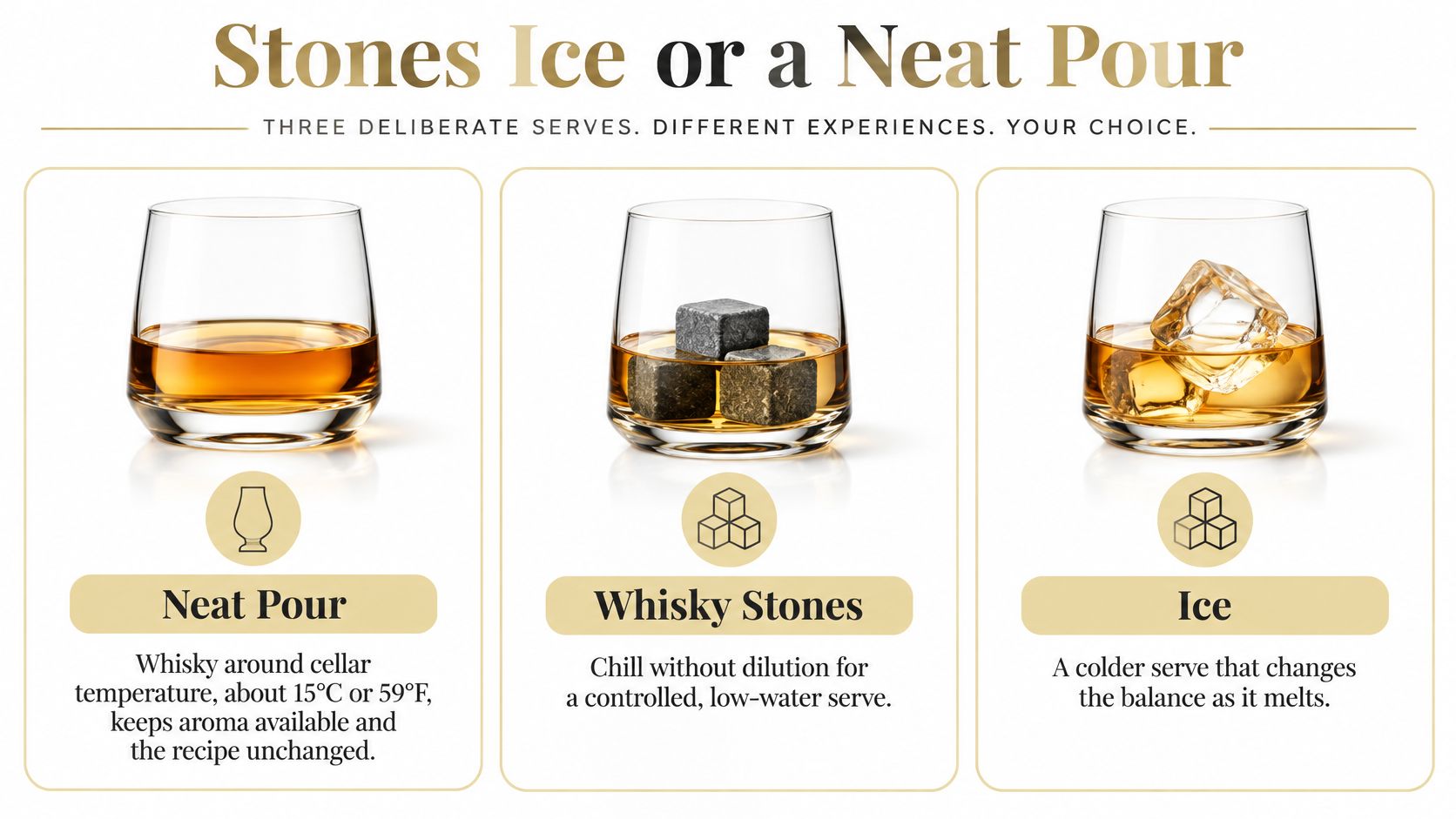
Neat, stones and ice compared
| Serve | Temperature | Dilution | Gift it when |
|---|---|---|---|
| Neat at cellar temperature | Cellar-cool rather than ice-cold | None | Aroma and the original recipe matter most |
| Whisky stones | Cooler than room temperature when properly chilled | Minimal | They want cold without added water |
| Ice | Cold and still changing as it melts | Progressive; substantial dilution can blur style differences | They like high-proof whisky softened or enjoy cocktails |
Stones separate cooling from adding water. They suit a drinker who prefers a cooler pour but dislikes how melting ice changes it. Their cooling is not as intense as ice, so they may disappoint someone who likes a very cold drink that becomes progressively diluted.
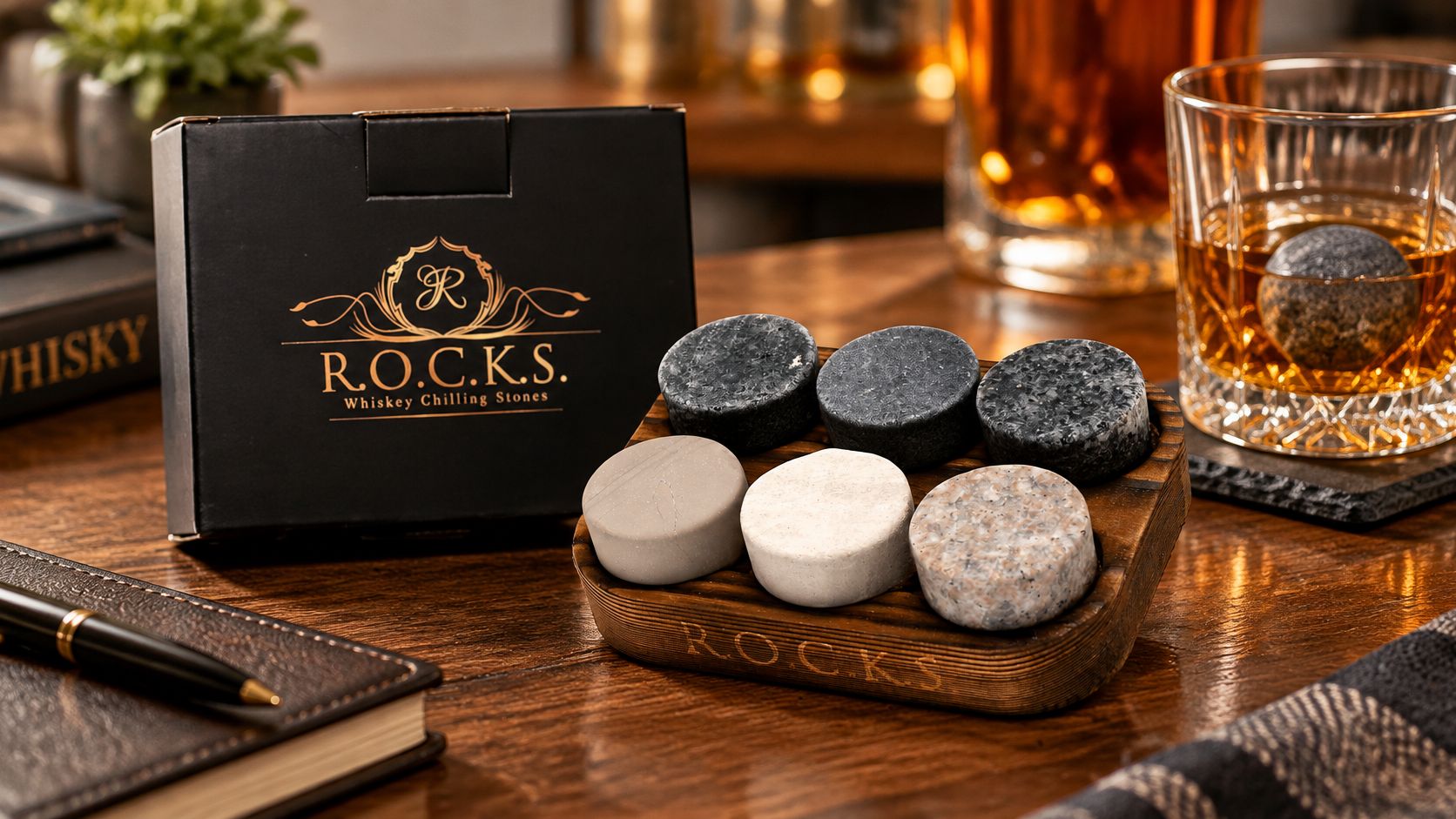
The Original Rocks are handcrafted and hand-polished from granite. They make a fitting gift for someone who likes whisky chilled without much added water, rather than a replacement for ice in every serve.
Ice has its own purpose. Someone drinking high-proof whisky may enjoy the changing balance as it melts. For a cocktail drinker, the colder texture and dilution may already be part of the preferred serve.
Water changes more than strength
A controlled whisky dilution study found that adding water reduced water-loving aroma compounds in the headspace while increasing the relative concentration of more water-averse compounds, including smoky or phenolic compounds. In the samples tested, whisky-style differences became substantially less distinguishable beyond approximately 20% water, although American-versus-Scotch contrasts could remain detectable or increase.
Water is another way to adjust a serve, not a mistake to avoid. A pipette or teaspoon lets the drinker add it deliberately, changing strength and aromatic balance in small steps.
To choose a gift, compare small pours of the same whisky neat, with stones and with ice. Notice which one the recipient enjoys finishing. That habit is a better guide than appearance alone.
If you're comparing different bottles rather than serving methods, keep their temperatures consistent. This whisky stones versus ice guide explains the difference between the two ways of chilling a pour.
How Glass Shape Changes Aroma
A whisky glass is a funnel for smell, not a badge of expertise. Choose its shape for what the recipient wants to notice and how they like to drink.
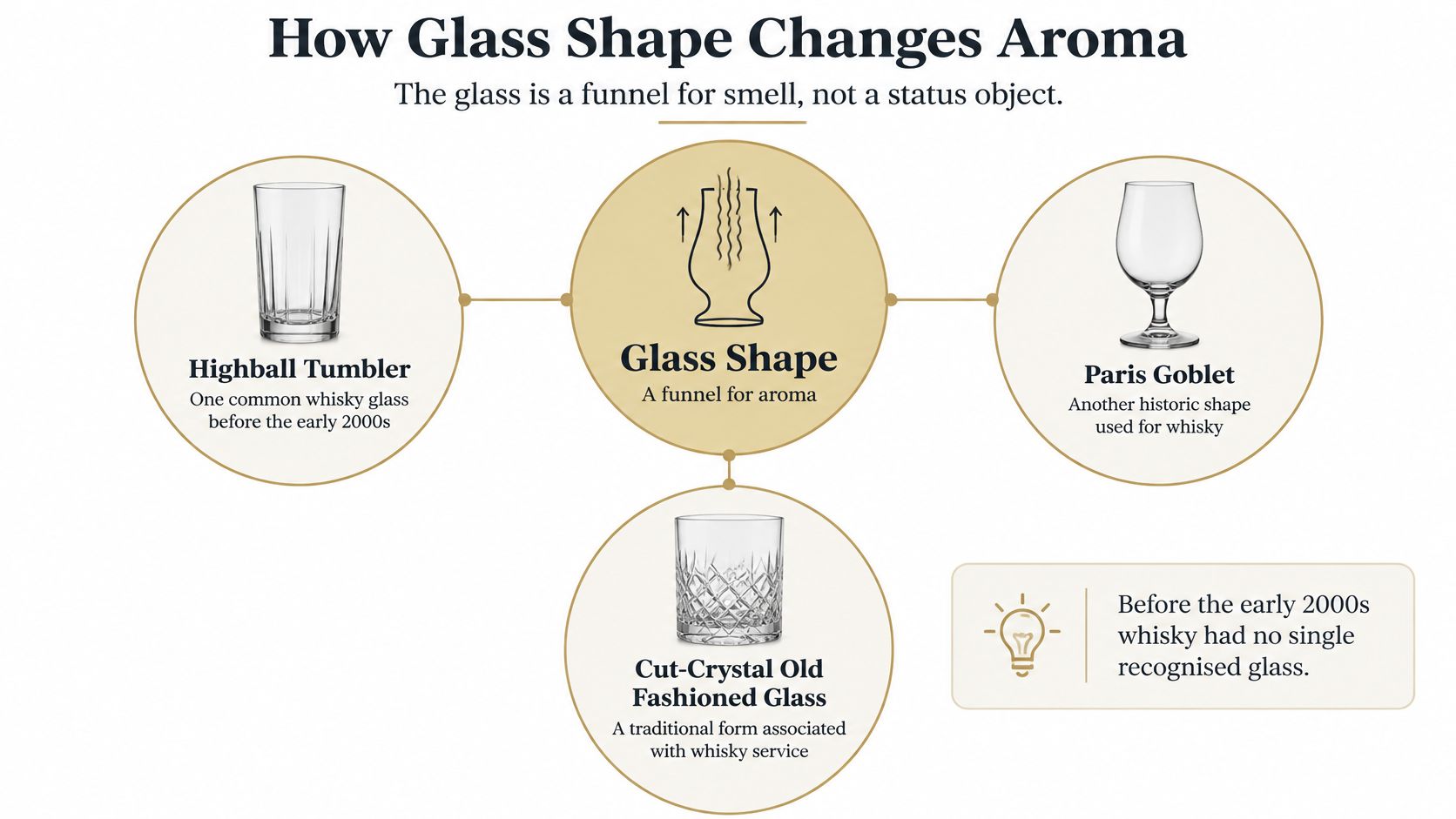
Before the early 2000s, whisky had no single universally recognised glass style, with highball tumblers, Paris goblets and cut-crystal old fashioned tumblers among the formats used, according to Master of Malt's Glencairn history; the Glencairn entered production in 2001, drawing on laboratory nosing copitas and input from master blenders at five major whisky companies. Its inward-curving rim connected the design to tasting rather than decoration alone.
A narrower opening needs a thoughtful pour
Tulip- and bowl-shaped glasses concentrate aroma-active compounds near the opening, but they can also concentrate ethanol vapour enough to temporarily suppress smell at high intensity, as explained in this University of Turku document on whisky aroma and glass geometry. The practical response is straightforward: use a modest pour and let it rest briefly before nosing.
Don't fill a tasting glass as though it were a water tumbler. Leave space above the liquid, bring the glass towards your nose gently and move it away if the alcohol feels sharp. A specialised shape is useful only when the recipient can use it comfortably.
A good tasting glass helps someone explore a bottle. It doesn't turn a disappointing bottle into a better one.
A wider tumbler trades some aroma focus for working room. That makes it a good gifting option for someone who regularly adds a large cube or makes a stirred cocktail. A comfortable rim and stable base matter more here than a dramatic silhouette.
Match the rim to the routine
- For the slow taster: Choose a nosing or tulip glass with room above a modest pour.
- For the ice-and-cocktail drinker: Choose an old fashioned tumbler that accommodates their preferred cube and leaves drinking space.
- For long drinks: Choose a highball when whisky with soda or mizuwari is already part of the recipient's routine.
- For shared evenings: Choose a matching crystal set when the recipient regularly serves a partner or guests.
A coordinated set makes a thoughtful anniversary or small-team gift because the pieces belong together without needing elaborate packaging. Our glassware assortment is a good fit when you want to combine practical use with an engraved name or commemorative detail.
For help evaluating the shapes rather than focusing on appearance, use our guide to choosing whisky glasses. The most attractive gift is still the one that feels natural in the recipient's hand.
Signs of Quality You Can Check
Check the material, contact points and stability before choosing decoration. A product photograph may show how a gift looks, but it cannot reveal whether a rim feels uneven or a tray will fit the recipient's space. Start with the written material description: granite, crystal, solid oak or a named metal finish gives you a concrete point of comparison. A vague phrase such as “premium material” does not.
Quality checks by accessory
| Item | Check | Pass signal | Reject signal |
|---|---|---|---|
| Stones | Material and finish | Solid granite, hand-finished, no grit shedding | Crumbly, sandy or hollow feel |
| Stones | Weight and shape | Heavy for its size, round, sits stably | Light or lopsided |
| Crystal glass | Weight and rim | Comfortable weight, even rim | Thin body unsuitable for everyday handling, uneven rim |
| Crystal glass | Base | Does not wobble on a flat surface | Wobbles when set down |
| Wood tray | Material | Solid oak | Printed veneer when sold as solid wood |
| Wood tray | Engraving and fit | Suitable engraving surface and usable bar-cart footprint | Too small to hold the intended set |
| Metal tools | Finish and balance | Named finish and balanced in the hand | Hollow feel |
For stones, examine the surface when the gift arrives. It should feel smooth rather than sandy, with no loose grit transferring to your fingers. Check that each stone sits securely in the intended glass, then lower it in gently. A stable fit helps keep the stones from knocking against the glass during use.
With crystal, judge weight by comfort, not heft alone. Carefully run a clean fingertip around the rim, then set the empty glass on a flat surface to check for wobbling. Thin glass suits careful use; for everyday drinkware, favour a sturdier body.
Check the whole set, not just each piece
Measure the tray against the glasses and the recipient's shelf or bar-cart space. Leave enough room to lift a glass without catching its neighbour. For engraving, ask to see a proof showing the lettering at its actual relative size, so you can judge whether it will be easy to read.
Metal tools should identify their material or finish rather than relying on colour alone. Hold the handle and consider how it feels during its intended task. A barspoon that feels awkward to stir with is still awkward in a matching gift box. Choose accessories that suit the recipient's existing routine, whether they prefer a neat pour, ice or cocktails, so the gift is more likely to be used.
Before ordering, use this checklist:
- Named material: The description identifies what the item is made from.
- Useful weight: It feels substantial without being uncomfortable.
- Suitable shape: It fits the intended neat, ice or cocktail serve.
- Protective packaging: The pieces can travel securely without excessive disposable filler.
Check each point against the product description and the recipient's available space before placing the order.
Engraving That Still Feels Personal
Personalisation should make the object feel like theirs. A name, shared milestone or short message does that more effectively than filling every available surface.
The U.S. personalised-gifting market was valued at $9.69 billion in 2024 and is projected to reach $14.56 billion by 2030, while 55% of respondents favour personalised messages, according to the U.S. Personalized Gifting Market Outlook announcement on GlobeNewswire. For a gift buyer, the useful lesson is relevance, not complexity.
Give the message enough room
A wood tray accommodates a longer line, a milestone date or a discreet logo. A curved glass usually benefits from initials, a short name or a brief toast. Keep the lettering readable without turning the glass into a noticeboard.
For a personal gift, choose the name the recipient uses. A private nickname can be lovely when you're certain they'd enjoy displaying it; otherwise, a first name is the safer choice. For a company gift, make the recipient's name the main detail and your mark secondary.
These sample lines are starting points, not claims about a particular recipient:
- A first name: Alex
- A household milestone: Morgan, Est. 2026
- A client thank-you: With thanks for your partnership
When you're deciding between a wooden surface and curved glass, Quote My Wall offers a useful resource to compare materials for engraved men's gifts. Consider where the wording will sit before you settle on its length.
Leave room for life after the event
An oversized company logo can make an otherwise useful piece feel like office merchandise. Initials or a small inscription are easier to welcome into a home, and less restrictive if the recipient later passes the item on.
Personalisation test: Would the recipient choose to display this if your company weren't watching?
Check spelling, capitalisation and the engraving proof before approving an order. For corporate lists, keep each recipient's name attached to the correct design throughout approval rather than copying names between separate documents.
We offer engraving on wood trays and glassware, so our gifting assortment can connect an everyday object with a birthday, anniversary, employee reward or client milestone. An engraved tray-and-glass combination is a strong option when the message matters as much as the drink.
Corporate Gifts People Will Use
Recipient fit determines whether a corporate gift gets used. Giftly's corporate-gifting coverage cites a 2024 finding that three-quarters of buyers consider sustainability, up from 4% in 2023, estimates that 40% of corporate gifts end up in landfills, and reports that 62% of companies prioritise personalised gifts while 55% invest in sustainable gifts in separate 2025 reporting. These figures make recipient preferences, packaging and continued use practical considerations when choosing a gift.
Ask a small question before placing a large order
Use a preference question on the event invitation: Which would you use most, tasting glassware, cocktail tumblers, serving accessories or an alcohol-free drinkware option? It lets recipients indicate what fits their habits without requiring a detailed questionnaire about drinking.
Seniority alone does not show an interest in whisky or cigars. For mixed teams, leave cigar tools out and consider drinkware suitable for water or other cold drinks. Only describe glassware as suitable for hot tea when its specifications explicitly support hot liquids.
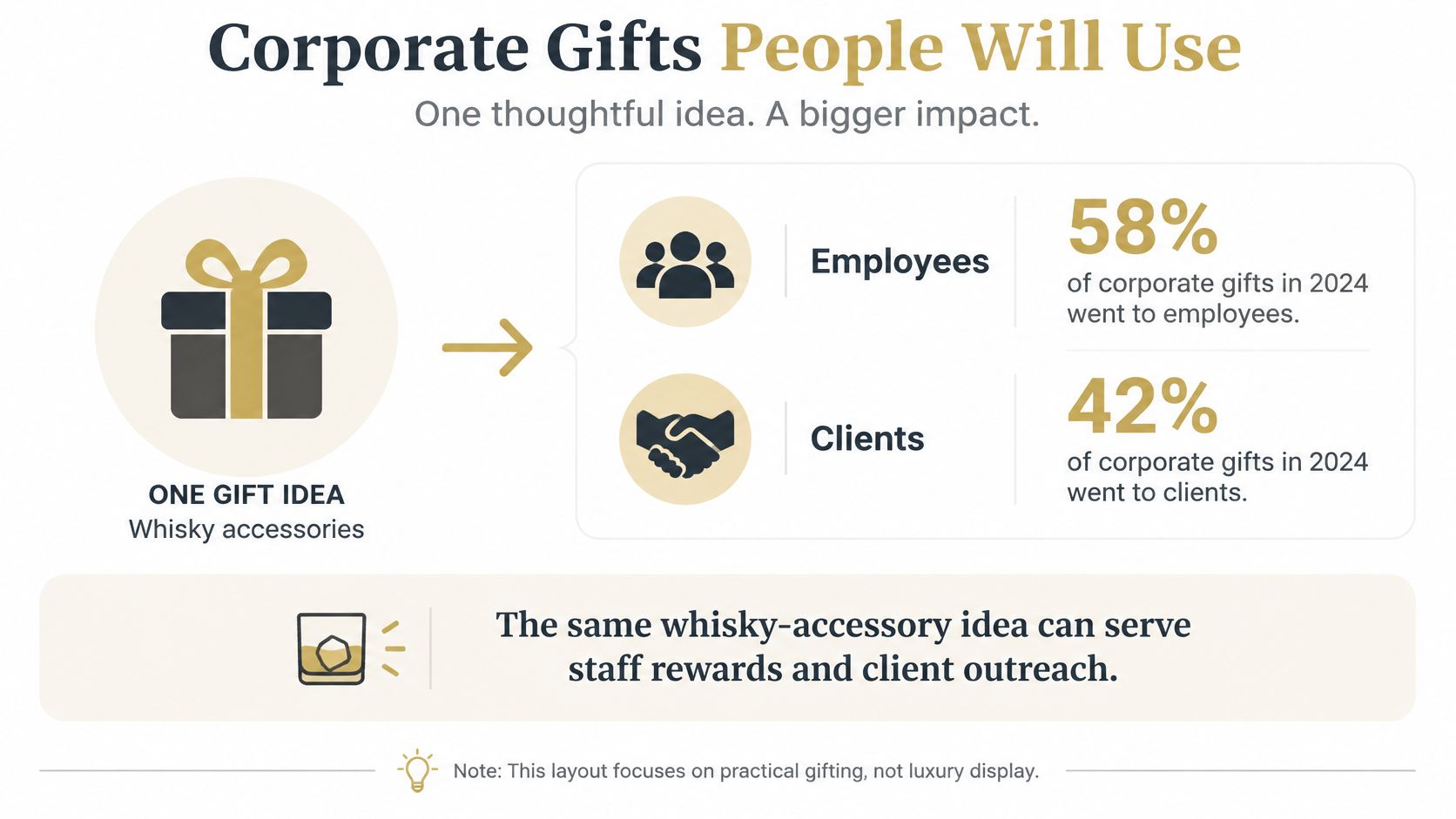
EVERKI's corporate-gifting statistics report that approximately 58% of corporate gifts in 2024 went to employees and 42% to clients. A coordinated accessory programme can serve both recognition and relationship gifting, while varying the contents to suit each group.
Buy for the object's working life
A gift's usefulness depends on more than its first impression. Check how it will be cared for, stored and replaced:
- Check care requirements: Tell recipients whether pieces need hand-washing.
- Reduce packaging waste: Prefer protective, separable packaging with clear recycling routes.
- Plan replacements: Find out whether a broken glass can be replaced without buying an entire new set.
- Respect storage space: Avoid bulky displays for recipients with compact homes or work areas.
- Measure usefulness: Ask whether the gift is being used, not only whether it arrived.
For clients who travel or prefer not to keep home-bar items, HYDAWAY's discussion of packable drinkware for client gifting suggests a different direction. An alcohol-free drinkware option can suit someone whose routine does not include whisky.
Whisky accessories can suit holiday programmes, service anniversaries, prospect meetings and event rewards when the contents match recipients' preferences. ROCKS has a Wholesale section for trade buyers. Before approving a production list, use this custom whisky glasses guide to consider personalisation.
A tangible gift works well when the aim is to give a memorable object. Keep branding discreet and make it straightforward for recipients to take the gift home.
Send a Set They Will Use
A useful gift starts with a habit, not a box. Does the recipient drink bourbon neat, prefer a cooler pour, enjoy nosing whisky, or host friends? Match the accessory to that routine, then consider personalisation and delivery.
Ready sets by occasion
| Occasion | Product or gift direction | Habit it fits |
|---|---|---|
| Bourbon drinker | The Original Rocks granite whiskey chilling stones | Cooling a neat pour without adding ice |
| Anniversary or collector | Personalised whiskey glasses | Sharing favourite bottles or serving occasional cocktails |
| Wedding or housewarming | A personalised gift for whiskey or spirits lovers | Displaying and sharing drinks at home |
| Tasting-curious friend | The Connoisseur's Set – Nosing Glass Edition | Taking time to notice whisky's aroma |
| Client event | An engraved wood tray or glassware | Hosting, with useful pieces to keep at home |
The Original Rocks stones are handcrafted and hand-polished from granite. They offer a way to cool a drink while avoiding the dilution that comes from melting ice. The recipient can still choose how to serve each pour, which makes stones a practical match for someone whose preference varies.
For someone who enjoys tasting, the Connoisseur's Set – Nosing Glass Edition provides a focused starting point. A nosing glass directs attention to aroma, much as a frame draws the eye to one part of a picture. For a couple or a new household, personalised glassware gives shared pours a place in the home without assuming they need a full bar.
Corporate gifts benefit from the same habit-first approach. An engraved wood tray or glassware can suit client and prospect gifting, premium events, or employee rewards. Keep the engraving restrained and useful: a name or short message can make the gift personal while leaving the item suitable for regular use.
Add a useful care card
A brief care card helps the recipient look after the gift without turning the package into a manual. Keep the instructions specific to the pieces included, and avoid adding accessories just to make the parcel larger. A gift that fits the recipient's routine is more likely to earn a place in regular use.
Delivery timing matters if the gift is for an event. ROCKS offers free, secure, tracked shipping, with an estimated arrival time of 3 to 5 business days. Treat that as a lead-time estimate rather than a guaranteed deadline, and confirm how engraving affects timing before placing the order.
The final choice can stay simple: match the accessory to the recipient's usual pour, settle on any engraving, and check delivery timing. ROCKS sells whiskey chilling stones, glassware and personalised barware gifts for individual recipients and corporate occasions. Visit ROCKS Whiskey Chilling Stones to choose a gift that suits the way they drink.


