

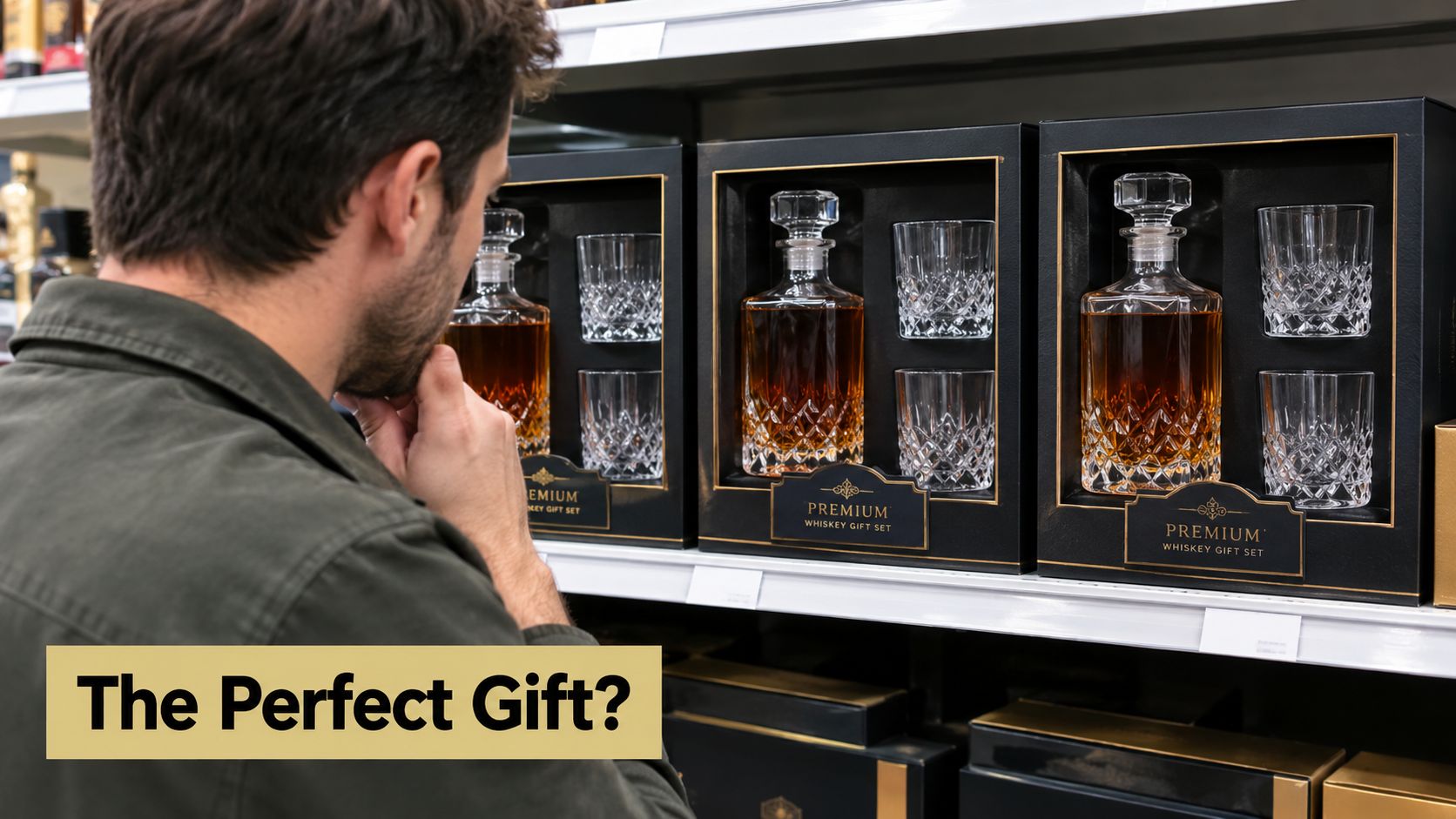
You're standing in front of three gift sets that look almost identical. One has a decanter, one has heavier tumblers, and one offers a small engraving panel. You can already hear the question in your head: will the recipient use it, or will it disappear into a cabinet after the celebration?
The right monogrammed whiskey glasses and decanter set isn't just the prettiest option. It's the one that matches the occasion, the recipient, the way the gift will be used, and the level of personalization that feels meaningful rather than automatic. ROCKS offers engraved glassware, whiskey tumblers, and decanter sets that fit personal milestones, weddings, housewarmings, client gifts, employee recognition, and premium company events.
Why Monogrammed Whiskey Glasses and Decanter Sets Just Work
A decanter set works because it combines display value with a practical ritual. The recipient can place it on a bar cart, use it for a favorite bourbon or scotch, and remember the person or company that gave it to them each time they pour. That combination makes it more useful than a decorative object and more personal than standard drinkware.
The category also has strong commercial momentum. The global branded glassware market was valued at $13.58 billion in 2025 and is projected to reach $24.82 billion by 2034, implying a 6.8% CAGR, according to Dataintelo's branded glassware market analysis. Whiskey glasses represented 15.8% of market share in 2025 and are forecast to grow at a 7.1% CAGR, while personalization includes monogrammed and engraved glassware for premium gifting and corporate use.
That growth doesn't mean every personalized set is a smart purchase. It means buyers have more choice, and the details matter more. Before browsing, decide five things:
- Personalization format: Initials, a full name, a date, a logo, or a short message each creates a different emotional effect.
- Engraving method: The mark should survive regular handling and cleaning, not merely look impressive when the box is opened.
- Glass and crystal material: The vessel must suit serving, display, and any longer holding period.
- Set coordination: The tumbler, decanter, engraving placement, and overall weight should look deliberately matched.
- Use case: A husband's anniversary gift calls for a different treatment than a client thank-you or employee award.
A buyer who wants to understand the decanter's role before choosing a set can also review this practical guide to what a decanter is used for. The important point is simple: don't buy a decanter because it completes a gift box. Buy it because the recipient will enjoy seeing it, handling it, and using it.
Choosing the Right Personalization Format
Most buyers stop at initials because initials are easy. That's also why they can feel impersonal when the occasion calls for something more specific. Treat the inscription as part of the gift design, not as a final checkbox on the product page.
Match the inscription to the relationship
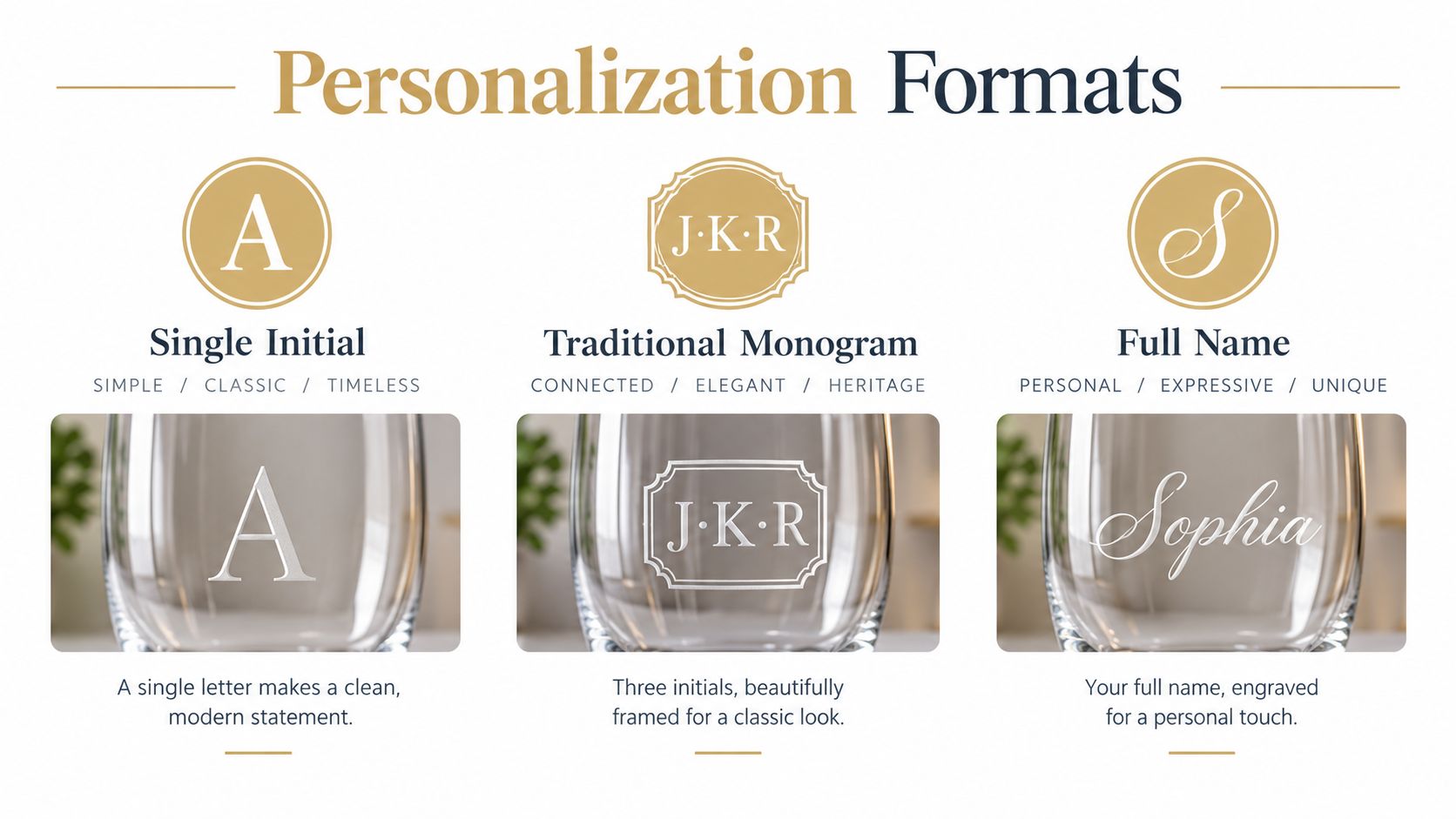
A single initial creates a restrained, elegant result. It suits someone with a minimalist bar cart or a recipient whose full name would make the glass feel too formal. A traditional three-letter monogram feels more established and works well when the recipient already uses monograms on accessories or stationery.
A full first name or surname reads clearly from across a table and feels more deliberate. It's a strong choice for a husband, father, mentor, or employee because the gift identifies the person directly rather than relying on a code only close friends understand.
Paired names belong on wedding and anniversary gifts. They turn two matching glasses or a decanter set into a record of the relationship. Add a commemorative date when you want the piece to function as a keepsake tied to a specific day.
For a milestone birthday, retirement, or major personal achievement, a short message or inside joke can be more valuable than a conventional monogram. Keep it concise. Long inscriptions become difficult to read on curved glass and can make a refined gift look crowded.
Use corporate personalization with more judgment
A company logo is the obvious corporate option, but it isn't always the best one. A logo alone can make a premium gift feel like branded merchandise. For a client or employee, combine the recipient's name with a discreet logo when the design allows it. The name creates ownership, while the logo identifies the organization behind the gesture.
This shift toward occasion-specific personalization reflects the wider direction of the category. Engraved and personalized glassware reached $38 million in tracked online sales in 2025, with revenue expected to grow another 20% to 50% in 2026, while indexed revenue increased 42% from February to July across tracked retailers, according to Grips Intelligence's category analysis. The important buying signal isn't just category growth. It's the move away from generic monogramming toward inscriptions that reflect the event and recipient.
For a polished tasting gift, The Privilege Collection, Reserve Glass Edition uses crystal glass designed to highlight the color, brilliance, and clarity of scotch or bourbon, giving a personal inscription a refined surface rather than a novelty feel.
Use this quick framework:
- Husband or partner: A single initial, traditional monogram, or full name.
- Wedding couple: Paired names, paired initials, and the wedding date.
- Employee award: Full name plus the recognition date, with a restrained company logo if appropriate.
- Client gift: Recipient name plus logo, not a large logo alone.
- Milestone birthday: A short message or private reference that the recipient will understand immediately.
The best format is the one that tells the recipient why this particular glass or decanter belongs to them.
Engraving Methods Compared
Personalization method affects more than appearance. It determines how the mark ages, how the glass should be cleaned, and whether the production process introduces avoidable structural stress.
Sand-carved engraving
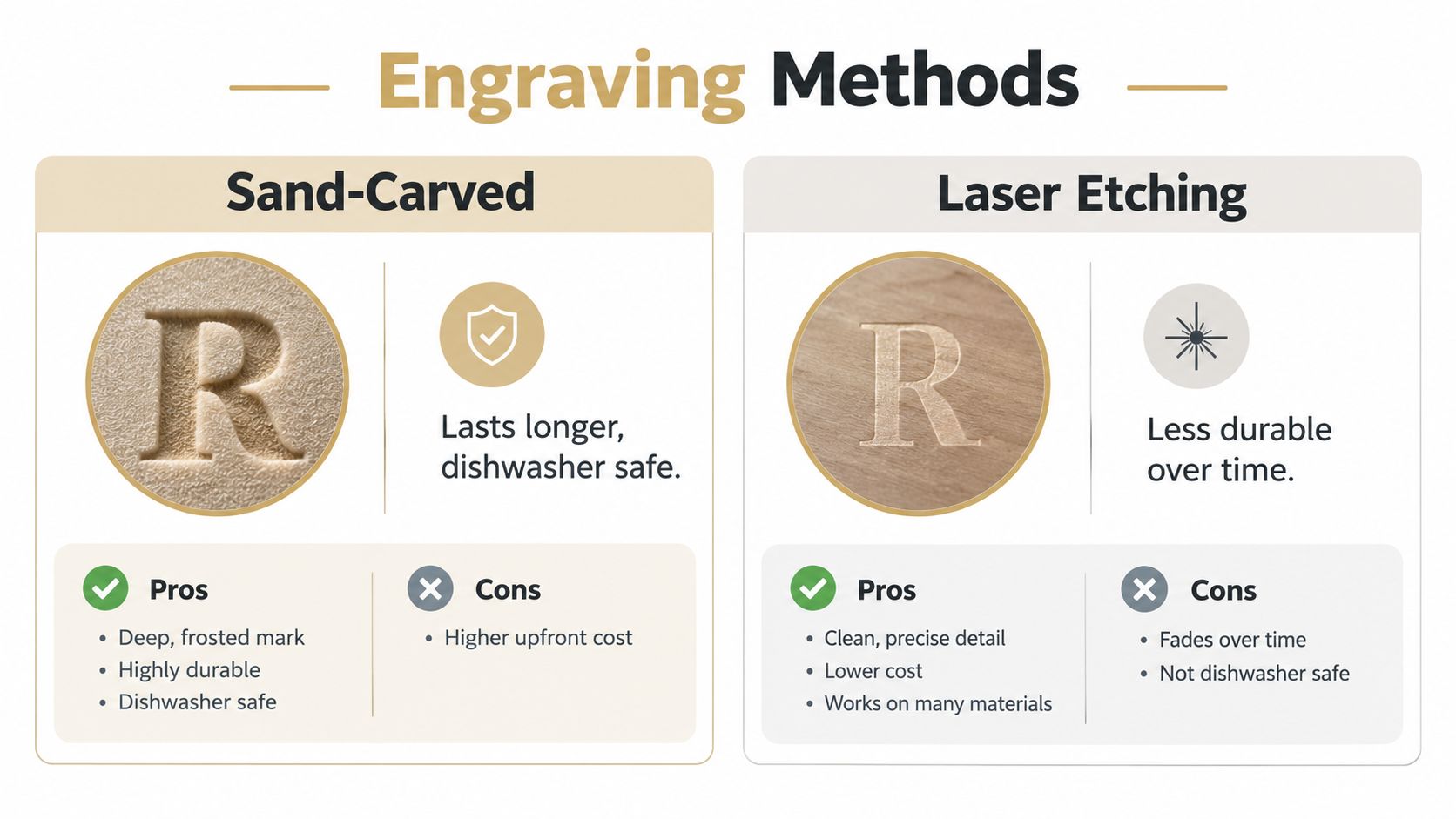
Sand-carved marks create a frosted, tactile finish with a premium presence. The process removes material from the surface rather than laying ink on top, and sand-carved personalization is generally permanent and dishwasher-safe. It's the strongest visual choice when you want the monogram to feel integrated into the glass.
The risk comes from excessive depth. Removing too much material near the rim can weaken its integrity, especially on a thin-walled tumbler. Ask the supplier whether the design stays shallow and evenly distributed, rather than assuming deeper always means better.
Laser engraving
Laser engraving delivers precise lettering, logos, and repeatable placement across a corporate order. It's generally permanent and dishwasher-safe when produced correctly, which makes it a strong default for names, dates, and clean one-color logos.
Calibration matters. Poorly calibrated laser work can create localized micro-fractures, particularly on thinner glass. A credible supplier should favor thicker walls, controlled engraving depth, and annealing after engraving to relieve stress in the material.
Printed and painted marks
Printed or painted personalization can support colorful artwork and quick production, but it wears faster than an engraved mark. Dishwasher exposure, handling, and repeated contact with the fingers can gradually damage the surface treatment. I'd reserve it for a short-term event item or a design where color matters more than permanence.
Supplier question: Ask whether the glass is engraved into the material or decorated on top of it, then ask about dishwasher testing and annealing. A low price isn't a bargain if the mark fades or the rim fails.
For more background on the process, this guide explains how glass engraving works. My default recommendation is sand-carved engraving or properly annealed laser engraving on thicker glass or crystal. Choose printing only when its visual effect improves the gift.
Glass Styles, Crystal Choices, and Decanter Sizing
Start with the drinker, not the product specification. A tasting glass should show color and concentrate aroma. A heavy rocks glass should feel stable in the hand and leave room for neat whiskey, water, or ice. A highball belongs to a longer mixed drink, while an unbreakable outdoor tumbler makes more sense for patios, travel, or gatherings where breakage is a concern.
The decanter adds another decision. Some buyers want a sculptural centerpiece for a bar cart. Others want a practical vessel for serving. Those are not identical requirements, particularly when the decanter may hold spirits for an extended period.
A practical comparison
| Style | Crystal Type | Capacity | Best For |
|---|---|---|---|
| Crystal tasting glass | Lead-free crystal preferred | Small tasting pour | Scotch, bourbon, color and aroma appreciation |
| Heavy rocks tumbler | Lead-free crystal or quality glass | Standard neat or mixed serving | Whiskey neat, water, or one large cube |
| Highball glass | Quality glass or lead-free crystal | Longer mixed drink serving | Highballs and spirit-forward cocktails |
| Outdoor tumbler | Durable, unbreakable material | Casual serving | Patios, travel, and event use |
| Display decanter | Lead-free crystal or borosilicate glass | Matched to the intended serving set | Bar-cart presentation and regular serving |
| Storage-oriented decanter | Lead-free crystal or borosilicate glass | Matched to the holding period | Repeated use where spirits may remain inside |
Choose safer materials for repeated use
Leaded crystal deserves careful handling in a gifting context. Lead can leach into spirits over time, and Canadian public-health guidance recommends limiting crystalware to serving rather than storage. The decanter safety guidance from Advanced Mixology also explains that U.S. and EU definitions of crystal use different lead thresholds.
For a premium gifting set intended for repeated use or longer holding, lead-free crystal or borosilicate glass is the practical global default. It gives the recipient the clarity and presentation associated with fine glassware without making storage safety an afterthought.
A crystal tasting silhouette, such as the Soleil Glass Edition, suits someone who enjoys examining a spirit as much as drinking it. A heavier tumbler silhouette is better for a bourbon drinker who values a substantial grip and a stable base.
Don't choose decanter size in isolation. Match it to the number of tumblers, the recipient's normal serving style, and whether the set will sit on a compact bar cart or a larger home bar. A decanter that overwhelms two small tasting glasses feels mismatched, while a small vessel paired with a full entertaining set looks impractical.
Pairing Glasses and Decanters into a Cohesive Set
A monogrammed set should look designed, not assembled from whatever pieces happen to be available. The glass and decanter need a shared visual language, including similar clarity, weight, geometry, and engraving treatment.
Start by comparing the material and feel. A heavy crystal decanter paired with thin-rim budget tumblers creates an obvious quality gap. The reverse can also look awkward, with delicate glasses beside a decanter that feels too bulky for the occasion. The pieces don't need to be identical, but they should appear to belong on the same bar cart.
Design rule: Match the engraving style before matching the lettering. A sand-carved decanter beside laser-marked glasses looks less intentional than a coordinated design with slightly different silhouettes.
Capacity should follow the number of glasses and the intended serving pattern. A set for two intimate tastings can use a more compact decanter, while a client or event gift designed for shared serving needs a vessel that won't feel undersized. Check the practical serving relationship before ordering, rather than choosing the decanter solely for its shape.
Engraving placement matters as much as the design itself. Put the monogram where it remains visible when the decanter is on the bar cart and the glasses are standing upright. A logo that disappears behind the base or a name hidden by the spirit defeats the purpose of personalization.
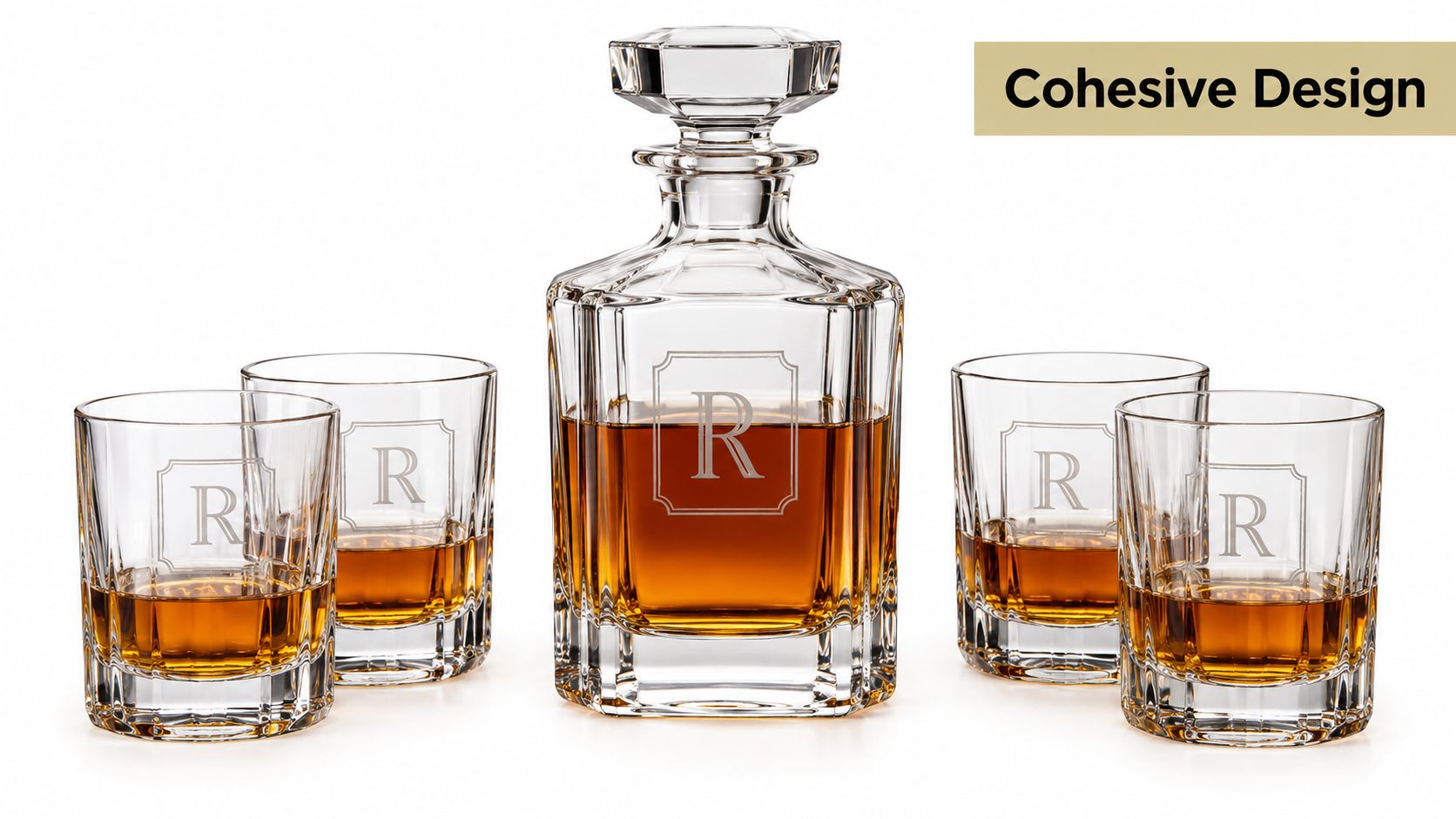
Use one of these starting points:
- Personal milestone: One decanter, matching tumblers, and a single initial or full name. Keep the design quiet enough for daily display.
- Wedding or anniversary: Paired initials or names across the set, with the date placed on the decanter or a less crowded area.
- Corporate event: Matching glasses or a coordinated decanter set with recipient names and a discreet logo. Keep every piece on the same layout template.
ROCKS' assortment of barware, engraved glassware, whiskey tumblers, and decanter-style gifts is a good fit when you want to build around the occasion rather than force every buyer into one standard set.
Corporate Gifting and Event Use Cases
Corporate buyers need gifts that survive the event itself. A branded item that sits in a drawer has limited value. Drinkware earns more attention when recipients use it at home, place it on a bar cart, or bring it into a regular hosting routine.
Branded drinkware already has strong repeat-use potential. 53% of consumers own branded drinkware, and half of those owners use it at least two to three times per week, according to Gift a Feeling's corporate gifting statistics. That repeated visibility makes monogrammed whiskey glasses and decanter sets a practical option for client appreciation, employee recognition, and prospect gifting.
Monogramming alone can be the wrong call for a corporate order. A generic company monogram may identify the sender, but it doesn't necessarily make the recipient feel chosen. Add the recipient's name whenever the order process and design allow it, particularly for smaller, higher-value gifts.
Match the format to the event
Client gifts should carry the recipient's name with a discreet company logo. The name makes the piece feel commissioned for the client, while the logo provides brand recognition without turning the glass into an advertisement.
Employee awards benefit from a full name and recognition date. That format records the individual achievement and gives the recipient a reason to keep the piece visible beyond the presentation ceremony.
Wedding favors work best with paired initials or the couple's names. Buyers looking for an unusual present can also browse this guide to find unique wedding presents for ideas that feel more personal than standard registry items.
Holiday gifts can carry a short message, especially when a company wants warmth rather than a formal award tone. Keep the company mark secondary and let the inscription sound human.
Board-level gifts call for restraint. A premium set with a monogram only can feel more refined than a large logo, particularly when the recipient already knows the company well.
For corporate buyers, the case for engraving is also about perceived quality. Companies are increasingly choosing permanent laser engraving over printed logos for premium gifts, while selecting fewer, higher-quality items instead of distributing more disposable merchandise. That makes a coordinated decanter and glass set a strong fit for a smaller client list, executive event, employee milestone, or carefully selected prospect campaign.
For help choosing a format for client appreciation, use this guide to corporate gift ideas for clients. The right order isn't the one with the largest logo. It's the one recipients will keep in use.
Ordering, Turnaround, Care, and Pricing Basics
A polished result starts before the engraving file reaches production. For a personal order, confirm the spelling, initials, date format, and inscription placement. For a corporate order, prepare a clean logo file, identify the correct version of the brand mark, and decide whether each recipient receives the same design or an individualized name.
Ask for a proof when the inscription includes a logo, multiple lines, unusual lettering, or a date. Proof approval prevents the most expensive mistake in personalized gifting, which is producing a large order with the wrong artwork or text. Confirm the supplier's production schedule, proof deadline, rush options, and minimum order requirements before promising a delivery date to a client or event organizer.
Use this buyer's checklist
- Artwork: Supply a high-quality logo file and clarify whether the supplier prefers a vector format.
- Text: Send names exactly as they should appear, including capitalization, punctuation, and accents.
- Proofing: Approve the layout before production, especially when the design will be repeated across a corporate run.
- Order size: Ask whether single pieces, matched sets, and larger corporate quantities follow different production terms.
- Method: Confirm whether the mark is laser-engraved, sand-carved, printed, or painted.
- Material: Ask whether the decanter is lead-free crystal or borosilicate when it may hold spirits beyond immediate serving.
Personalization complexity affects the final cost. Initials typically require less artwork preparation than a detailed logo, while a matched decanter and glass set requires more coordination than one engraved tumbler. Material and crystal type establish the baseline, then engraving method, design complexity, set coordination, and corporate quantity shape the final quote.
Care should follow the decoration and material. Properly sand-carved or well-produced laser engraving is generally dishwasher-safe, while printed or painted marks deserve gentler handling. I recommend hand-washing delicate or thin crystal pieces when the goal is to keep the rim and surface looking clear, even when the engraving itself can tolerate a dishwasher.
For decanters, rinse promptly after use and avoid harsh cleaning products that can leave odors or residue. A gentle rice-and-water cleaning approach can help loosen remaining spirit residue without aggressive scrubbing. Store the set away from direct sunlight, and keep the decanter empty when it isn't being used for serving.
Most barware, including whiskey glasses and decanters, can be laser-engraved or printed with a company logo, recipient name, commemorative date, or short message without affecting usability. Corporate buyers are increasingly selecting permanent laser engraving over printed logos for premium gifts and choosing fewer, higher-quality items per recipient, as described in this overview of the changing corporate gift standard.
Choose the inscription before you choose the box, then build the set around the recipient and occasion. ROCKS Whiskey Chilling Stones offers whiskey glasses, barware, gift sets, and engraving options suited to personal celebrations and corporate gifting, so visit ROCKS Whiskey Chilling Stones to find a coordinated gift that will be used, displayed, and remembered.


