


You've poured a two-finger measure of bourbon you want to enjoy, and now you're hesitating. Ice will cool it, but melting water may soften the proof and reshape the flavor. Drinking it neat preserves everything, but the alcohol may feel sharper than you want.
That small decision explains why use whiskey stones. They offer a modest, controlled chill without adding meltwater, making them useful when you want the spirit cooler but don't want dilution to lead the experience. They're not a universal replacement for ice. They're a precision tool for particular pours, tasting preferences, and thoughtful gifting moments.
The Honest Case for Whiskey Stones
Whiskey stones solve a simple tension. You want to take the edge off a room-temperature pour, but you also want to keep the whiskey's original proof and flavor structure. Stones absorb cold in the freezer and transfer it gradually to the drink, so the spirit cools without the water that melting ice introduces.
Independent testing found that soapstone-style stones cooled a 2 oz pour by about 6–10°F, while ice lowered the same drink by more than 22°F. That difference matters. Stones provide a gentler temperature change, while ice delivers stronger cooling and progressive dilution. Independent testing of whiskey stones and ice helps put the distinction in practical terms.
Practical rule: Choose stones when preserving the pour matters more than making it very cold.
The modern whiskey-stone product dates commonly to 2007, when Andrew Hellman introduced soapstone stones after drawing inspiration from stones kept cold at his grandfather's Swedish summer home. The idea addressed an old drinking problem with a modern barware accessory, cooling spirits while avoiding the water created by melting ice. This history of whiskey stones gives useful context for the product's rise.
For a clear explanation of their real-world performance, learn whether whiskey stones work. The short answer is yes, but their value depends on the drink, the serving temperature, and your attitude toward dilution.
What Whiskey Stones Actually Are
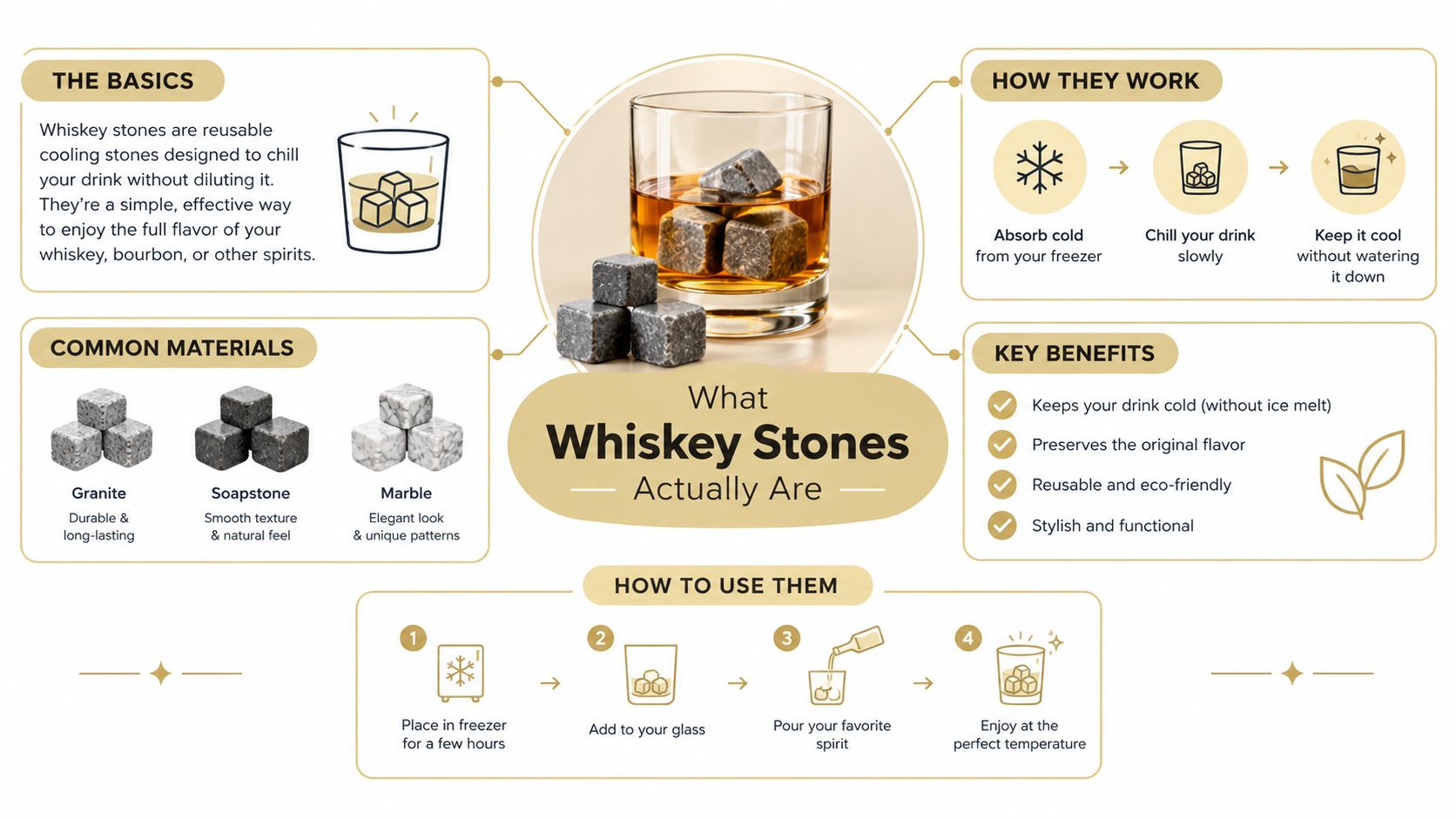
Whiskey stones are small chilling pieces made from materials such as soapstone, granite, or stainless steel. You place them in the freezer, then add them to a glass before or after pouring whiskey, bourbon, scotch, or another spirit you plan to sip neat.
The cooling process is straightforward:
- Freeze the stones. They absorb cold from the freezer.
- Place them in the glass. Their chilled surface comes into contact with the spirit.
- Let them transfer cold gradually. The drink cools, but the stones don't melt.
- Rinse and dry them afterward. That keeps the next pour clean and neutral.
Soapstone is popular because it's dense, smooth, and generally flavor-neutral. Granite has a heavier feel and can provide a similarly steady chill. Stainless steel chills quickly and may become visibly frosty, which some drinkers enjoy and others find too abrupt for a delicate pour. Shapes vary from traditional cubes to rounded pieces, and sets are commonly packaged in compact quantities intended for a single tumbler.
The key distinction is between sensible cooling and the cooling produced by a phase change. Ice draws substantial heat from a drink as it melts, but that melting adds water. Whiskey stones transfer cold without changing into liquid, which is why they preserve the original proof.
Non-porous or properly finished materials also make repeated use practical across different spirits. Still, you should follow the care instructions for the specific material, especially with natural stone. For a closer look at construction and material choices, see what whiskey stones are made of.
Stones vs Ice vs a Splash of Water
There isn't one correct way to temper whiskey. Stones, ice, and water each change the drinking experience differently, so the best choice depends on whether you want cooling, dilution, aroma development, or a combination.
| Method | Temperature Effect | Dilution | Aroma Impact | Best For |
|---|---|---|---|---|
| Whiskey stones | Gentle, modest cooling | None from the stones | Keeps the original concentration intact | Small neat pours and high-proof spirits |
| Large ice | Stronger, colder cooling | Gradual dilution as the ice melts | Can soften intensity and change the profile over time | Casual sipping and drinks that benefit from water |
| Splash of water | Little direct cooling | Immediate, controlled dilution | Can open aromas and soften alcohol | Tasting high-proof whiskey and exploring the nose |
Large ice works well when you want a drink that becomes softer as you sip. The melting water isn't automatically a flaw. The Oxford Companion to Spirits & Cocktails explains the role of ice, noting that much of ice's cooling effect comes from melting, which dilutes the beverage.
A small splash of water takes a different route. It gives you control over dilution from the beginning, and many tasters use it to reduce ethanol intensity and explore aromas. The key is to add gradually. A few drops may be enough for one whiskey, while another may become more expressive with a larger splash.
Stones suit the drinker who wants a cooler pour with no added water. Ice suits someone who wants a colder, evolving drink. Water suits someone who wants to tune aroma and balance directly. Treat the choice as a flavor decision, not a contest between accessories.
How to Use and Care for Them
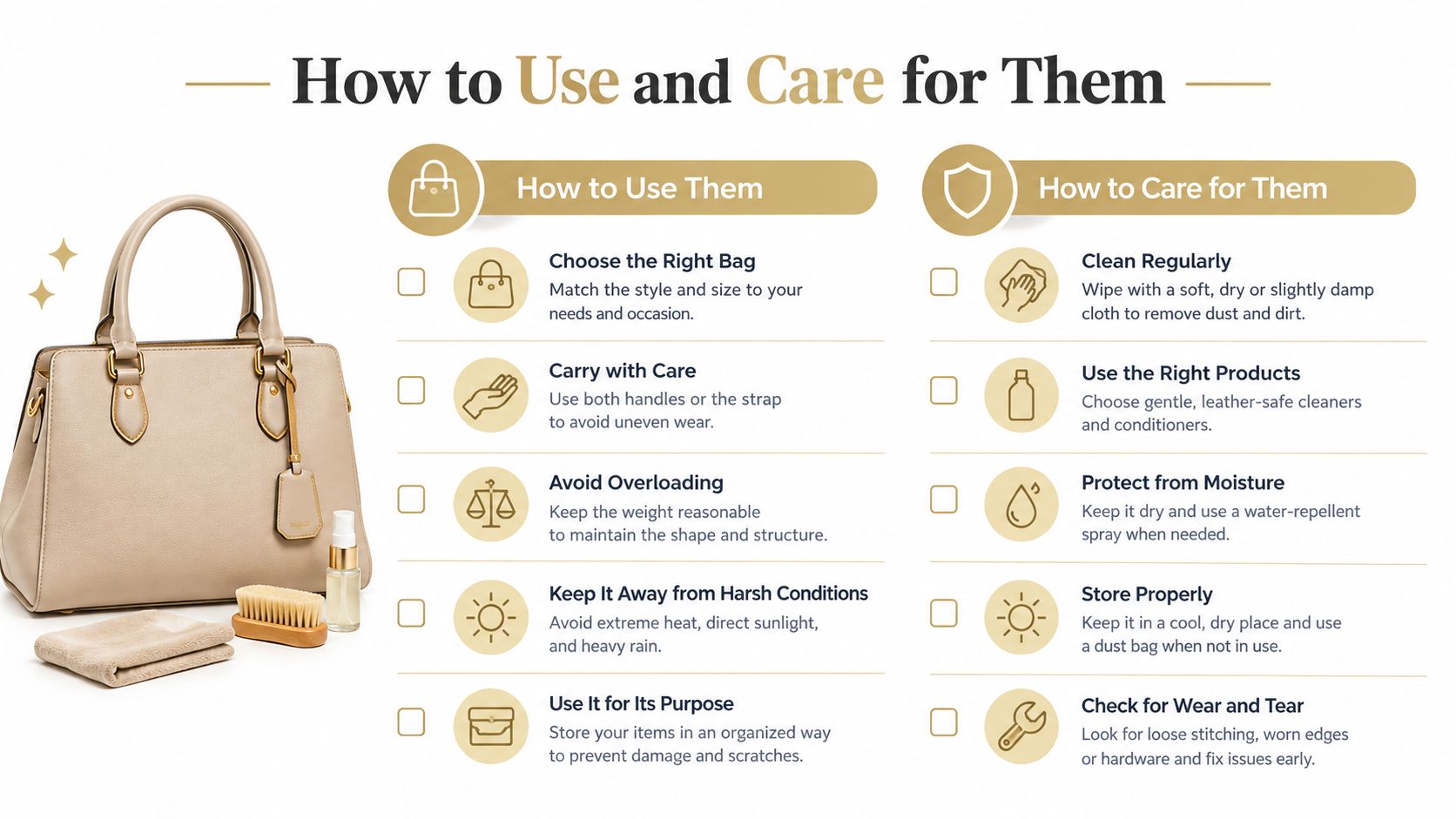
Whiskey stones work best when they become part of a small routine rather than a gift that stays in a drawer. Start by rinsing new stones according to the manufacturer's guidance, then dry them completely before freezing. A dry, sealed storage bag or dedicated box helps prevent freezer odors from reaching the stones.
For a steady chill, freeze them for at least four hours. A quick rinse before use can remove dust or storage residue, but natural stone care varies, so avoid assuming that every material should receive the same treatment. Soapstone and other porous materials can retain detergent, making a careful rinse and thorough drying especially important.
A simple serving routine
- Chill the stones. Keep them in a sealed bag or their storage case.
- Prepare the glass. A sturdy rocks glass gives the stones room to move.
- Add two to four stones. Start with fewer if you prefer a very subtle chill.
- Pour the whiskey. Let the spirit make direct contact with the cold surfaces.
- Taste before adjusting. You can always add another stone, but you can't remove dilution once ice has melted.
Cold retention depends on the glass, the room, and the volume of whiskey. In many home-serving situations, stones remain useful for roughly twenty to forty minutes, though the chill will gradually soften.
Cleaning and storage
Hand-wash stones with care, using mild soap only when the material and manufacturer permit it. Rinse thoroughly, dry them fully, and store them in a clean pouch or box. Inspect natural stones for cracks periodically, and don't use pieces that look damaged.
Best Whiskey Styles for Stone Chilling
Stone chilling makes the most sense when water could flatten a flavor profile you want to study or preserve. Cask-strength and high-proof bourbon are natural candidates. A gentle chill can make the alcohol feel less forceful while keeping the whiskey's caramel, oak, and vanilla character concentrated.
Single malt scotch can also work well, particularly when you want to maintain a spirit's fruit, spice, smoke, or cask influence without immediately changing its concentration. A modest temperature reduction may make the pour feel more approachable while keeping the tasting experience close to the original bottling.
Irish single pot still whiskey is another reasonable match for a light chill. Its grain sweetness and spice can remain clear when you want cooling without a larger change in texture. Flavored or honey whiskies may benefit from a little cold as well, especially when the aim is to moderate sweetness without washing out the added character.
| Whiskey Type | Stone Compatibility | Why It Works |
|---|---|---|
| Cask-strength bourbon | High | Cools the pour while keeping proof and layered oak flavors intact |
| Single malt scotch | High to moderate | Preserves concentrated fruit, spice, smoke, or cask notes |
| Irish single pot still | Moderate | Provides a gentle chill without overwhelming grain sweetness |
| Flavored or honey whiskey | Moderate | Tames sweetness while retaining the added flavor |
| Young or fiery whiskey | Variable | May benefit more from controlled water or melting ice |
| Budget blend | Variable | Dilution can sometimes improve softness and balance |
The best test is simple. Pour the whiskey neat first. Then try stones in a second pour. If the reduced warmth helps you notice more without making the drink feel muted, stones are doing the job you want.
When Stones Are Not the Right Tool
Whiskey stones aren't automatically better than ice. They make a different tradeoff. If your priority is a colder drink, stones may disappoint because they don't provide the same cooling power as melting ice. Their lower mass and gradual thermal transfer produce a shallow chill, particularly in a warm room or a thick glass that begins above serving temperature.
Some whiskey also improves with dilution. Young bourbon, bonded rye, or an inexpensive blend may taste sharp when served neat, and water can soften those edges while revealing flavors that were difficult to find at full strength. In that situation, refusing dilution defeats the purpose of improving the drink.
Cocktails create an even clearer boundary. An Old Fashioned, whiskey highball, or other long drink often depends on ice for temperature, texture, and controlled water addition. Stones can't replace the structural role of ice in a cocktail shaker or mixing glass, and they shouldn't be treated as a cocktail ingredient.
A blind-test summary reported that 12% of regular whiskey drinkers preferred stones, compared with 73% who preferred large ice and 61% who preferred a small splash of water. The comparative discussion of whiskey stones and ice reinforces the more useful conclusion. Stones are a niche preference, not a universal upgrade.
The real question isn't whether stones beat ice. It's whether this pour needs zero dilution or balanced dilution.
That distinction also makes stones a sensible gift. They offer a practical option without telling the recipient that every whiskey should be served the same way.
Why They Make a Standout Gift
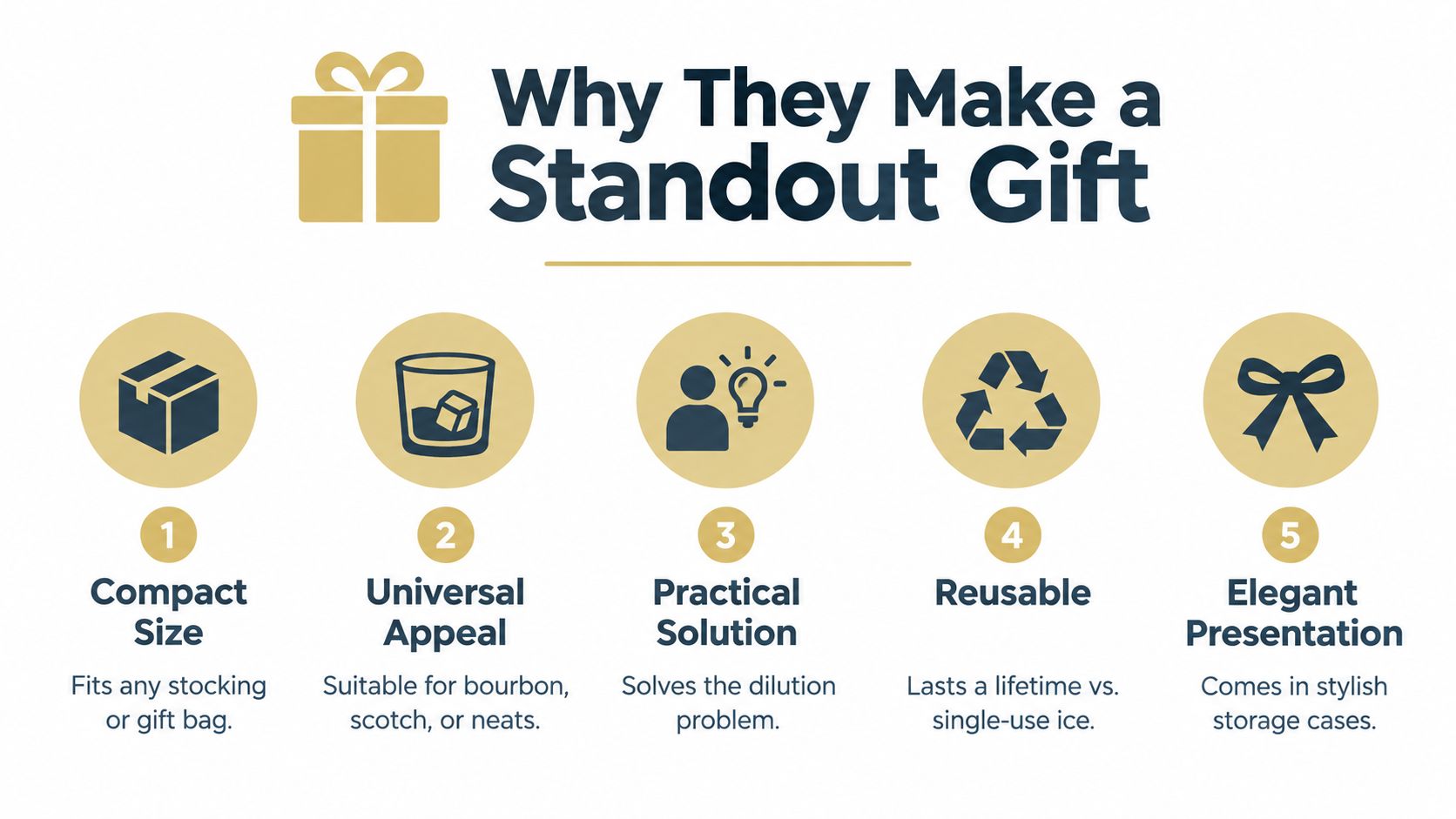
A whiskey-stone set works as a gift because it solves a real problem without requiring the recipient to change their entire bar setup. The box is compact, the accessory is easy to understand, and the recipient can decide whether stones suit bourbon, scotch, cocktails, or another neat pour.
That flexibility matters for gift seekers. A bottle reflects a specific taste, while a reusable chilling set supports experimentation. Someone who prefers large ice can still use the stones occasionally, and someone who drinks high-proof spirits may make them part of a regular ritual.
The presentation also gives corporate buyers room to create a more considered package. Whiskey and related barware have a strong gifting connection. One 2025 market report on whiskey decanter sets placed the gifts application segment at 31.2% market share and projected a 7.9% CAGR through 2034, so premium whiskey accessories fit an established gifting context, although the figures are specific to decanter sets rather than whiskey stones. Review the whiskey decanter set market report.
Personal and business gifting ideas
- Personal occasions: Housewarmings, birthdays, retirements, anniversaries, and thank-you gifts all suit a practical bar accessory.
- Personalization: Engraved wooden cases, monogrammed pouches, and personalized whiskey stone options can make the gift feel intentional.
- Corporate programs: Client appreciation bundles, employee recognition packages, welcome kits, conference gifts, and holiday programs can all use a compact whiskey-themed set.
- Pairings: Add crystal tumblers, a tasting notebook, or curated mini-bottles when you want to build a fuller experience.
For broader inspiration across spirits, glassware, and accessories, this browse gift guide can help you compare complementary ideas.
Corporate buyers should confirm lead times, minimum order quantities, branding options, and packaging formats before placing a bulk order. Custom logos on pouches or boxes can align the gift with an event, while a restrained presentation works better for client relationships where quality matters more than loud branding.

ROCKS Whiskey Chilling Stones offers whiskey stones and complementary barware for personal gifts, client appreciation, employee gifting, and company events. Visit ROCKS Whiskey Chilling Stones to explore gift-ready sets and options for creating a more considered spirits gift.


