


You've been asked to find a gift that feels personal, survives shipping, and won't disappear into a drawer. Maybe you're a marketing manager planning client gifts, or you're looking for something better than another bottle of wine for a milestone birthday. Custom cocktail glasses solve that problem when you choose the right shape, decoration, packaging, and quality controls.
They're practical enough for regular use, attractive enough to display, and personal enough to feel intentional. For corporate buyers, they also offer a useful middle ground between disposable promotional merchandise and expensive luxury gifts. The glass becomes part of a ritual, whether that's an evening cocktail, a celebratory toast, or a non-alcoholic drink served at home.
Why Custom Cocktail Glasses Make Memorable Gifts
A bottle of wine gets opened, enjoyed, and replaced. A personalized glass stays in the recipient's home. That difference gives custom cocktail glasses unusual gifting value: the product supports a repeated ritual while the engraving or logo preserves the connection to the occasion.
For a friend's birthday, a pair of engraved rocks glasses can mark a new chapter without feeling overly formal. For a wedding party, matching glasses create a keepsake that guests can use long after the event. For a client, a well-presented cocktail glass set can communicate appreciation without forcing the recipient to display a loud brand message.
Practical rule: Personalize the object in a way the recipient will want to keep visible. A discreet monogram or small emblem usually outlasts oversized promotional artwork.
The broader glass drinkware market was estimated at USD 13.95 billion in 2024 and is projected to reach USD 26.09 billion by 2030, with a 11.1% CAGR from 2025 to 2030, according to market reporting on glass drinkware demand. Cocktail-specific styles sit inside that larger premium ecosystem, serving both home entertaining and hospitality buyers.
That scale matters for gifting because glassware isn't a novelty accessory. It occupies the intersection of functional tableware and premium presentation. A modest design choice, such as a weighted base, a clean engraving, or a quality gift box, can shift the item from ordinary barware to a meaningful present.
Custom and decorative glassware also has a long history. Goblets developed recognizable forms by the mid-17th century, and engraving with patterns, coats of arms, and religious imagery became common during the 18th and 19th centuries. The classic martini glass, coupe, and highball later became enduring templates during the early 20th-century “Golden Age of Cocktails,” as described in this history of large cocktail glasses and personalization.
That history explains why branded glassware feels natural in hospitality and gifting. You're not adding a logo to an unrelated object. You're continuing a tradition of turning serving vessels into markers of identity, celebration, and belonging.
Choosing the Right Glass Style for the Occasion
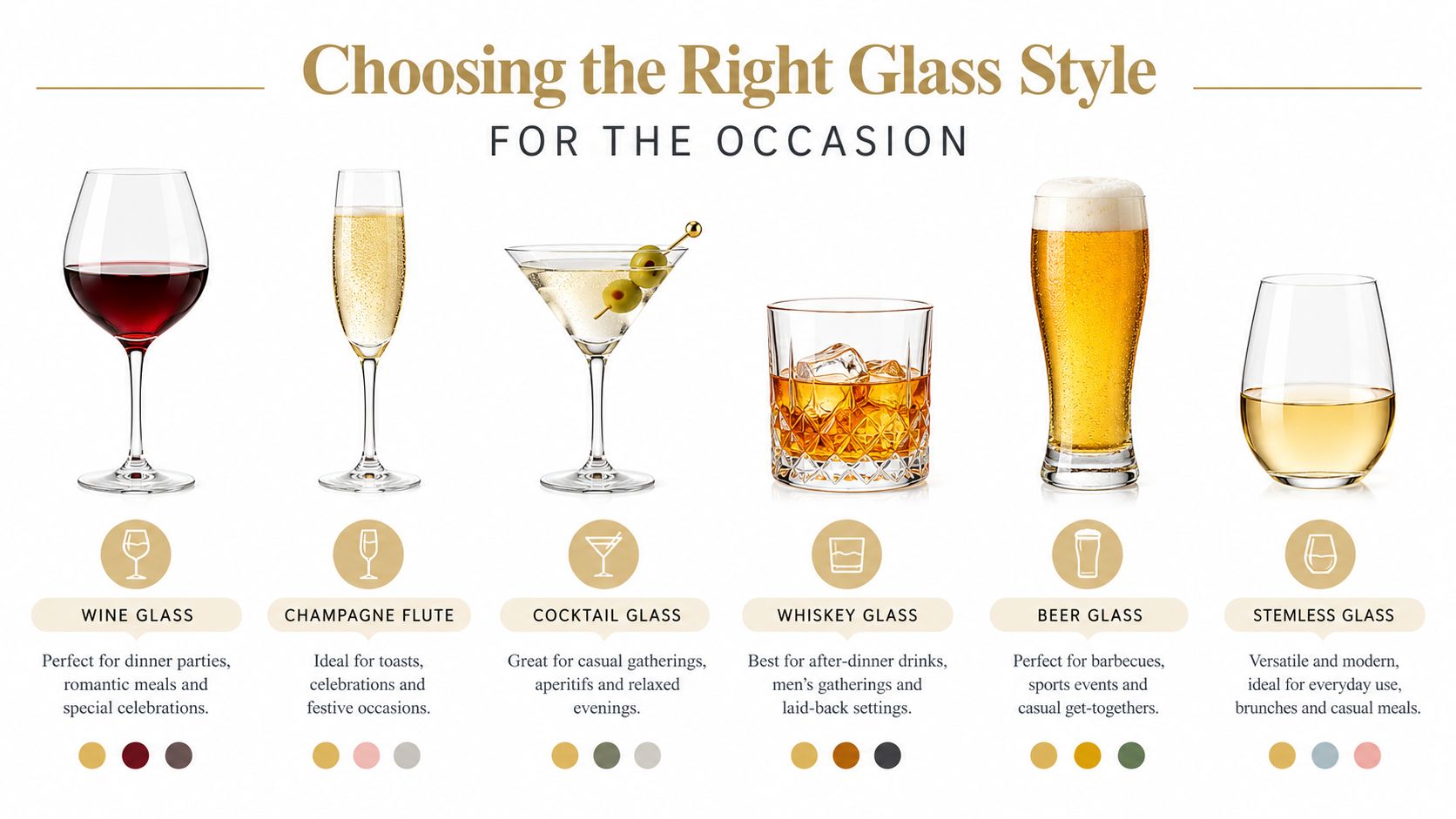
Start with the recipient's drinking habits, not the supplier's catalog. The shape determines how the glass feels in the hand, how it presents the drink, and whether it fits naturally into the person's home bar.
Match the silhouette to the recipient
Rocks or lowball glasses are the safest default for executive gifts, groomsmen sets, whiskey drinkers, and general home bars. Their compact shape works for whiskey, old fashioneds, spirit-forward cocktails, and even desserts. Choose a substantial base when the gift needs to feel formal.
Coupe glasses communicate cocktail sophistication. They suit martinis, Manhattans, sparkling serves, and hosts who care about presentation. They're a strong choice for hospitality programs because the silhouette looks distinctive in photographs and at the table.
Nick and Nora glasses feel more specialized. Give them to craft-cocktail enthusiasts, bartenders, or recipients who already own basic barware. Their smaller, elegant profile signals knowledge without requiring an oversized logo.
Highball and Collins glasses work for spritzes, gin and tonics, mocktails, and outdoor entertaining. They're also useful for corporate programs that want a more inclusive drinkware gift, since the format works equally well for alcohol-free refreshments.
For casual branding and larger orders, stemless wine-style glasses offer a relaxed presentation and are easier to position as everyday drinkware. A guide to customized bar glassware can help buyers compare barware formats before selecting a final silhouette.
Choose the material deliberately
Soda-lime glass keeps the price tier accessible and works well for event gifting or larger programs. Crystal or lead-free crystal creates a brighter appearance and a more refined feel, making it better suited to milestone gifts and senior-client presentations. A weighted base adds perceived value, but it also increases shipping weight and can raise breakage exposure.
My recommendation is simple. Use a sturdy rocks glass for broad recipient lists, a refined coupe or Nick and Nora for a curated host gift, and a lead-free crystal or premium-weighted option when the presentation needs to match a high-touch relationship.
Engraving Versus Printing for Lasting Impressions
Decoration should follow the purpose of the gift. Laser engraving and sandblasting change the glass itself, while pad printing and decals place color on its surface. That distinction affects appearance, dishwasher performance, cost, and the message your gift sends.
| Method | Dishwasher Durability | Best For | Typical Minimum |
|---|---|---|---|
| Laser engraving | High durability; the mark is cut into the glass | Personal gifts, groomsmen sets, executive gifts | Small to medium batches |
| Sandblasting or deep etching | High durability with a tactile, frosted finish | Premium hospitality and corporate presentation | Small to medium batches |
| Pad printing | Lower durability than etched decoration | Short-run promotional gifts and color logos | Flexible, often suited to smaller campaigns |
| Ceramic decals | Strong durability after firing, with higher production cost | Detailed logos, multiple colors, and premium programs | Usually suited to larger planned runs |
For recurring bar use, etching is the clear technical choice. Independent guidance indicates etched glassware can exceed 1,000 dishwasher cycles, while printed labels may show visible wear after roughly 42 to 68 cycles, UV-polymer prints after about 75 to 110 cycles, and ceramic ink prints in the 300 to 800 cycle range. Those figures are summarized in this comparison of etched glassware and printed labels.
What each finish communicates
Laser engraving creates a clean, restrained mark and works especially well for names, initials, dates, and simple logos. Sandblasting produces a deeper, more tactile result with a frosted appearance. Both methods suit groomsmen gifts, milestone birthdays, and executive presents because permanence reinforces the value of the gesture.
Pad printing is better for trade-show handouts, event giveaways, and campaigns where full-color logo fidelity matters more than long service life. Ceramic decals support detailed artwork and gradients, but the extra firing process increases cost and makes them more appropriate for planned production than urgent gifting.
Before submitting artwork, review guidance on how to upload a logo for engraving. Vector artwork, outlined fonts, and simplified marks produce cleaner results than tiny raster files.
For personalized barware ideas, see this resource on personalised cocktail glasses. My direct recommendation is to engrave when the recipient will use the glasses repeatedly, print when color recognition matters most, and choose ceramic decals only when the artwork needs detail that etching can't reproduce.
The Custom Order Workflow From Design to Delivery
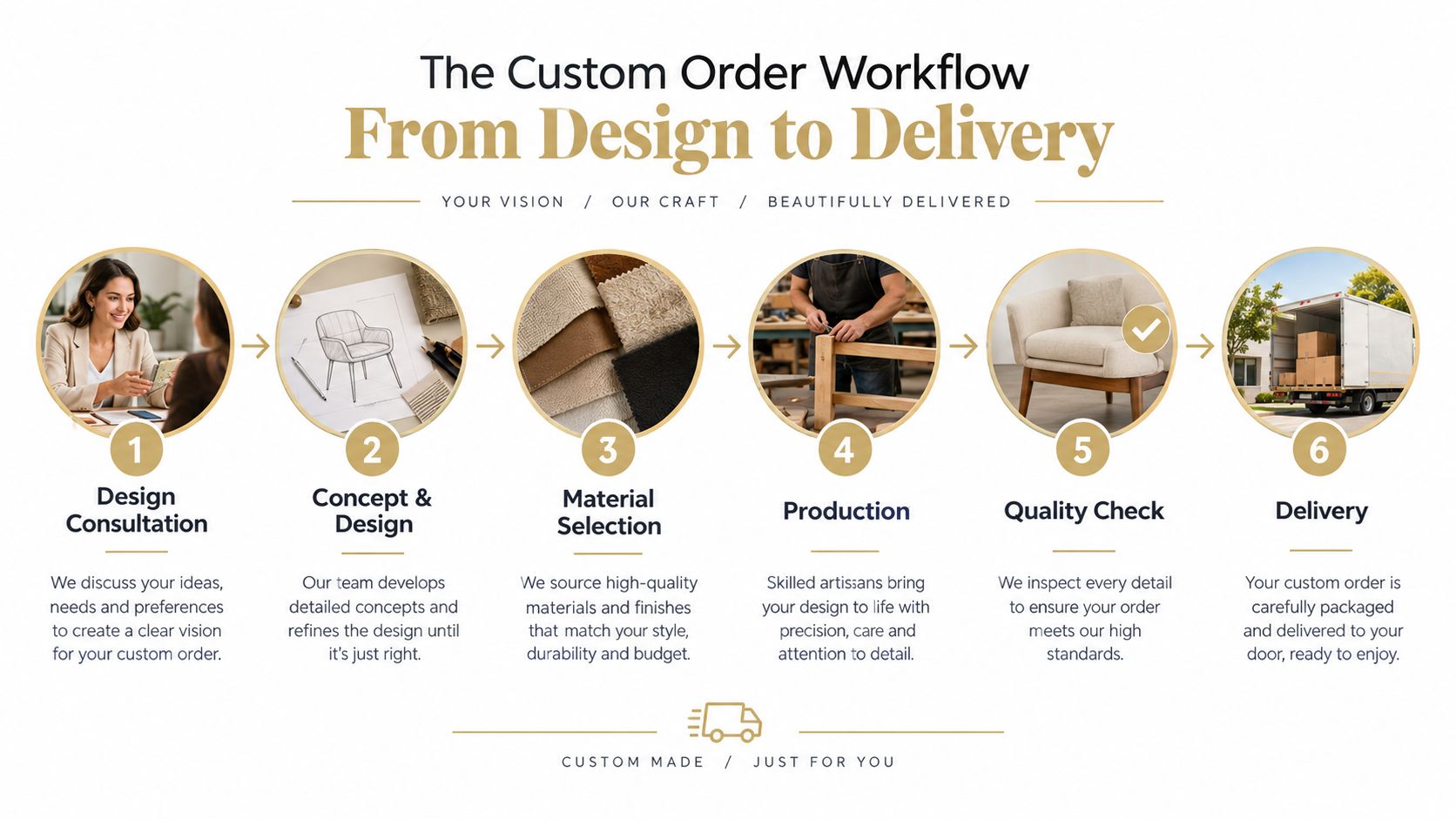
Most custom glassware problems start before production. Buyers approve a logo without checking how it will behave on a curved surface, skip a physical sample, or discover too late that packaging and delivery requirements weren't included in the quote.
Prepare artwork for glass
Send vector files whenever possible. Convert fonts to outlines, define the safe zone on the curved surface, and simplify fine details that may disappear during engraving or blasting. For small text, ask the supplier to confirm the minimum legible height. A practical production guideline is roughly 1.5 mm, but the supplier should approve the final artwork against the selected glass.
Request a digital mockup that shows the logo at the actual position and scale. Don't approve a flat logo preview alone. Curvature, taper, and the distance from the rim can change how balanced the design looks.
Approve a physical sample
A sample tells you what a screen proof can't. Inspect:
- Registration: Is every logo aligned at the same height and angle?
- Edge feel: Does engraving leave a rough rim or uncomfortable transition?
- Weight: Does the glass feel appropriate for the intended gifting tier?
- Artwork clarity: Are small letters, thin lines, and negative spaces still readable?
- Packaging fit: Does the glass sit securely without touching the box walls?
For larger programs, confirm the minimum order before artwork is finalized. Engraved glass orders commonly begin in the 12 to 48 piece range, while screen-printed runs may require higher quantities. Lead times also vary by decoration method. A neutral custom barware guide recommends allowing about six weeks, while two weeks is considered rush territory and may involve extra charges. Review the custom bar glassware ordering guide before committing to an event date.
Ask about hidden costs
Get written answers on color-match proofs, tooling or setup fees, packaging upgrades, drop-ship addresses, and the supplier's breakage replacement policy. Shipping to individual recipients can change the packing requirements substantially, so provide the full distribution plan before the quote is approved.
A workable planning template looks like this:
- Artwork approval: finalize vector files and mockups.
- Sampling: inspect one physical glass and packaging.
- Production: confirm the decoration schedule and inspection point.
- Packing: verify individual boxes or protective bulk shipping.
- Delivery: set arrival before the event, not on the event date.
Custom Cocktail Glasses for Corporate Gifting
Corporate buyers should stop treating premium drinkware as just another logo item. A useful glass earns space in the recipient's home, appears during hosting, and carries the brand association through repeated use. A pen may be practical, but a carefully selected cocktail glass creates a stronger sense of occasion.
The broader personalized gifts market was estimated at $31.4 billion in 2025, with corporate gifting representing about $5.8 billion, or 18.4%, according to personalized gifts market data. Engraved and personalized glassware alone reached $38 million in tracked online sales in 2025, with projected growth of 20% to 50% in 2026, according to online sales intelligence for personalized glassware.
That doesn't mean every event needs premium crystal. It means the category has enough flexibility to serve different budgets and audiences. Choose individual presentation boxes for senior clients, curated employee rewards, and milestone celebrations. Use protective bulk shippers for large internal events where the receiving team will distribute the gifts.
| Tier | Packaging | Best For | Per-Unit Cost Impact |
|---|---|---|---|
| Essential | Protective bulk cartons with dividers | Large events and internal distribution | Lowest packaging impact |
| Presentation | Individual folding boxes with inserts | Client gifts and employee appreciation | Moderate packaging impact |
| Premium | Rigid gift boxes, tissue, and care card | Executive gifts and milestone occasions | Highest packaging impact |
Pair the glasses with a small accessory, such as cocktail bitters, a garnish tool, or a smoked ice kit. For recipients who don't drink alcohol, offer mocktail-friendly highballs or etched water glasses instead of forcing a spirits-based gift.
Branding should remain alcohol-neutral when the recipient list is broad. A discreet company mark, event date, or message of appreciation is more inclusive than a large spirits reference. For barware planning and gift-set ideas, review this resource on custom bar glassware.
Quality Checks and Care Tips That Protect the Gift
A beautiful sample doesn't guarantee a consistent production run. Buyers need a receiving checklist that separates acceptable variation from defects that should trigger a remake or credit.
Independent production guidance recommends three checkpoints: pre-production dimensional verification, pilot-run testing, and final inspection. Typical tolerances include ±2 mm in height and ±5 ml in capacity, with inspection for bubbles, cracks, distortion, decoration adhesion, and thermal resistance. The same guidance describes tape testing, hot-to-cold water checks, and a useful bulk-order benchmark of a shape-inspection rejection rate below 3% in its glassware quality-control guidance.
Receiving checklist
- Inspect the rim: Reject chips, sharp edges, and visible cracks.
- Check logo placement: Compare several pieces against the approved sample.
- Review the surface: Look for bubbles near the base, mold marks, clouding, or distortion.
- Test adhesion: Use the agreed tape test for printed or decal decoration.
- Document defects: Photograph the carton, packing position, batch markings, and each defective glass before requesting replacement.
For care, handwashing remains the safest default for engraved premium pieces. Printed glass should follow the supplier's dishwasher instructions, with top-rack use where permitted. Store glasses upright with enough space between rims, and avoid stacking shapes that weren't designed for it.
Don't promise a decade of service without checking the construction and care instructions. A good buyer gives recipients a care card, labels the decoration truthfully, and confirms dishwasher guidance before distribution.
Putting It All Together for Your Next Order
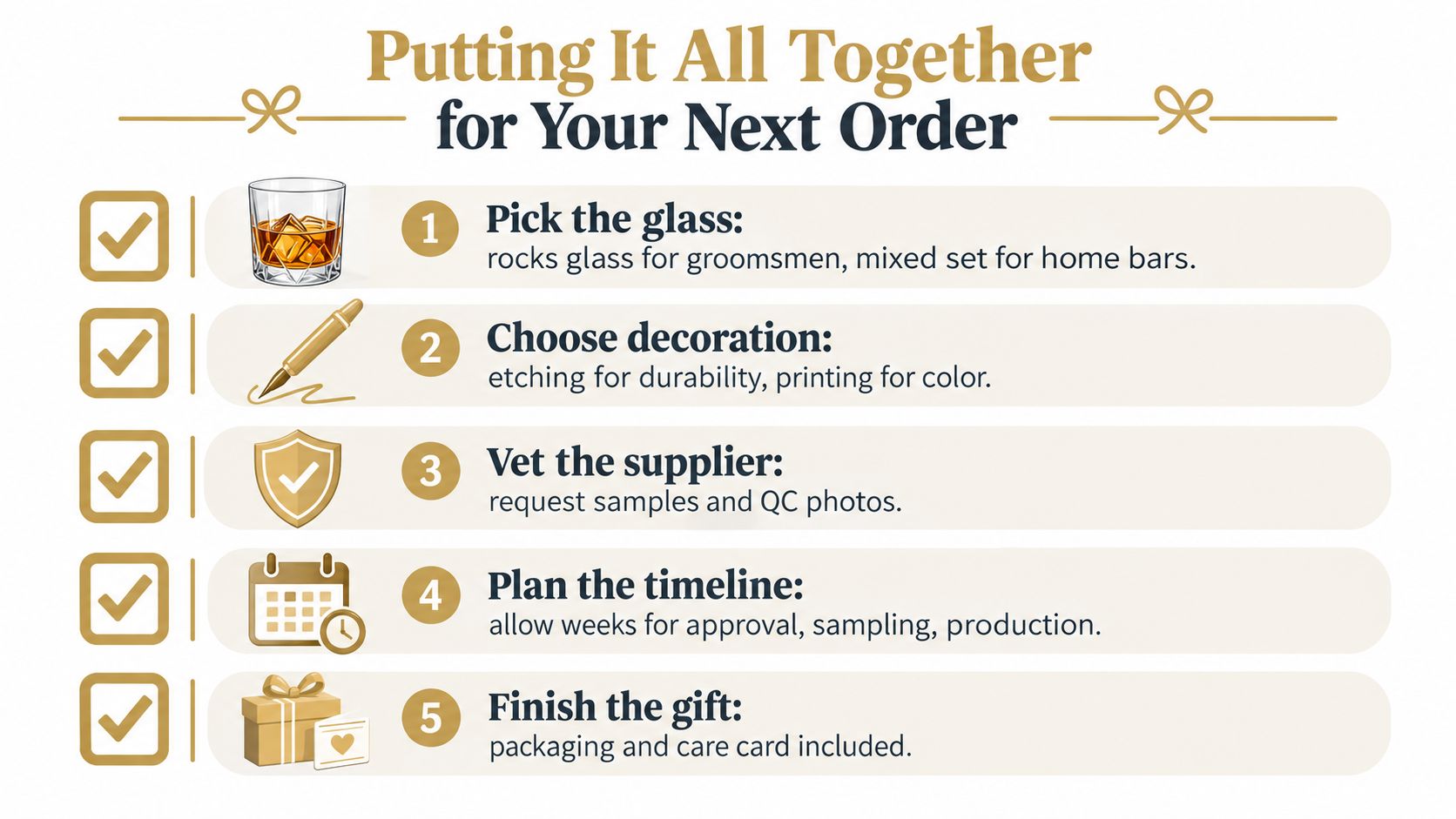
Treat the order as a gift program, not a logo application. For a dozen wedding-party glasses, prioritize the recipient, engraving quality, individual presentation, and a delivery buffer. For a large corporate event, prioritize repeatable decoration, protective shipping, inclusive drinkware choices, and a receiving process.
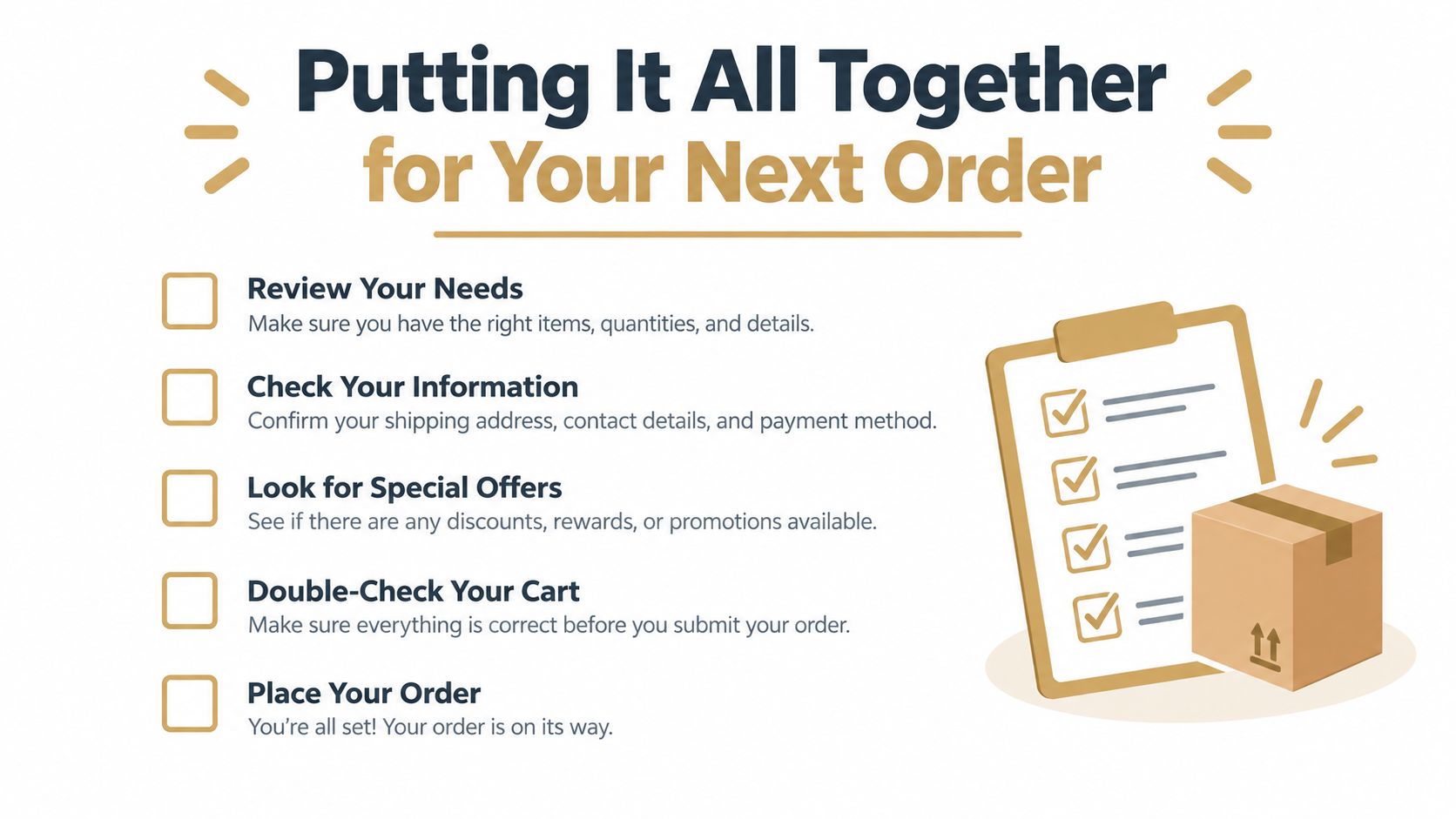
Before placing the order, confirm these points:
- Select the glass shape for the recipient and occasion.
- Choose etching for durable personalization or printing for color-led promotional work.
- Approve vector artwork and a physical sample.
- Confirm packaging, shipping insurance, breakage replacement, and the final delivery date.
- Include dishwasher-safe labeling and a care card where appropriate.
Set the delivery date at least two weeks before the occasion so you have time to inspect the shipment and resolve defects. Order a small overage for breakage protection, especially when gifts will travel individually to distributed teams. Keep the approved proof, sample photographs, packing specification, and inspection notes together in one order file.
For a practical barware gift assortment, ROCKS Whiskey Chilling Stones offers cocktail glasses, whiskey glasses, gift sets, and related accessories for individual gifting and corporate programs. Visit ROCKS Whiskey Chilling Stones to review options, request a suitable glassware configuration, and plan a branded barware gift around your event.


