

You're choosing a gift for someone who enjoys whiskey, but the glass options make a simple purchase feel complicated. Perhaps it's a birthday present for your partner, a housewarming set for friends, or a client gift that needs to suit people with different drinking habits.
A plain whiskey glass is a useful starting point because it doesn't prescribe a ceremony. The right one can feel comfortable at a quiet evening pour or a company dinner. Start with what the recipient drinks, then choose the capacity, shape, and personal detail that will make the gift feel considered.
Plain Whiskey Glass Sizes and What Each Holds
| Style | Typical capacity | Opening | Best pour | Gift fit |
|---|---|---|---|---|
| Rocks or single Old Fashioned | 6–8 oz (180–240 ml) | Wide | About 2 oz neat or one large cube | Everyday pairs and logo programs |
| Double Old Fashioned | 10–14 oz (300–415 ml) | Wide | Cocktail, extra ice, garnish | Bar sets and hosted events |
| Glencairn or tulip nosing | Near 6 oz (about 175 ml) | Narrow rim | Half-ounce to one-ounce neat pour, not ice | Tasting flights for one drinker |
| Copita or nosing glass | 4–6 oz | Tapered | Small neat aroma pour | Connoisseur tasting gifts |
| Snifter | 8–12 oz | Inward bowl | Neat spirit, no ice | After-dinner display gifts |
| Highball | 8–12 oz | Tall and straight | Whiskey and soda or long iced drink | Cocktail-host gifts |
Plain whiskey glass sizes and best pours are easiest to understand when you separate capacity from serving size. Capacity describes what the vessel holds, not how much whiskey someone should pour. These are shopping ranges rather than fixed specifications, so check the dimensions of the actual glass before ordering.
Choose by the drink, not the grandest name
A single rocks glass is the straightforward gift choice for someone who likes a short pour. There's room around the spirit, and the broad mouth makes adding a large cube practical. It's also an approachable format when you know the recipient enjoys bourbon but don't know their favorite cocktail.
The double Old Fashioned gives a cocktail host more working room. Double describes the larger vessel, not an instruction to double the alcohol. Choose it when ice, dilution, and a garnish all need to fit without crowding the rim.
A tulip or copita suits someone who pauses to smell and compare neat whiskey. Its full capacity shouldn't be mistaken for its intended tasting pour. A snifter offers a fuller bowl and a more formal presentation, making it a possible gift for someone who already enjoys that after-dinner ritual.
For a whiskey-and-soda drinker, choose a highball. Height provides space for the longer drink; a short tumbler isn't automatically the right gift because the spirit is whiskey.
Try the hand test
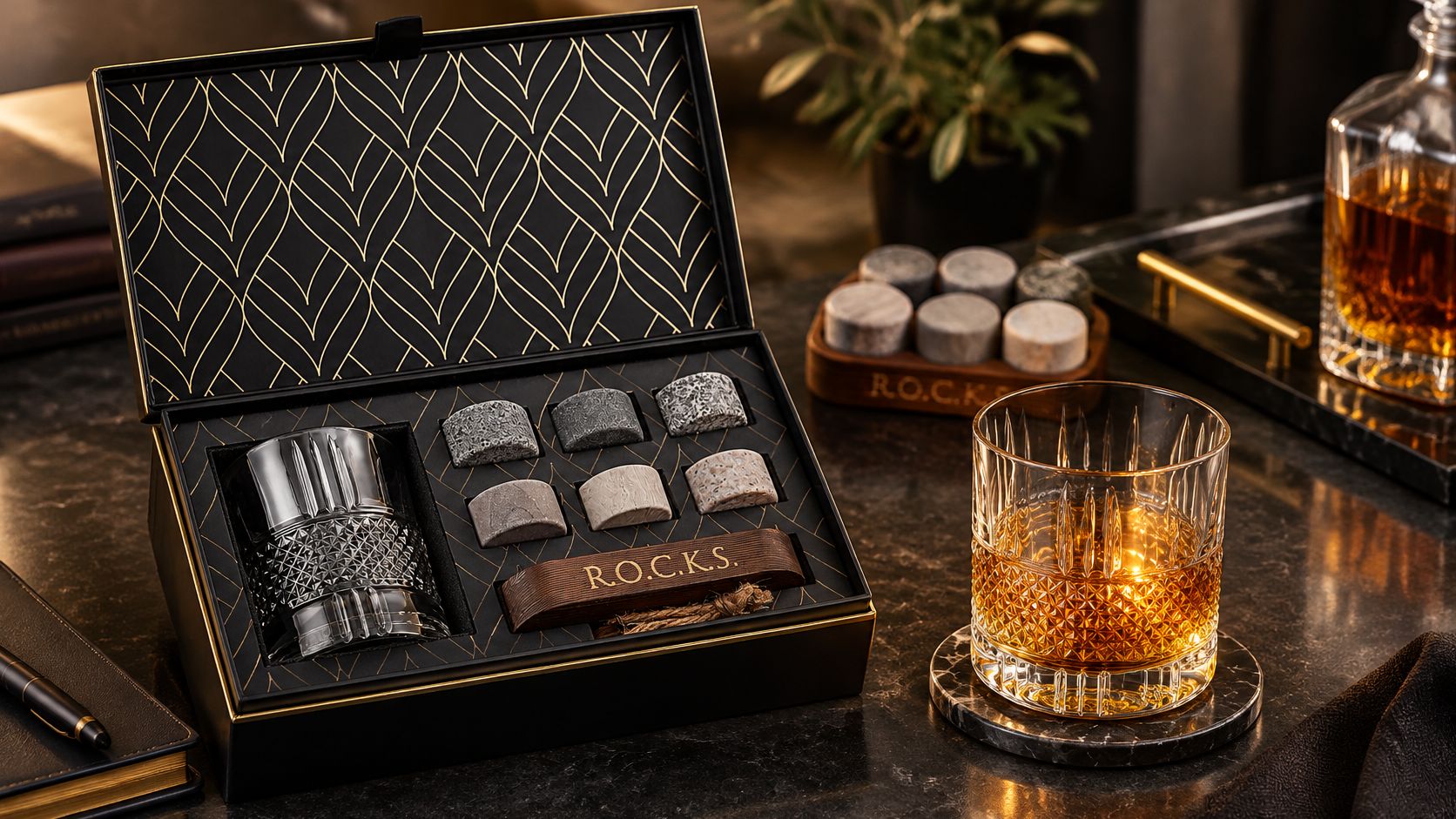
Hold the glass around its lower wall, then place it on a level surface. A short, heavy base should feel settled rather than top-heavy. If the recipient uses chilling stones, check that they can lie flat inside rather than bunching against a narrow bottom.
Customer Stephen describes that fit directly:
“Absolutely pure liquor with no dilution and the stones are just the right size and weight for a good short, heavy-bottomed whiskey glass.”, Stephen
For gifting, matching rocks glasses scale neatly from a pair to a housewarming set or an event order. A nosing glass is a more individual choice, best suited to a recipient whose tasting habits you already understand. Keep your chosen serving style in mind when comparing the shapes.
When a Plain Glass Beats Etched or Shaped Glass
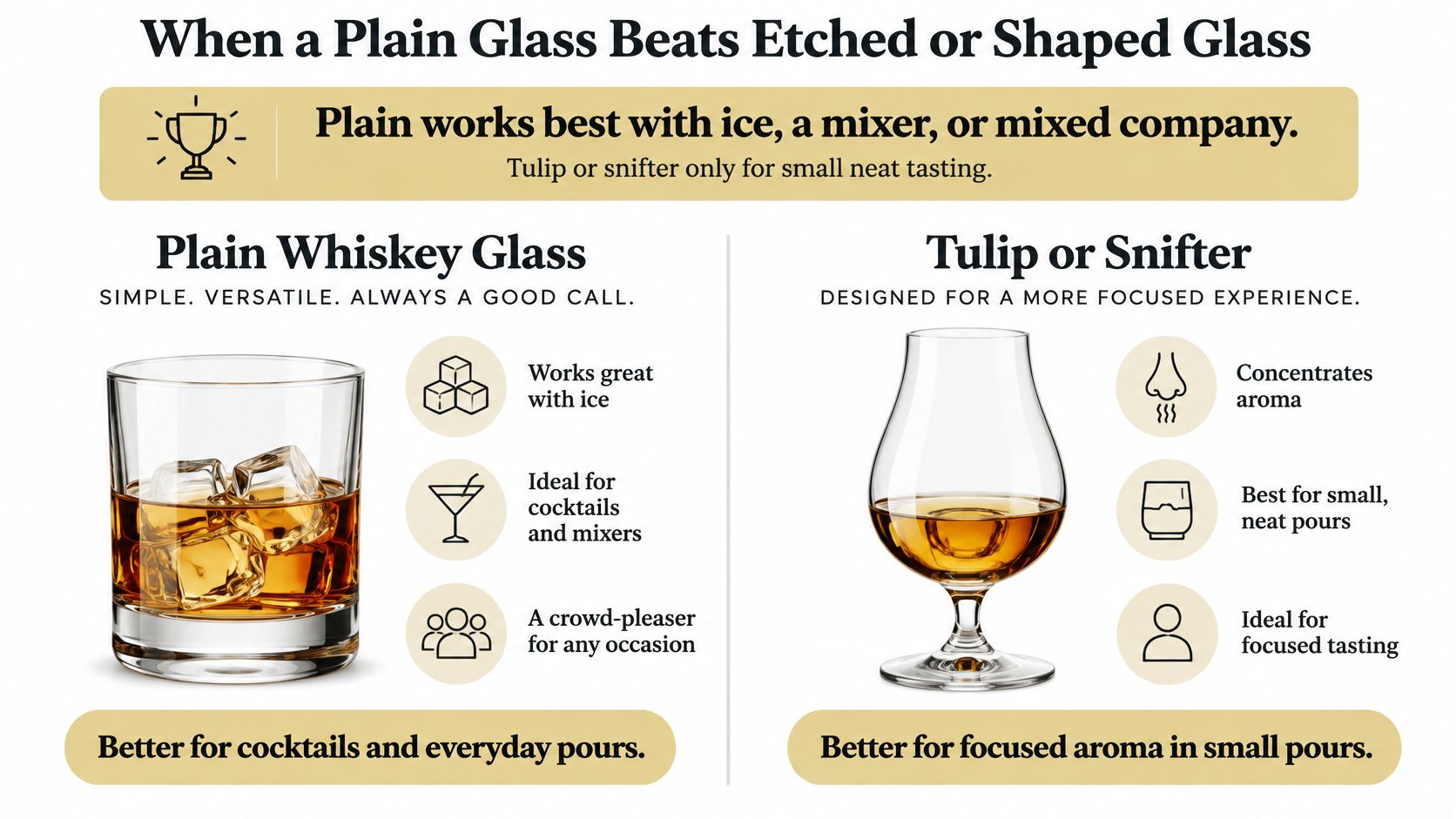
Plain tumblers are usually the better fit for ice, mixers, and mixed company. A tulip, copita, or snifter earns its place when the recipient wants focused aroma from small neat pours. That's a use-case distinction, not a ranking of serious and unserious whiskey drinkers.
There's also an important vocabulary difference: plain describes decoration; shaped describes geometry. A tulip can have plain walls, and a rocks glass can be intricately cut. Don't let a decorative pattern stand in for a decision about how the drink will be served.
Shape changes the experience, not the drinker's credentials
The Blind Barrels whiskey tasting guide discusses how glass geometry affects aroma presentation. The useful conclusion for gift buyers is that different vessels can create different sensory impressions, not that a particular shape must please everyone.
Think of the opening as the route between the whiskey and the nose. A narrow rim gathers vapors near the opening; a broad rim lets them disperse more freely. Concentrating aroma can also bring alcohol vapor closer to the nose, so a high-proof pour may feel more comfortable in a wider glass for some drinkers.
That isn't a promise that wide glasses always reduce burn. Pour size, whiskey strength, and how closely someone noses the glass all matter. A thoughtful gift respects the recipient's preferences rather than trying to correct them.
| Drinking job | Practical choice | Why it fits |
|---|---|---|
| Comparing neat whiskey | Tulip or copita | Supports deliberate aroma checks |
| Bourbon over ice or an Old Fashioned | Plain rocks glass | Leaves accessible room for ice and sipping |
| Cocktails or whiskey and soda | Double rocks or highball | Accommodates the complete drink |
| Social sipping and company gifts | Matching plain tumblers | Familiar, easy-to-understand service |
Decoration is a separate decision
Etching and deep cuts can look attractive, but they don't turn a wide tumbler into a nosing glass. Dense patterns can interrupt the view of the whiskey. Raised or sharply cut details also deserve inspection because exposed edges can become vulnerable contact points during handling.
Don't assume every etched glass is fragile, either. Construction, rim finish, and care matter more than a blanket distinction between decorated and undecorated glassware. Choose ornament when you know the recipient likes ornament.
For a client list, clean walls leave fewer aesthetic assumptions to get wrong. They also provide an uncluttered area for restrained personalization, which makes our engraving service a good fit for gifts intended to feel personal without looking busy.
Better means better for the recipient's priorities: aroma concentration, alcohol comfort, ice room, durability, or gift appeal. No single shape wins all of those jobs.
Choose the shape for the pour, then keep the wall plain if the gift still needs a name or logo.
What a Plain Whiskey Glass Is and Where It Came From
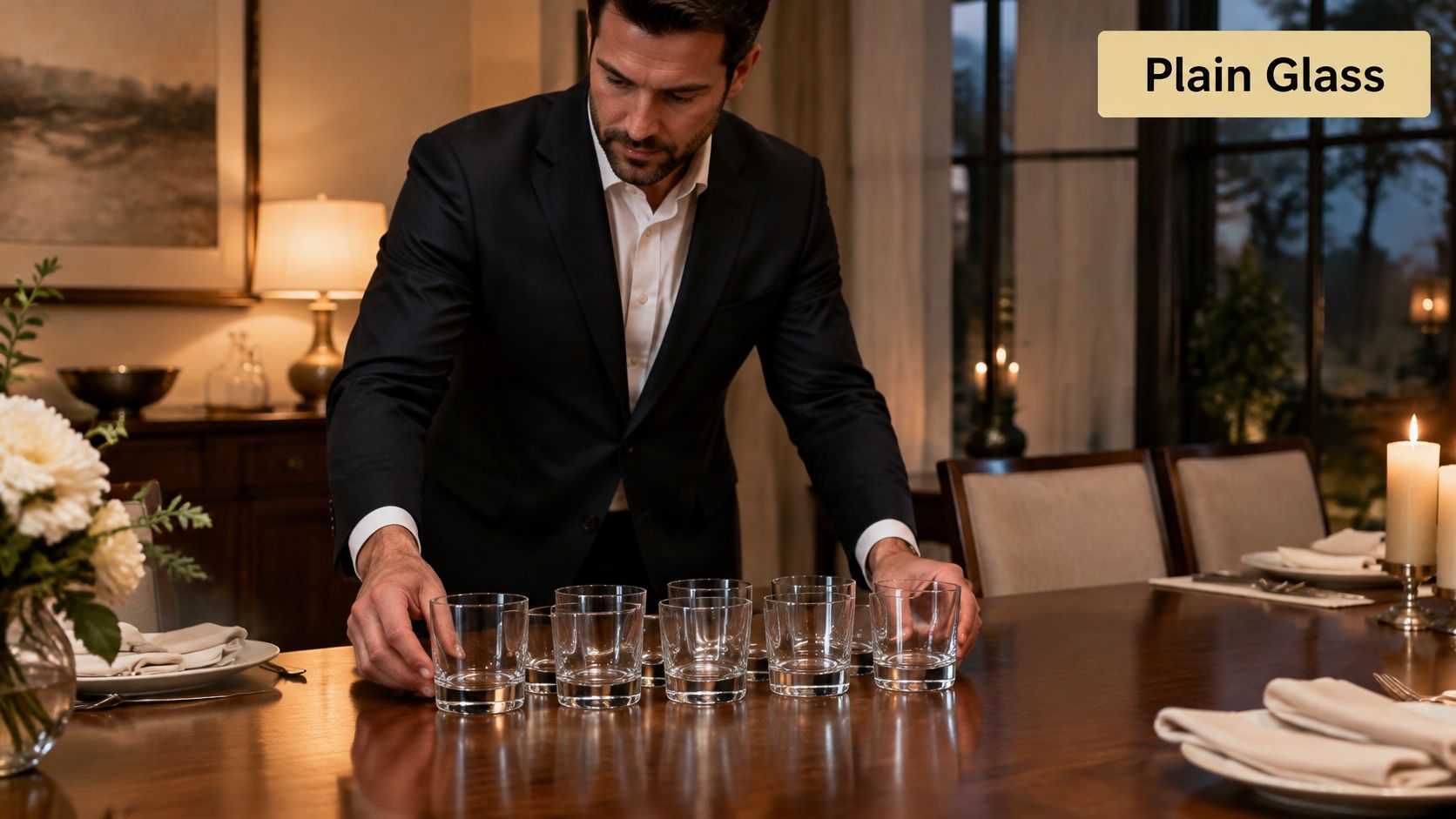
Say you're setting eight matching glasses before a client dinner. You skip ornate crests because they compete with the table setting, and choose clear tumblers that work with the evening rather than announcing a theme.
A plain whiskey glass, in the familiar rocks-glass sense, is a short, wide tumbler with clear walls, a substantial base, and no cut pattern, factory crest, or decorative etching. The whiskey remains visible through the wall. It's a neutral object that the host can make formal or relaxed.
From matching tableware to familiar hospitality
The historical account summarized in the whisky-glasses market overview traces the tumbler's accessibility to improved glass pressing by the late 1840s, followed by the dominance of colorless glass and simple geometric designs in the American market by the mid-1850s. At the 1853 Exhibition of the Industry of All Nations at New York's Crystal Palace, the New England Glass Company displayed 130 pieces in a coordinated design, including tumblers, illustrating how manufacturers could offer matching glassware across a household table.
The important connection isn't that a particular exhibition invented whiskey service. It's that repeatable, moderately priced glassware helped make coordinated hospitality accessible beyond wealthy households. The plain tumbler belongs to that practical tradition.
For a gift buyer, that background explains why simplicity doesn't have to read as cheapness. A comfortable shape, clear wall, and well-finished rim can communicate care without elaborate decoration. Our guide to what a rocks glass is offers a closer look at the familiar silhouette.
A neutral object can still have character
The plain rocks glass works much like a white shirt: easy to dress up and unlikely to clash. Put it beside linen and a polished tray, and it suits a dinner. Place it on a kitchen counter, and it still feels appropriate.
For someone furnishing a rustic retreat, California Cowboy's guide to pewter cup collecting for cabin enthusiasts provides a useful contrast in material and character. The gift question is whether the recipient enjoys a collected, decorative look or prefers transparent, understated barware.
- Choose visual neutrality when you're buying for unfamiliar interiors or a broad client audience.
- Choose a distinctive material or pattern when you know the recipient's taste well.
- Add a restrained mark when you want a simple object to commemorate a particular relationship.
For company gifts, we can apply that last approach through personalization. The glass doesn't need to carry an elaborate design to become a keepsake.
What to Check Before You Buy
Once you've selected the serving style, inspect the glass itself. A polished product photograph can't tell you whether the base rocks on a table, the lip feels rough, or the engraving will dominate the drink.
For a personal gift, try to handle a sample. For a corporate order, establish the physical specification before approving artwork or comparing quotations.
Inspect the base, rim, and wall
- Set the base on a flat surface. Check for wobble before adding anything. Then consider how the recipient's usual ice or flat stones will sit inside; a thick-looking base isn't useful if the glass feels unstable.
- Look through the wall. Hold the glass against a plain background, then view a colored drink through it if possible. You're checking whether the wall gives a clear view, not whether an elaborate pattern makes the piece look expensive.
- Check the lip gently. Visually inspect the rim first, then lightly feel an intact edge for roughness. Don't run a finger across a visible chip or crack. A smooth sipping surface matters more than a decorative band.
- Confirm material and care instructions. Ask whether the piece is everyday glass or crystal, and whether its stated care method suits the recipient. Our dishwasher-safe glassware guide helps clarify what to check rather than assuming all clear drinkware can be washed alike.
- Approve the engraving position. A name, date, or logo should sit comfortably on the lower wall or a suitable base area, not crowd the sipping edge. We offer engraving on glassware and wood trays, so placement can be considered as part of the gift rather than added as an afterthought.
- Compare the matching pieces. Check height, profile, and visual consistency across the intended set. A tray looks more deliberate when the glasses belong together, especially for client presentations or event tables.
Treat personalization as part of the specification
Among Danish online gift shoppers, customization ranked ahead of price, product quality, and delivery time in a conjoint study of 204 responses published in the ABAC Journal. That finding supports giving personalization a place in the purchase decision, rather than treating it as a decorative extra.
It doesn't mean engraving can rescue an uncomfortable glass. Start with the object the recipient will use, then decide how the mark should look. For a company order, approve the spelling, logo artwork, orientation, and placement together.
The fail test: If the glass feels awkward in the hand or the proposed mark would cover the pour, choose another piece before personalizing it.
Keep the physical inspection focused on the base, rim, and wall. Those checks belong before the price comparison, because a lower quote won't fix the wrong drinking experience.
Gift Moments a Plain Glass Fits
A useful glass becomes a thoughtful gift when the mark suits the relationship. The recipient shouldn't need an explanation of why it was chosen, and the engraving shouldn't read like a speech.
A 2024 peer-reviewed study spanning four experiments found that recipients valued customized gifts more highly than non-customized gifts, with the authors attributing the effect to vicarious pride, a feeling connected to the giver's effort, in Psychology & Marketing. The practical lesson is to make the customization specific to the person, not just to fill the available space.
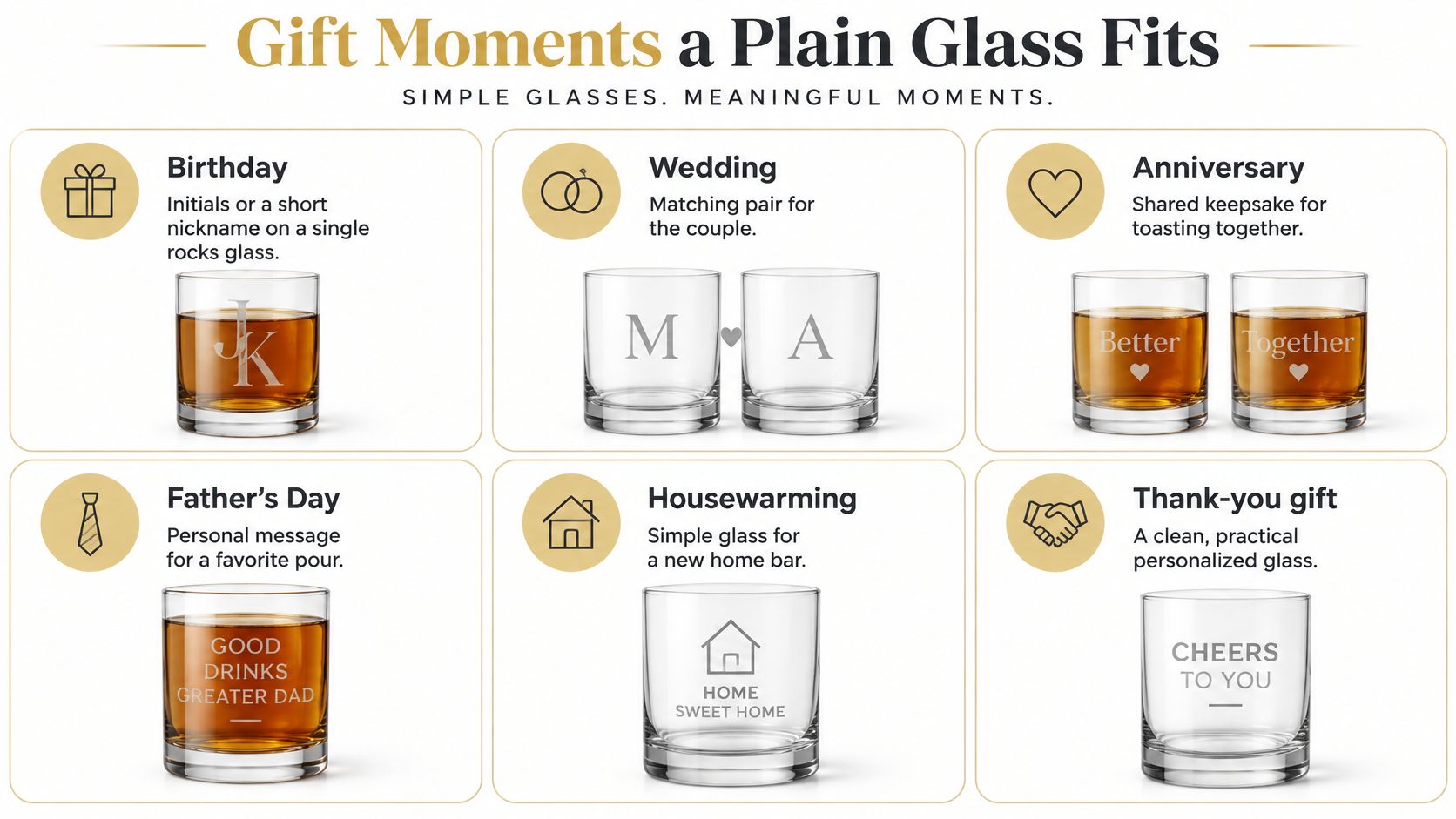
Match the mark to the moment
- Birthday. Put initials or a familiar nickname on a single rocks glass. Choose something the person uses comfortably, not an inside joke they'd rather keep off the dinner table.
- Wedding. Give a matching pair with the couple's date. Consistent placement makes the glasses feel connected without requiring an elaborate shared crest.
- Anniversary. Use a meaningful date or a short phrase associated with the couple. Let the gift commemorate their life together rather than reproduce the original wedding design automatically.
- Father's Day. Choose a personal message that sounds like the giver. A familiar form of address can feel warmer than a generic slogan about whiskey.
- Housewarming. Set matching plain glasses on a tray for a ready-to-use home-bar start. A surname or move-in date can acknowledge the home without imposing a decorative theme.
- Thank-you gift. For a colleague, client, or host, use a discreet name, company mark, or event emblem. Keep the recipient's enjoyment ahead of the sender's desire for visibility.
Each mark should be something the recipient will be happy to see whenever they pour. Our personalization service is a good fit for these occasions because the same restrained approach can serve both personal and professional relationships.
Make business recognition feel human
A 2022 Coresight Research survey of 300 U.S. corporate gift buyers found that 66% cited employee appreciation or milestone gifting, up from 64% the previous year, according to Synchrony's account of the corporate-gifting market. The account also connected more frequent gifting with remote and hybrid work and year-round recognition.
For an employee milestone, put the person's name ahead of campaign language. For client appreciation, choose a discreet logo rather than a sales message. Prospect gifts should remain useful on a home bar after the meeting is forgotten.
The format already has a recognizable hospitality role. The National Museum of Cambridge Glass listing describes the Old Fashioned as whiskey or brandy with muddled sugar, bitters, and water, traditionally served with ice in an old-fashioned glass. That familiar association helps an understated tumbler feel at home at a dinner.
Use a logo, a date, or a short message, not a paragraph. Recognition feels more personal when the recipient can enjoy the object without reading an advertisement.
Choose the Glass Then Personalize the Set
Use the pour-first rule to make the final choice. A plain rocks glass fits an ice drinker or a mixed group; a larger cocktail vessel suits a host; a nosing shape belongs with someone who actively enjoys neat tasting. You don't need to buy the most specialized glass to give a thoughtful present.
If you searched for “whiskey glass plain,” the useful next step is to turn that broad description into an order specification. Decide what the recipient will do with it, what the mark should say, and whether you're gifting an individual piece or a coordinated set.
Finish the gift without overcomplicating it
Our Original ROCKS are handcrafted, hand-polished granite stones used to chill whiskey without adding melting ice water. They suit a recipient who wants some cooling while preserving the drink's undiluted character.
The Connoisseur's Set - Reserve Glass Edition pairs our stones with a heavy Reserve crystal whiskey tumbler designed for comfortable handling and swirling. It's a coordinated option when you want the glass and cooling accessory to feel like a complete gift.
For a recipient who favors a more decorative bar-cart presentation, The Privilege Collection - Soleil Glass Edition offers crystal whiskey glasses described for their brilliance, clarity, and presentation of the spirit's color. Choose that direction because it matches the person's style, not because decoration automatically makes a better glass.
Confirm the order before approving the mark
For an individual gift, our personalised whiskey glass set guide can help you consider the name or occasion detail. For business gifting, we offer personalised corporate whiskey gifts, and corporate or bulk custom orders can carry a company logo on the wood tray and whiskey glasses.
Before ordering, confirm:
- The serving format. Check the selected capacity and dimensions against the recipient's drinking habits.
- The personalization. Decide between a name, date, or logo, then approve its spelling and position.
- The recipient count. Make sure the set configuration matches how the gifts will be distributed.
- The complete quotation. Request unit pricing, engraving costs, and the intended set quantity together.
Quotes for corporate and bulk custom orders are available on request. Give us the occasion, recipient count, and proposed mark so the discussion starts with the gift you need.
ROCKS Whiskey Chilling Stones offers granite whiskey stones, barware gifts, and personalization for people who want a plain whiskey glass to feel thoughtfully chosen. Visit ROCKS Whiskey Chilling Stones to select a gift for your recipient or request a corporate quote covering the set quantity and engraving.


