

A buyer usually lands on pint glasses when they're tired of disposable swag and equally tired of overcomplicating the gift. They need something useful, presentable, and personal enough to avoid the usual “thanks, this will sit in a drawer” reaction. That's exactly where engravable pint glasses earn their keep.
The mistake is treating all personalization the same. It isn't. A retiree gift, a brewery gift-shop item, and a client event giveaway shouldn't use the same glass shape, the same artwork style, or the same engraving method. If you match the glass and the mark to the reason for the gift, the result feels intentional instead of generic.
A Familiar Gifting Moment
A familiar version of this happens at company lunches all the time. Someone hits a work anniversary or retirement milestone, a gift bag comes over, tissue paper gets pulled back, and there's a pint glass with their name, dates, and a short message etched into the side. People pass it around, nod, and say the same thing for a reason: “That's nice.”
It works because the gift is specific without becoming awkwardly personal. It's useful, easy to understand, and it doesn't ask the buyer to guess somebody's shirt size, favorite snack, or home decor taste. For wedding receptions, milestone birthdays, sales awards, and brewery events, engravable pint glasses solve a common gifting problem. Generic gifts disappear. Personalized barware gets used.
Where buyers usually get stuck
The problem starts after the basic idea feels right. A marketing manager may need a few hundred glasses for a client event. A retail buyer may want something that looks good on a brewery shelf and still feels giftable. An individual shopper may want one strong keepsake for a fiftieth birthday and not care about bulk economics at all.
Those are three different jobs. Too many sellers treat them as one.
A pint glass with a centered logo is not automatically a good gift. It's only a good gift when the decoration style fits the reason you're giving it.
That's the practical lens I'd use. For corporate client gifts, the mark should look restrained and premium. For retail gift seekers, the design usually needs more personality. For event orders, the production method and timing matter almost as much as the artwork.
Why this category keeps showing up
That demand isn't random. The glassware category is large enough that this isn't some novelty corner of gifting. One market report values the global glassware market at about USD 15.27 billion in 2025 and projects USD 24.36 billion by 2034 at a 5.2% CAGR, while another places the global glass drinkware market at USD 13.95 billion in 2024 with a projected rise to USD 26.09 billion by 2030 at an 11.1% CAGR. The same source cites drinkware at 32.4% share in one 2025 breakdown, which is why engravable pint glasses remain a durable fit for gifts, promotions, and barware assortments rather than a novelty buy in global glassware market reporting.
Our product assortment is a good fit here because gift seekers and corporate buyers usually need exactly that middle ground. Something personal, practical, and presentable without turning the order into a design science project.
What Makes a Pint Glass Engravable
A buyer approves the artwork, then the sample arrives and the logo looks cloudy, cramped, or crooked on the curve of the glass. That problem usually starts with the blank, not the design file.
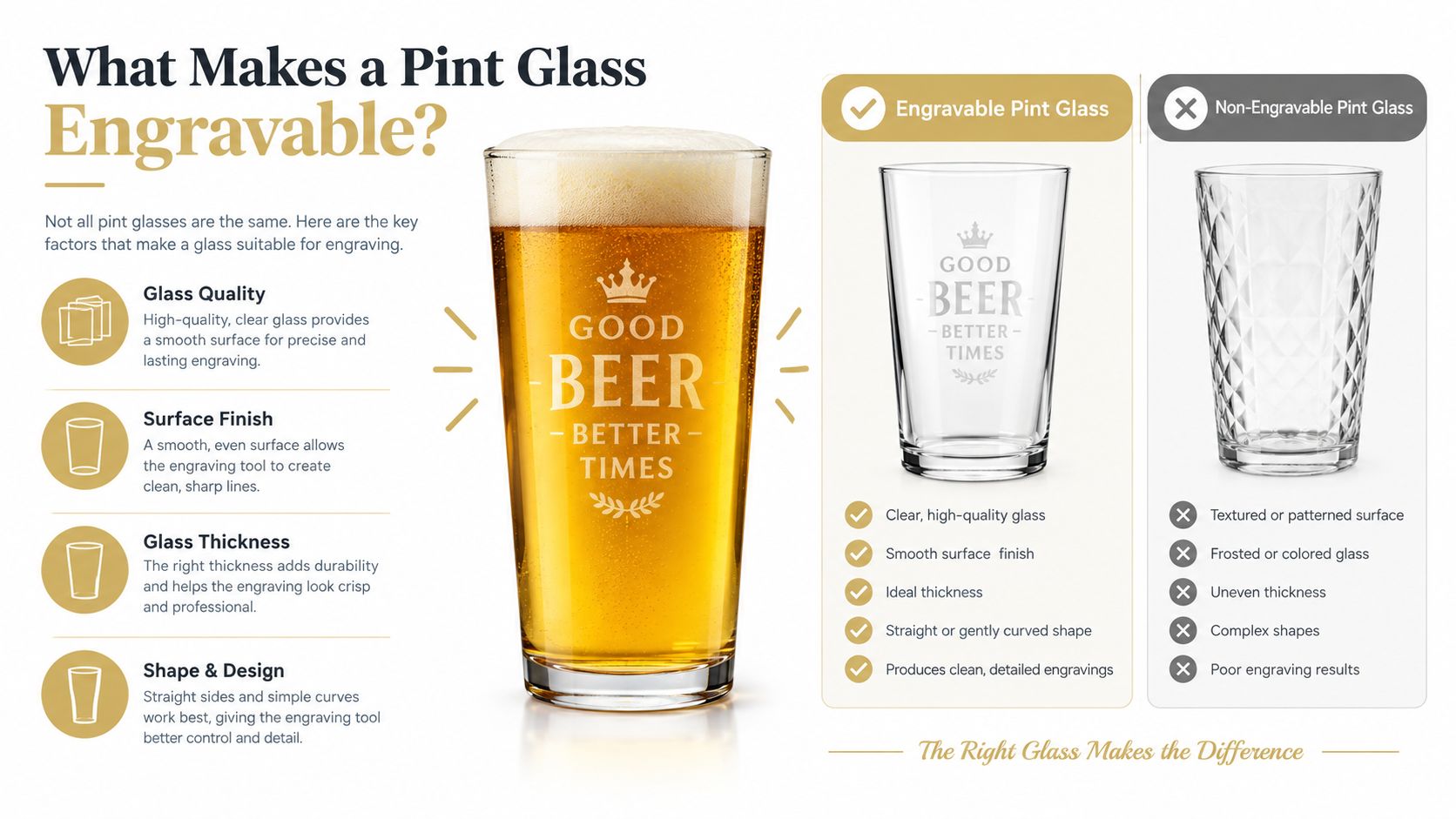
An engravable pint glass needs three things: a stable surface, enough usable print area for the artwork, and glass quality that can take a permanent mark without chipping or showing obvious distortion. Start with the vessel. Then decide how personal or how formal the engraving needs to feel.
Pint size changes by market. The imperial pint is 568 milliliters, while the U.S. liquid pint is 473 milliliters, which affects decoration area and how close artwork sits to the fill line, as outlined in this pint glass overview.
The two shapes that matter most
Two shapes handle engraving better than the rest, and they do different jobs.
The American shaker pint gives you a tall, fairly clean vertical panel. Use it for simple corporate marks, employee names, event dates, or one-line personalization. It is the safer choice when you need consistency across a large order and do not want the artwork fighting the shape of the glass.
The imperial or British-style pint, including nonic forms and fuller beer-glass profiles, gives you a broader face for decoration. That extra width helps when the design includes a crest, multi-line copy, or artwork that needs breathing room. It also tends to look more gift-like at retail because the silhouette has more character. For corporate gifting, though, a broader face only works if the artwork stays restrained. Too much copy on a large panel starts to look promotional instead of premium.
That is the buying decision. Corporate clients usually need a glass shape that keeps the engraving disciplined. Retail gift buyers usually benefit from a shape that gives the design more personality.
What to inspect before you approve a gift order
Check the blank glass in your hand before you approve decoration. If the base feels light, the wall looks wavy, or the rim is inconsistent, the finished gift will look cheap no matter how well the engraving is done.
Focus on these details:
- Wall thickness: Thicker walls usually handle engraving more cleanly and look better with frosted marks.
- Base weight: A heavier base improves presentation and hand feel, which matters for executive gifts and client sets.
- Surface consistency: Ripples, seams, and visible distortion make logos and monograms look sloppy.
- Shape symmetry: On cylindrical drinkware, even slight inconsistencies can make centered artwork look off.
- Glass type: Standard soda-lime glass can engrave well, but low-grade blanks are more prone to edge defects and cosmetic flaws.
If you need a plain-language reference while comparing blanks, this guide to pint glass engraving basics is a useful starting point.
Practical rule: Match the blank to the gifting job. A clean shaker pint suits large corporate runs. A broader British-style pint suits more expressive gift designs. Engraving should fit buyer intent, not get added as an afterthought.
Our product assortment fits that approach well because the goal is not personalization for its own sake. The goal is a pint glass that still looks right after the engraving is on it.
Laser Engraving vs Sandblasting
Buyers usually get quoted on one of two methods. If you understand the difference, most ordering decisions get easier fast. If you don't, you end up comparing prices on products that don't even produce the same visual result.
What laser engraving does well
Laser engraving on glass is usually a controlled surface-marking process. The laser creates micro-fractures or localized ablation in soda-lime glass, leaving a frosted permanent mark rather than a deep carved cut, according to this guide to laser engraving glass. For pint glasses, that means sharp detail, easy setup, and good flexibility for names, dates, and small-batch logo work.
It's the practical choice when you need variable data or quick approval cycles. A digital file goes in, the machine follows it, and you don't need a physical stencil for every change.
For cylindrical glassware, stability matters more than brute force. Rotary fixturing, clean surfaces, and careful heat control improve consistency, especially on filled logos or dense artwork, as noted in this guide on engraving glass with proper fixturing and prep. That's why a good laser result depends heavily on process discipline.
When sandblasting wins
Sandblasting cuts deeper and looks more dramatic. The mark is matte, tactile, and easier to read across a room. For a premium corporate gift, that deeper frost often looks more expensive because it catches light better and has more physical presence.
The tradeoff is setup. Sandblasting usually needs a stencil and more production prep. That makes it less convenient for one-offs and more sensible for consistent artwork across a run.
Laser Engraving vs Sandblasting on Pint Glasses
| Factor | Laser Engraving | Sandblasting |
|---|---|---|
| Best use | Short runs, personalized names, variable data | Brand-led runs, event glassware, premium gifting |
| Look | Fine, precise, frosted surface mark | Deeper matte frost with stronger visual impact |
| Artwork strength | Small text, line art, compact logos | Bold logos, crests, broader layouts |
| Setup | Digital workflow | Physical stencil workflow |
| Speed for one-off changes | Fast | Slower |
| Touch feel | Smoother, shallower | More tactile, more carved feel |
| My recommendation | Tight deadlines and personalization | Higher-impact gift presentation |
If you're comparing methods at a practical level, this overview of how you engrave glass helps frame the conversation.
For gifting, my view is simple. Choose laser when names and timelines drive the order. Choose sandblasting when brand presentation drives the order.
Design Choices That Decide the Final Look
Most bad engraved pint glasses fail long before production. They fail in artwork prep, spacing, and poor restraint. The blank glass isn't the problem. The design choices are.
Start with artwork that can survive conversion
Engraving turns everything into contrast and texture. That means buyers should expect color logos to become monochrome artwork. If your brand depends on gradients, tiny outlines, or soft tonal shifts, the design needs simplification before it hits glass.
Use vector files when possible. If the supplier only receives a low-quality screenshot, the result will look like a low-quality screenshot made permanent.
Layout rules that keep the glass looking professional
A few design decisions carry most of the visual weight:
- Keep text readable: Fine script often looks elegant on screen and disappointing on glass.
- Respect the curve: A layout that reaches too far around the body can distort when viewed straight on.
- Stay away from the rim: Crowding the top edge makes the decoration feel accidental.
- Match style to purpose: A centered mark usually suits corporate gifting better than a busy full wrap. Retail gifting can support more expressive art.
If the recipient needs to rotate the glass to understand the design, the layout is doing too much.
What I'd recommend by gifting scenario
For corporate buyers, I'd keep it disciplined. Use a clean wordmark, initials, a short event title, or a modest crest. For employee recognition, add a name and date if the order allows personalization. For retail gift seekers, go bigger. Full-wrap statements, destination-themed art, humorous copy, and bolder illustration have more shelf appeal than plain monograms.
Here are the most common do's and don'ts:
- Do use stronger line weights when the design includes outlines or detailed symbols.
- Don't cram in extra copy just because the glass has space.
- Do test frosted contrast against the exact blank glass, especially if the vessel has visible texture or molding variation.
- Don't force delicate scripts for names that need to be readable at a glance.
- Do let the glass shape guide the composition instead of pasting the same logo file onto every vessel.
Our product assortment is a good gifting option because presentation matters as much as personalization. A disciplined design on the right glass usually beats a louder design on the wrong one.
Why Engravable Pint Glasses Work for Corporate Gifting
Corporate buyers don't need another object that gets tossed into a drawer after the event. They need gifts that feel considered and survive beyond the handoff. Engravable pint glasses do that well because they combine use, memory, and brand presence in one item.
Custom drinkware is already familiar territory for business gifting. One industry source says 88% of U.S. consumers own promotional drinkware, which helps explain why the format works so well for employee gifts, events, and client programs in this drinkware ownership discussion. Separate market-facing guidance also positions customized drinkware for employee appreciation, trade shows, company events, and client gifting in Merchology's drinkware gifting page.
The strongest use cases
Here's where I think engravable pint glasses make the most sense:
| Use Case | Typical Order Size | Recommended Engraving | Primary Outcome |
|---|---|---|---|
| Client thank-you gifts | Small to mid-size | Sandblasted logo or restrained laser mark | Useful gift with lasting brand presence |
| Retirement and service awards | Small runs | Personalized laser engraving | Individual recognition |
| Company milestone events | Mid to large runs | Sandblasted event design | Shared memory and branded event keepsake |
| Brewery or pub partnerships | Mid to large runs | Bold sandblasted artwork | Retail appeal and venue identity |
| Trade-show hospitality kits | Mid runs | Simple laser or sandblasted mark | Practical takeaway item |
Why this beats forgettable swag
A pint glass goes home. It gets used in kitchens, patios, bars, and game nights. That matters. The gift doesn't vanish at the venue exit.
If your team is thinking broadly about client presents, this roundup on memorable gifting experiences is worth reviewing because it reinforces the bigger point. Buyers remember gifts they can use and talk about, not just gifts with logos on them.
For client gifting, usefulness beats novelty almost every time.
For buyers building a larger branded barware program, custom bar glassware options can help narrow which vessel belongs in which campaign. ROCKS Whiskey Chilling Stones also offers custom etched glassware for events and branded barware programs, which makes it one practical option when you want pint glasses to sit alongside whiskey glasses or gift sets in a coordinated assortment.
Our product assortment is a great fit for corporate gifting because it lets buyers build around occasion, audience, and presentation instead of defaulting to generic merch.
Durability and Everyday Care
This is the question buyers ask after they approve the artwork. Will the engraving last?
The honest answer is that durability depends on the method and depth, not just the word “etched.” Coverage on dishwasher performance conflicts for a reason. Some finishes hold up extremely well in ordinary use, while delicate frosted or lightly etched surfaces can lose clarity under harsher dishwashing conditions. One source notes that visible loss can happen after only 15 to 20 washes for delicate etching in tough conditions, while deeper carved or professionally sandblasted work is described as far more durable in this review of dishwasher safety for personalized glassware.
What buyers should assume
If you need the safest gifting choice, ask for the deepest durable mark the blank glass can handle and don't rely on vague reassurance. Light marks can still be permanent in a technical sense, but “permanent” and “still looks crisp after repeated high-heat cycles” are not always the same thing.
A useful benchmark exists for European compliance. One industry source says EN 12875-1 requires passing 100 dishwasher cycles at 65°C with standard detergent to support a dishwasher-safe claim, which is relevant if your gifts move across markets or into formal retail assortments, as noted in this summary of dishwasher safety standard EN 12875-1.
Care advice I'd include with any gift order
- Rinse promptly: Frosted areas can hold residue longer than smooth clear glass.
- Avoid rough stacking: Glass-on-glass contact scratches surfaces and dulls presentation.
- Use a soft brush for cloudy marks: This helps lift residue from textured engraved areas.
- Ask the supplier direct questions: Don't ask “Is it dishwasher-safe?” Ask how the exact finish performs under repeated dishwasher use.
A well-made engraved pint glass should handle normal use without structural concern. What changes over time is usually appearance, not whether the glass suddenly becomes unsafe.
Ordering Checklist Before You Buy
Most ordering mistakes happen before production starts. Buyers approve the wrong capacity, send weak artwork, or fail to pin down placement. Then the glasses arrive and everyone argues over whether the proof “looked bigger on screen.”
That's preventable.
What to confirm before you approve anything
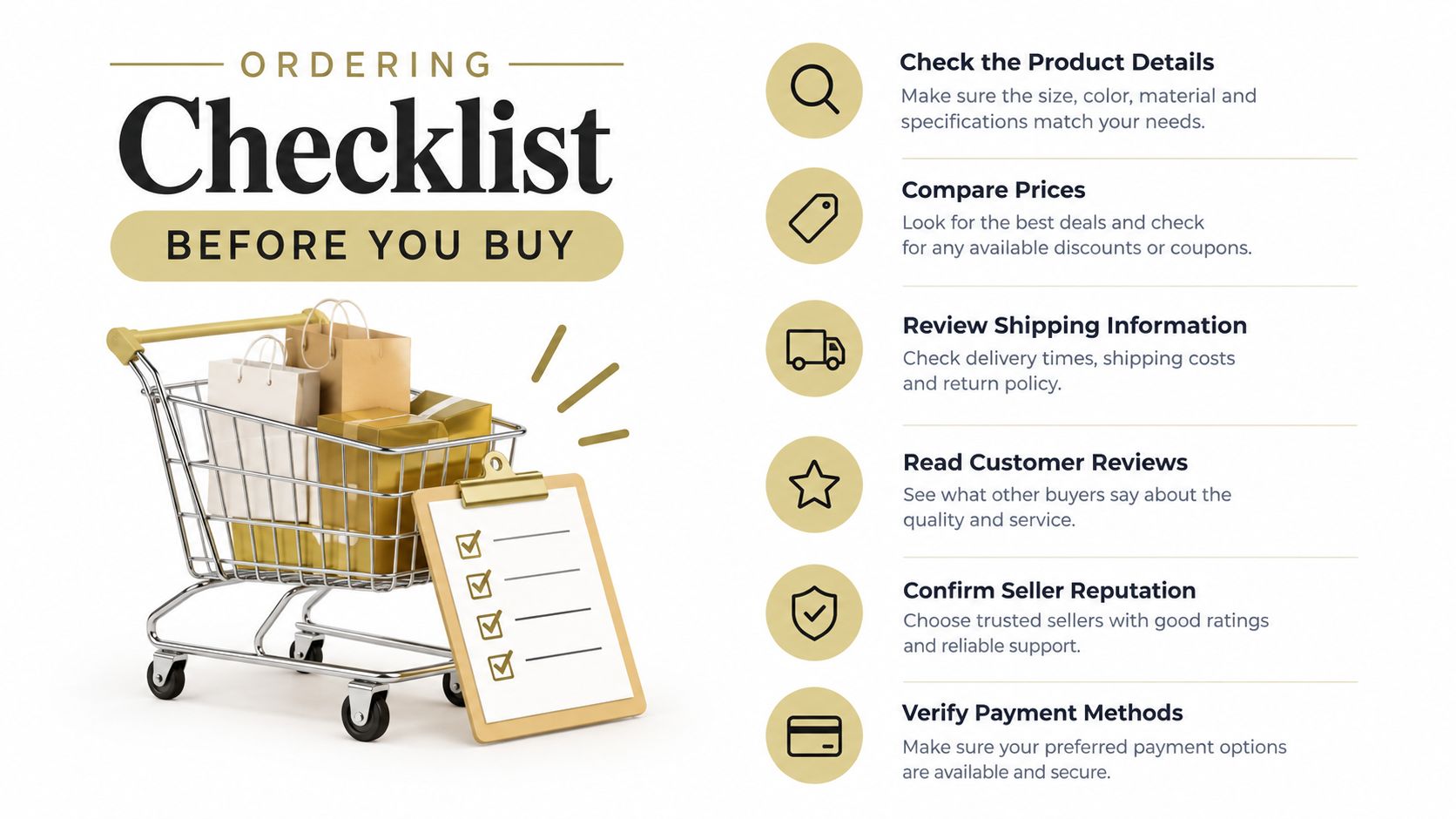
Take this checklist to the supplier:
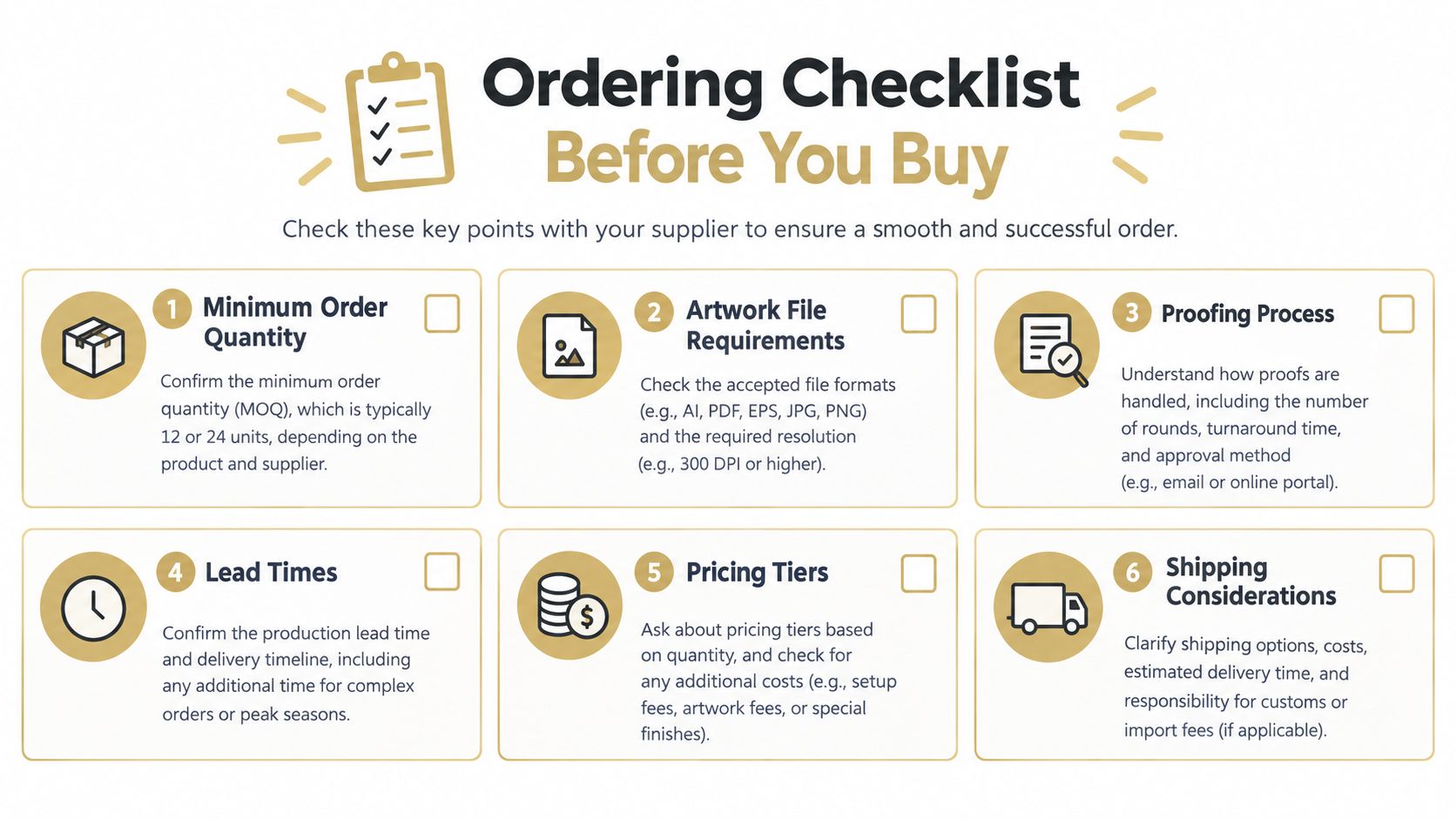
- Glass style and capacity: Confirm whether you're buying a U.S.-size pint or an imperial-style pint. Don't assume.
- Engraving method: Get a firm answer on laser engraving versus sandblasting.
- Artwork format: Ask what file type the supplier wants. Vector is usually the safest route.
- Placement coordinates: Request a template or marked proof that shows exact location on the glass.
- Proof process: Make sure someone signs off on final art before production begins.
- Cost breakdown: Have the quote separate unit cost, setup, packaging, and any rush charge.
- Shipping window: Tie delivery to your actual event date, not a hopeful estimate.
Two mistakes that waste money fast
First, avoid quotes that hide setup charges until the end. A low unit price can look attractive right up until the final invoice appears.
Second, be careful with rush production. Fast turnarounds can be necessary, but they can also distort the economics of the project quickly if the supplier is building around overtime, split shipping, or compressed scheduling.
Ask for a real-world photo proof when the order matters. On-screen mockups hide spacing problems, weak contrast, and awkward placement.
My final buying advice
If you're ordering for clients, keep the design cleaner than you think you need to. If you're ordering for retail shelves or direct gifting, push harder on personality. And if a vendor can't explain the difference between decoration methods, glass shapes, and care expectations in plain English, keep shopping.
Our product assortment is a great fit for gift seekers and corporate buyers because barware gifting works best when the vessel, the decoration, and the occasion all line up.
If you're choosing between pint glasses, whiskey glasses, or a broader branded barware set, ROCKS Whiskey Chilling Stones offers custom etched glassware and gift-ready barware that fits corporate events, client appreciation, and personal celebrations. If you want a cleaner way to build a gift that feels intentional instead of generic, visit ROCKS Whiskey Chilling Stones.


