


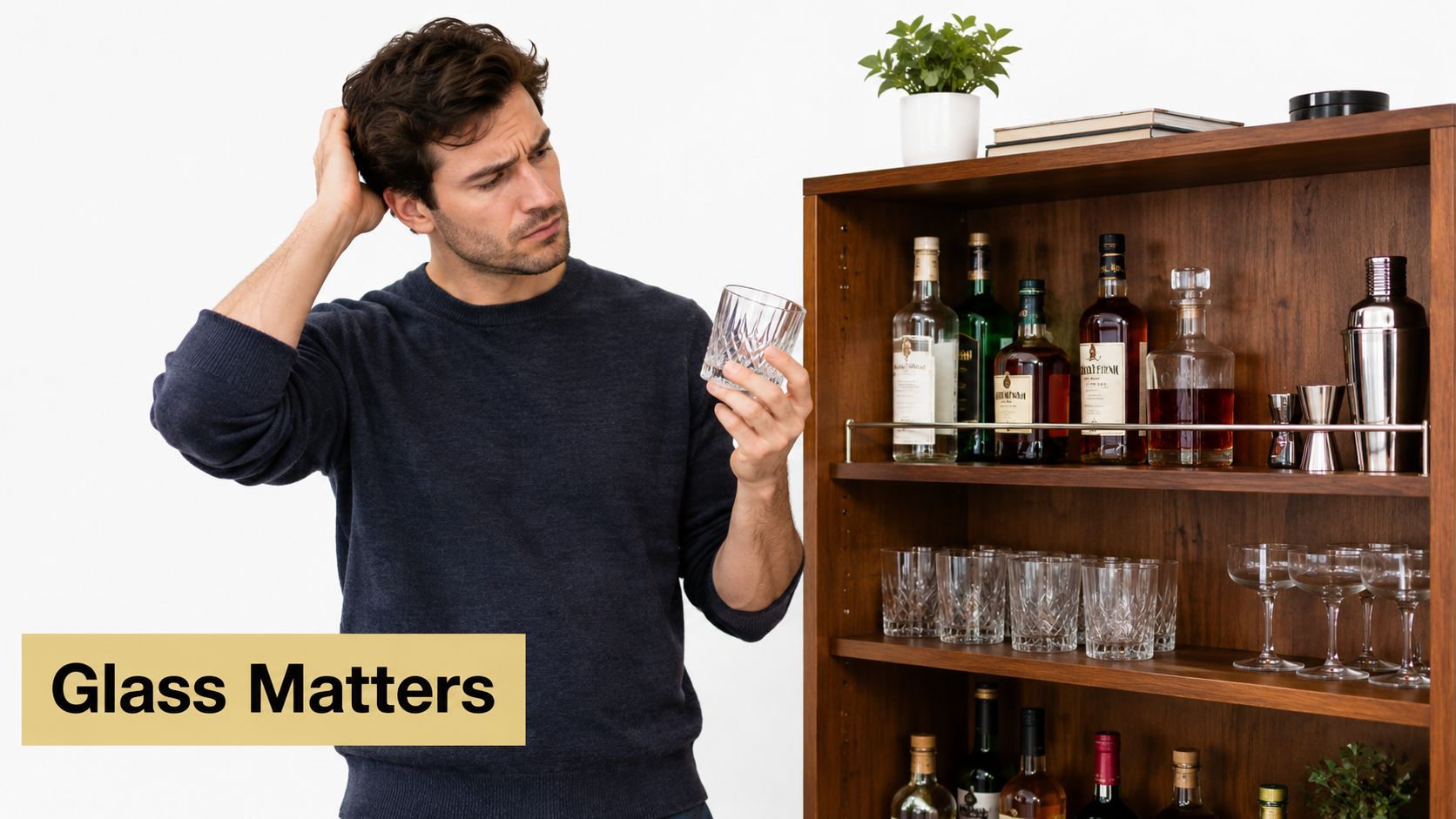
You're standing in front of a half-stocked bar cabinet, holding a rocks glass in one hand and wondering whether tonight's Old Fashioned really needs anything else. Or you're choosing a client gift, staring at a shelf of elegant shapes and trying to work out which one will be used instead of stored.
The different types of cocktail glasses aren't interchangeable decoration. Shape affects how a drink feels in the hand, how quickly it warms, how its aroma reaches the nose, how long carbonation lasts, and whether the presentation feels relaxed or formal. For gift seekers and corporate buyers, that makes glassware a practical choice, not just a style preference.
Why the Right Glass Changes the Drink
A glass changes the experience before the first sip. A stem keeps your hand away from the bowl, a wide rim gives aromas more room to escape, and a heavy base makes a short drink feel deliberate and stable. None of that means one vessel is universally correct. It means the drink and the glass should agree.
Start with the serving style. A drink served up, with no ice, needs a vessel that protects its temperature and gives the drinker enough room to enjoy the aroma without creating an oversized pour. A drink served over ice needs space for cubes or a sphere, plus a shape that feels comfortable to hold while the drink slowly dilutes.
Match the shape to the pace
A rocks glass tells the drinker to slow down. Its short profile suits whiskey neat, an Old Fashioned, or a Negroni over ice. A highball or Collins glass creates a longer, more casual experience, with room for ice, mixer, and fizz. A coupe makes a shaken sour or Daiquiri feel polished, while its rounded bowl gives the drink a softer silhouette than a sharply angled martini glass.
The sensory difference is real enough to test, but it isn't absolute. Research on drink containers indicates that shape can influence flavour perception, while sensory findings aren't always consistent. Chemical observations also indicate that bowl geometry can change which aromatic compounds enter the headspace above the drink. The review of glass shape and flavour perception supports a sensible conclusion: glassware can affect what you notice, but preference and tradition still matter.
Practical rule: Choose the glass for the drink's temperature, strength, and pace. Choose the decoration only after those three decisions are clear.
That rule works especially well for gifting. A single dramatic glass can look impressive, but a curated assortment gives the recipient a reason to use every piece. ROCKS Whiskey Chilling Stones' barware assortment is a good fit for whiskey lovers, cocktail enthusiasts, housewarming recipients, and corporate buyers who want a useful gift rather than another generic bottle.
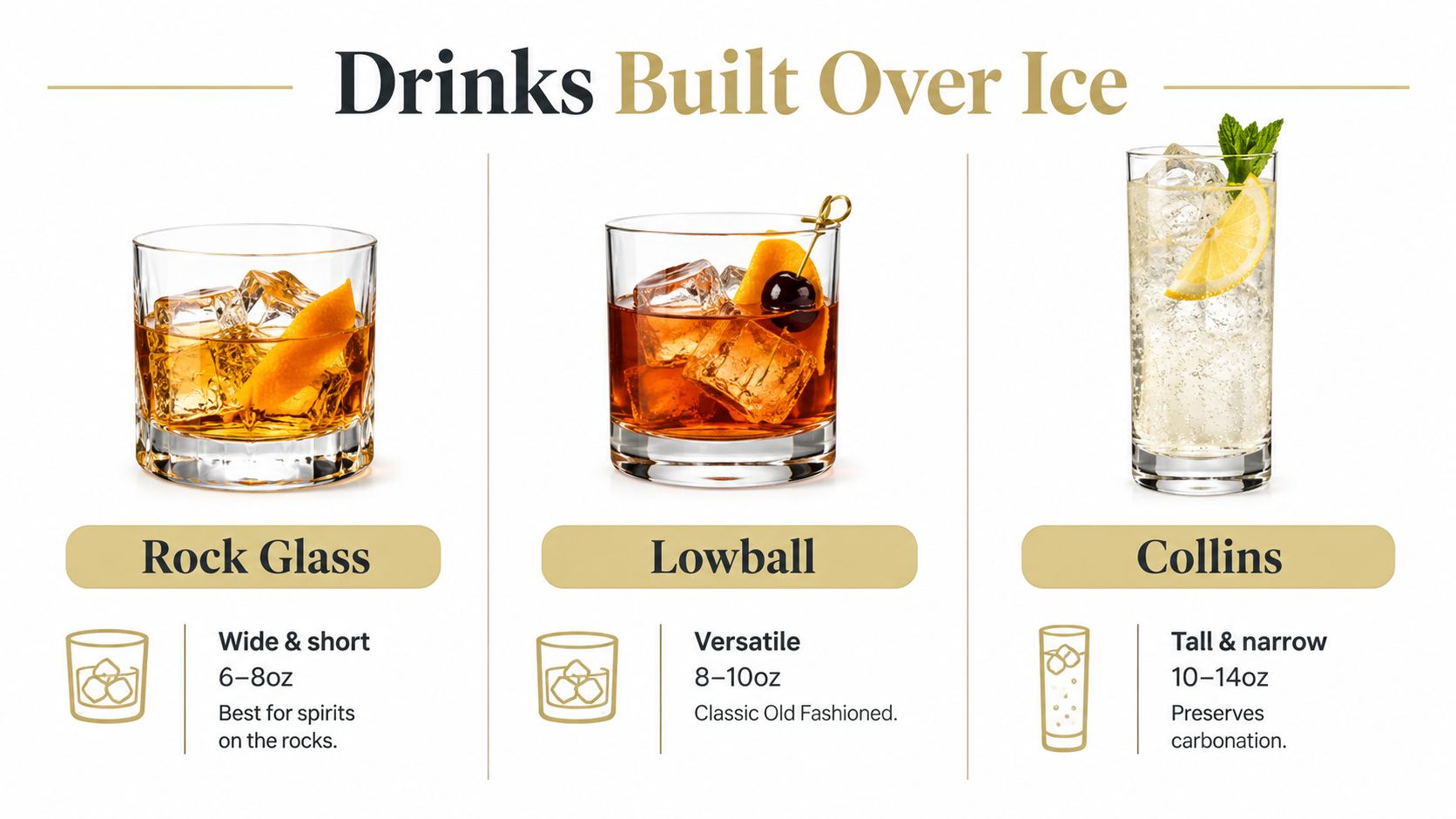
How Glass Shape Affects Aroma, Temperature, and Carbonation
Four physical features do most of the work: stem height, bowl width, rim diameter, and base thickness. Think of them as controls for the drinking experience.
A stem limits contact between your hand and the liquid. That matters for a Martini or Manhattan served without ice, because the drink has no remaining cubes to slow warming. A coupe and a martini glass both use a stem, though the coupe's rounded bowl feels more stable and less formal.
A wider bowl creates a larger liquid-to-air interface. That can release more aroma, but it also exposes more of the drink, allowing it to warm sooner. A tulip-shaped nosing glass takes the opposite approach. Its bowl gives aromas space to gather, then its narrower opening directs them toward the nose. That's useful with neat bourbon, where caramel, oak, spice, and alcohol intensity are part of the experience.
A narrower rim also focuses aroma. A Gimlet's lime oils can feel more concentrated at a tapered opening than at a broad, open rim. The difference won't turn an ordinary cocktail into a new recipe, but the delivery changes how the first sip presents itself.
Base thickness affects handling and perceived stability. A substantial rocks glass feels planted beside the chair or on a bar cart, while a delicate stemmed glass asks for more careful placement. For a Negroni over ice, that stable base suits a slow, measured drink better than a thin stemmed vessel.
Carbonation follows a simpler rule. Wide bowls let bubbles dissipate quickly, while tall, narrower shapes generally keep sparkling drinks lively for longer. That's why a Tom Collins, Gin and Tonic, or Paloma belongs in a highball or Collins glass rather than a coupe.
For practical sizing, a stemmed martini glass commonly holds 4 to 8 ounces, with 6 to 7 ounces common, while a cocktail recipe of 3 to 4 ounces fits comfortably in a 5 to 7 ounce vessel with headspace. These capacity guidelines come from the glassware guide from Nicolet College. The Connoisseur's Set - Nosing Glass Edition pairs a crystal whiskey nosing glass with round solid granite stones for a non-diluting cooling approach.
Coupe, Martini, and Nick and Nora for Drinks Served Up
If you can buy only one stemmed cocktail glass, buy a coupe. It's elegant without being fussy, and its rounded bowl is more forgiving on a crowded bar than the sharp V shape of a martini glass. A typical coupe holds approximately 4 to 7 U.S. fluid ounces, and its broad surface makes it particularly attractive for sours with an egg-white or aquafaba cap. Foodism's glassware guide also notes that sparkling wine loses bubbles quickly in the coupe because of that broad surface.
The martini glass is the theatrical choice. Its wide rim releases aroma quickly, and the V-shaped bowl makes a Martini look instantly recognizable. That presentation works for a cold, briny Martini, but it comes with a practical drawback: the glass is easy to knock over and less forgiving when carried across a room.
The Nick and Nora is my choice for a home bar focused on spirit-forward drinks. Its smaller, tulip-like bowl typically holds about 5 to 6 ounces, concentrating aromas while keeping the serving size sensible. It's ideal for a Manhattan, Boulevardier, or Gimlet served up. It looks less showy than a martini glass, but it's more comfortable for the drinker and better aligned with a compact cocktail.
| Glass | Capacity | Best Cocktail | Stability |
|---|---|---|---|
| Coupe | Approximately 4 to 7 U.S. fluid ounces | Daiquiri or Whiskey Sour | More stable |
| Martini | Typically 4 to 8 ounces | Martini or Sidecar | Least stable |
| Nick and Nora | Around 5 to 6 ounces | Manhattan or Boulevardier | Stable, but more delicate |
The coupe also has a fascinating history. Stemmed glassware for sparkling wine emerged in England in 1663, more than a century before Marie Antoinette's reign, so the familiar story that the coupe was modeled on her breast doesn't hold up. It later became strongly associated with cocktails such as the Daiquiri, Sidecar, and Manhattan because its bowl made “up” service attractive and accessible.
For a fuller look at drinks suited to the shape, see this guide to coupe glass cocktails. For gifting, the coupe is the safest first stemmed choice. It works for cocktail drinkers, feels celebratory at a housewarming, and won't look out of place in a corporate gift assortment.
Rocks, Lowball, and Collins for Drinks Built Over Ice
“Built over ice” means the drink is assembled directly in its serving glass. You add the ice, pour in the spirit and mixer, then stir or finish the drink without shaking and straining it into another vessel.
A rocks glass, also called an Old Fashioned glass, is short, wide, and sturdy. A lowball is usually a near-synonym in modern bar programs, with the naming difference often reflecting regional preference more than a meaningful technical distinction. These glasses suit whiskey neat, whiskey on the rocks, Old Fashioneds, Negronis, and Sazeracs.
A short vessel leaves room for a large cube or sphere and a spirit-forward pour. The drink stays compact, which makes the relationship between spirit, ice, and dilution easy to control. For an Old Fashioned, that's exactly what you want.
A highball or Collins glass is the long-drink alternative. Tall, narrow shapes accommodate more mixer and fizz, making them natural choices for Tom Collins, Gin and Tonic, Mojitos, and Palomas. A Collins glass is typically around 10 to 14 ounces, while a rocks glass can be around 6 to 12 ounces, depending on the format. The restaurant glassware guide from WebstaurantStore explains the practical distinction between short spirit-focused vessels and taller glasses designed for ice and mixers.
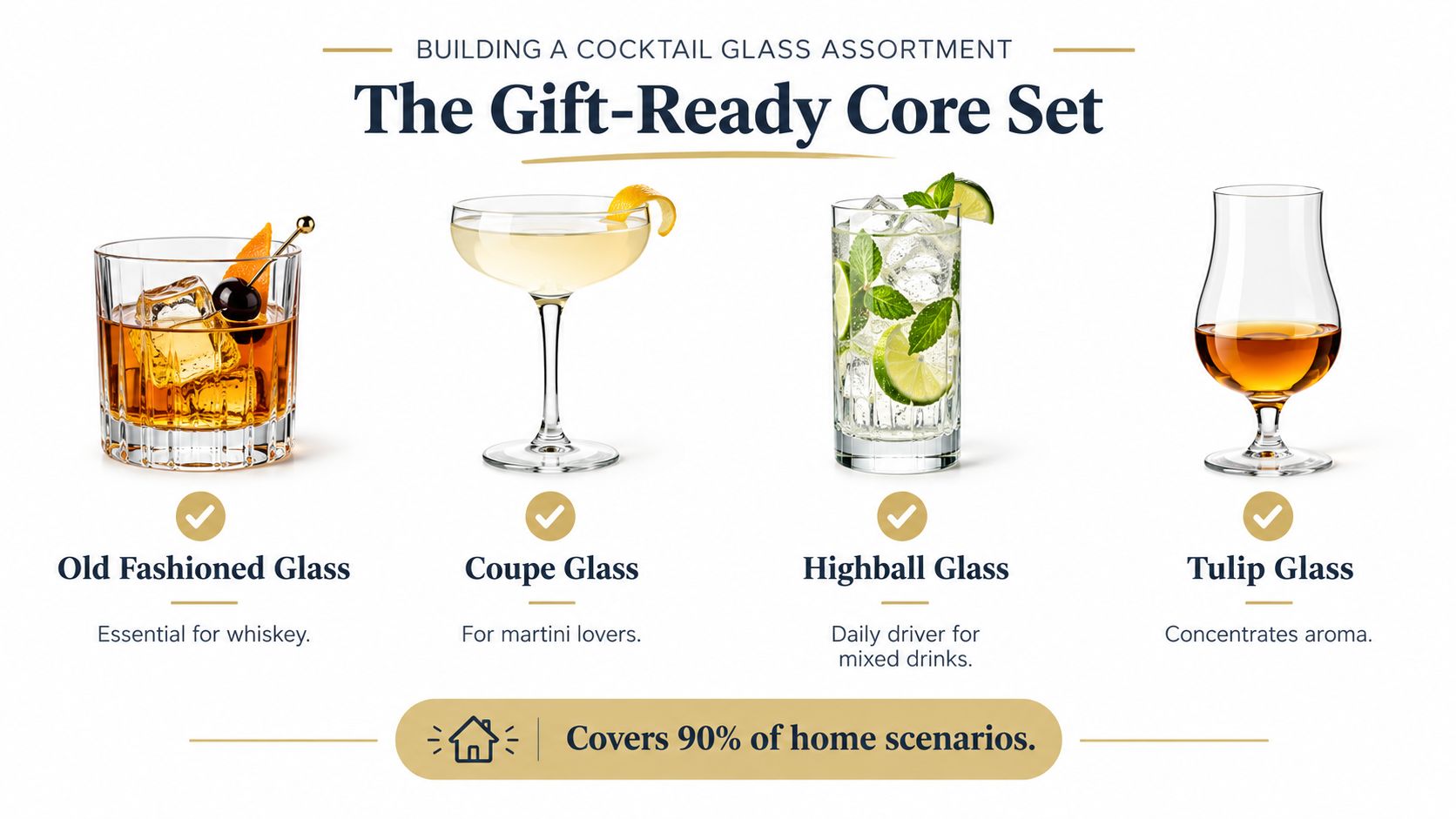
Short and strong calls for a rocks glass. Tall and long calls for a Collins or highball.
Capacity doesn't equal serving size. A glass advertised at its brim-full capacity is meant to hold less liquid in normal service. A 16-ounce wine glass, for example, is designed around a 5-ounce pour, while a 12-ounce rocks glass accommodates approximately a 2-ounce pour plus ice, as explained in this restaurant glassware sizing guide. That distinction matters when selecting a gift, because a large-looking glass doesn't promise a larger drink.
For most home bars and corporate gift programs, a double-old-fashioned glass, a coupe, and a highball form a dependable foundation. You can add a specialty glass later if the recipient has a clear preference. This highball glass guide is useful when choosing between tall shapes for mixed drinks.
Specialty Shapes From Tiki Mugs to Copper Mules
Specialty glassware exists because drinks aren't only recipes. They're rituals, visual cues, and sometimes a bit of theater.
A tiki mug is the clearest example. Ceramic, sculptural, and often oversized in personality, it belongs with rum-forward drinks such as the Mai Tai, Zombie, and Painkiller. A plain rocks glass can technically hold many of these cocktails, but it won't create the same sense of occasion. If the recipient enjoys themed hospitality, a tiki vessel is a strong gift choice. A resource such as this guide to finding the best tiki bars can help a gift buyer understand the culture surrounding these drinks before choosing a mug.
The copper mug is tied most closely to the Moscow Mule, a combination of vodka, lime, and ginger beer. Copper conducts cold quickly, and the handle keeps the hand away from the chilled body. Choose a lined version intended for drinks, particularly for frequent use, and treat it as a dedicated mule vessel rather than a universal cocktail glass.
A julep cup is gently tapered and designed for crushed ice and mint. The outside frosting is part of the intended presentation of a Mint Julep. It's not the most versatile piece in a small cabinet, but it's exactly right for someone who loves that drink or enjoys traditional Southern-style service.
A flute is narrow and stemmed, so it suits French 75s, mimosas, and sparkling wine. It keeps the drink visually lively for longer than a wide bowl, although a white wine glass can work when a flute isn't available.
These pieces aren't always the most efficient purchases. Tiki mugs take storage space, copper needs more care than everyday glass, and julep cups serve a narrower menu. Buy them when the recipient's drinking style calls for them. That's the difference between a memorable gift and a novelty item that sits untouched.
Material and Durability as a Buying Decision
Shape determines how the drink presents itself. Material determines whether the glass survives real use. For a home bar, event program, or corporate gifting order, durability deserves as much attention as silhouette.
Lead-free crystal offers a fine rim, attractive clarity, and a premium feel. It suits a milestone gift, a display-worthy whiskey set, or a recipient who treats tasting as a ritual. Its lighter, more delicate construction can also make it less forgiving in a busy household or event environment.
Soda-lime glass is the practical default. It's generally heavier, widely available, easier to replace, and often suitable for dishwasher use when the manufacturer permits it. A mid-range soda-lime set used regularly is more valuable than fragile crystal that never leaves the cabinet.
Borosilicate glass can be useful when thermal-shock resistance matters, though its suitability still depends on the specific product and care instructions. Stainless steel removes the breakage concern and works well for outdoor service, travel, and certain chilled drinks. Copper pieces provide a distinctive thermal and visual experience, but they need appropriate lining and care.
Sustainability isn't only about the raw material. Long service life, replaceable pieces, sensible packaging, shipping weight, and avoiding an oversized set that goes unused all affect the buying decision. Market coverage of barware materials and sustainability identifies recycled glass, alternative materials, and practical service considerations as important themes for buyers.
| Material | Durability | Cost | Best For |
|---|---|---|---|
| Lead-free crystal | Delicate to moderate | Premium | Milestones, tasting, display |
| Soda-lime glass | Moderate to strong | Accessible | Everyday home use and events |
| Borosilicate glass | Good thermal-shock resistance | Varies | Specialty everyday use |
| Stainless steel | High breakage resistance | Varies | Outdoor use and travel |
| Copper-lined | Durable body, requires care | Premium | Moscow Mules and themed gifts |
For corporate buyers, soda-lime or stainless pieces are usually the smarter choice when the gifts must travel, survive fulfillment, and remain useful. Crystal makes sense when the occasion calls for refinement and the recipient will appreciate careful handling.
Building a Cocktail Glass Assortment as a Gift
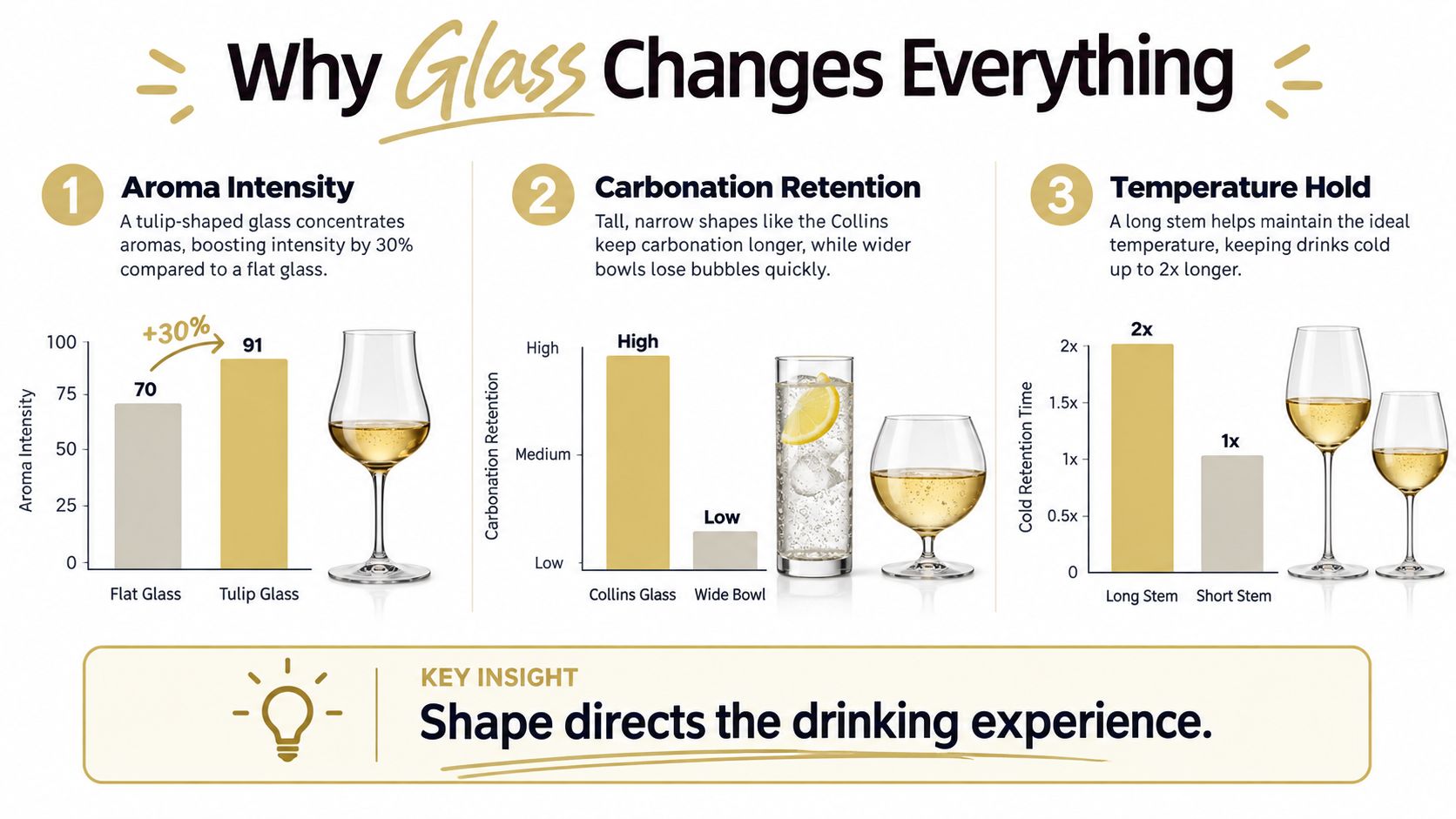
A small, curated assortment beats a single showpiece because it lets the recipient match the vessel to the drink immediately. My gift-ready core contains four shapes:
- Coupe: For Daiquiris, sours, and elegant drinks served up.
- Double-old-fashioned or lowball: For whiskey, Old Fashioneds, Negronis, and drinks over ice.
- Highball or Collins: For Gin and Tonics, Palomas, Tom Collins, and other long pours.
- Nick and Nora or martini glass: Choose the Nick and Nora for spirit-focused drinkers, or the martini glass for someone who values classic presentation.
That assortment works for a friend's housewarming, a wedding gift, a birthday, or a client appreciation package. It also fits ROCKS Whiskey Chilling Stones' broader barware assortment, which is designed around whiskey glasses, cocktail accessories, and gift sets for spirits enthusiasts.
Corporate buyers should think beyond the glass itself. Uniform sets simplify branding, packing, and distribution. A consistent assortment also feels more intentional than a collection of unrelated novelty pieces. Add engraving where available, particularly for a client name, event date, company mark, or employee recognition message.
Make the package feel considered
Packaging can turn useful drinkware into a memorable gift without adding unnecessary clutter.
- Nested boxing: Protects the pieces and gives the recipient a clean unboxing experience.
- Printed drink guide card: Shows which cocktail belongs in each shape and removes guesswork.
- Fabric pouch: Adds a tactile layer for smaller accessories or travel-friendly pieces.
- Simple recipient pairing: Match the assortment to the person instead of sending identical kits to everyone.
A whiskey drinker will appreciate a sturdy lowball and a nosing-oriented glass. A spritz fan needs a tall glass or flute-like option for lively mixed drinks. An occasional entertainer benefits most from a coupe, lowball, highball, and one stemmed choice that can cover several styles.
Don't buy a large mixed set just because the box looks generous. A smaller assortment that fits the recipient's actual habits is more sustainable, easier to ship, and more likely to become part of the daily bar routine. For more ideas around presentation, these bar cart accessories and décor can help complete a coordinated gift.
Choosing the Right Glass in Seconds
Use four questions at the shelf or checkout page.
Is the drink served up or over ice? Choose a coupe, Nick and Nora, or martini glass for a strained drink without ice. Choose a rocks glass, highball, or Collins for a drink built over ice.
Does it contain carbonation? Pick a tall, narrow highball or Collins for a Tom Collins, Gin and Tonic, or Paloma. Reserve the coupe for drinks where bubble retention isn't the priority.
Is it spirit-forward or a long pour? Neat whiskey and compact stirred cocktails benefit from a rocks glass or tulip-shaped nosing glass. Drinks extended with soda, tonic, ginger beer, or juice need the extra height and volume of a highball or Collins.
Is presentation the priority? Choose a martini glass for unmistakable theatre, a coupe for softer elegance, a copper mug for a Moscow Mule, or a tiki mug when the theme is part of the occasion.
The glass matters most with neat whiskey and a shaken sour. A tapered nosing shape can concentrate aroma around a spirit, while a coupe gives a foamy sour room to show its texture. For a casual rum and Coke or backyard spritz, almost any suitable tumbler can work.
The rule is simple: match the glass to the drink's temperature, strength, carbonation, and finishing pace. For gifting, choose a compact assortment that reflects how the recipient really drinks instead of collecting every shape on the shelf.
ROCKS Whiskey Chilling Stones offers whiskey chilling stones, cocktail glasses, whiskey glasses, and gift-ready barware for spirits lovers, gift seekers, and corporate buyers. Visit ROCKS Whiskey Chilling Stones to choose a practical drinkware gift or explore options for client appreciation, employee rewards, and personalised barware.


