


Have you ever chosen the most ornate whisky crystal decanter set in the room, only to discover that nobody knows whether it's safe for storing the whisky inside? The impressive cut pattern, heavy stopper and polished presentation may attract attention, but a memorable gift needs more than visual drama. Material safety, sealing performance and thoughtful presentation matter more than decoration alone.
A well-chosen set turns a bottle of whisky into an occasion. It gives the recipient a refined way to serve guests, creates a focal point for a home bar and provides corporate buyers with a gift that feels personal rather than disposable. The strongest choice treats the decanter as part of a complete gifting experience, not as a permanent replacement for the original whisky bottle.
Why a Whisky Crystal Decanter Set Is the Ultimate Premium Gift
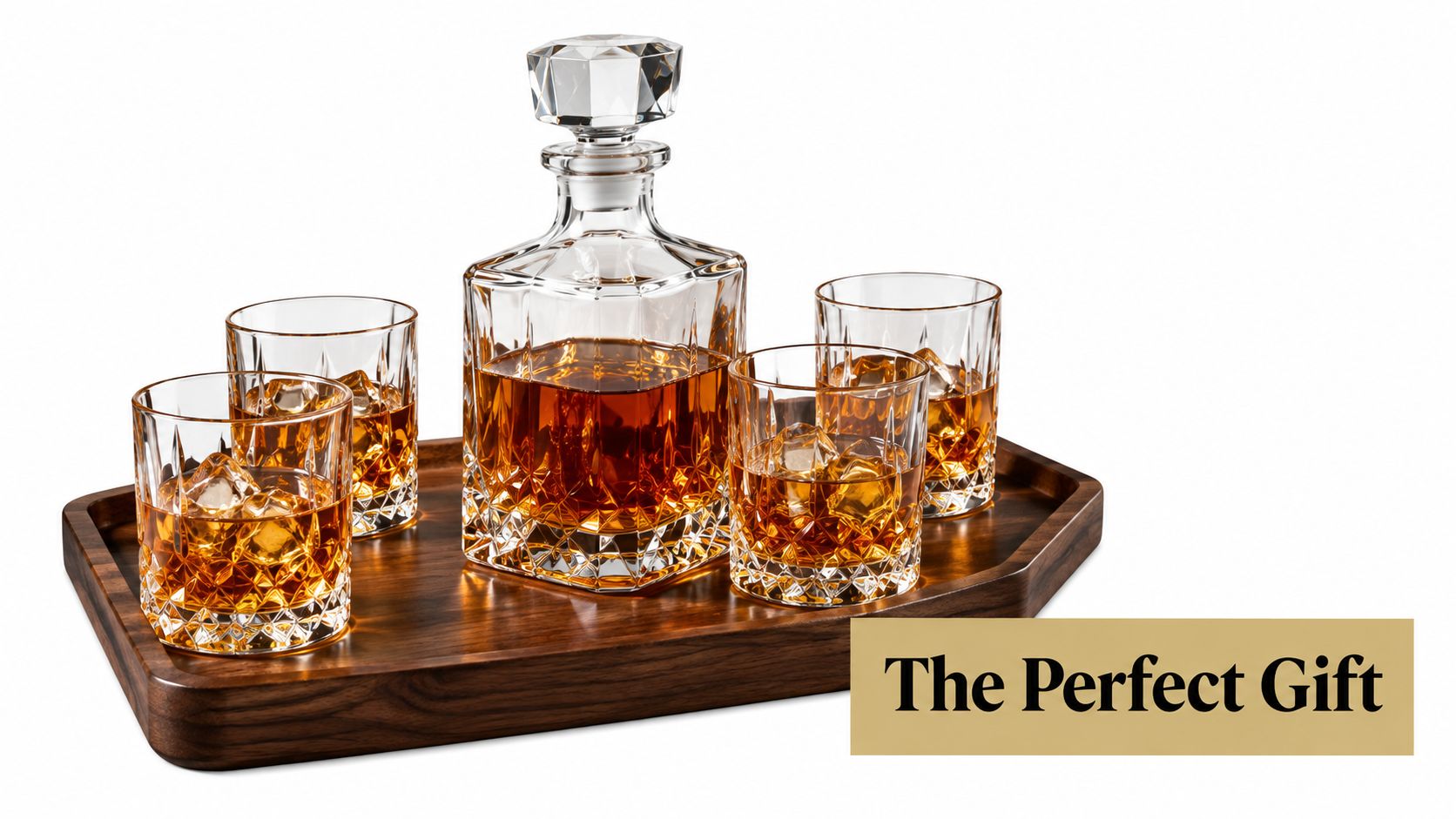
A recipient opens the box at a birthday dinner, wedding reception or client appreciation event. The first reaction is usually visual: the glass catches the light, the matching tumblers sit neatly beside it and the tray gives the whole presentation a sense of purpose. Then the practical questions begin. Is the decanter for daily use? Does the stopper seal properly? Is the crystal lead-free? Can the recipient display it without worrying about how it was made?
Those questions are exactly why a whisky crystal decanter set makes such a strong gift when selected carefully. It combines barware, presentation and personal meaning in one object. A bottle of whisky may eventually be finished, but a well-made decanter and its accompanying glasses can remain on a bar cart or office cabinet long afterward.
A gift with history and ceremony
Decanters have roots reaching back to Roman vessels used for transferring and serving liquids. Renaissance and Venetian glassmaking helped shape recognizable forms, while the modern spirit decanter became especially useful when whisky and other spirits were sold from barrels or unattractive bottles. Moving the liquid into a more presentable vessel separated storage from service and made hospitality feel intentional. The history of decanting and spirit presentation helps explain why the decanter remains both functional barware and a display object.
English lead crystal added another layer of prestige. London glassmaker George Ravenscroft established a glasshouse in 1673 and received a seven-year patent on 19 March 1674 to make “cristall for drinking glasses.” A documented 1676 formulation used lead oxide at approximately 27% of the mixture, creating greater brilliance, clarity and optical depth than ordinary glass. The history of English crystal connects today's sparkle and resonant ring with a tradition that is roughly 350 years old.
Gift buyer's rule: Choose the set that makes serving feel special without forcing the recipient to compromise on safe use.
For corporate buyers, the emotional value matters as much as the object. 85% of consumers believe the thoughtfulness of a holiday gift affects their perception of a brand, according to PPAI's survey of gift expectations. A decanter set can support that impression when the buyer selects the material responsibly, adds a relevant engraving and presents it with glasses or serving accessories. It works for a milestone birthday, wedding, housewarming, employee reward or client thank-you because the recipient can use it and display it.
Understanding Crystal Quality and Safety Standards
The word crystal doesn't tell you enough. It may describe traditional lead crystal, a modern lead-free crystal formulation or a decorative glass product with a crystal-like appearance. Before buying a set for regular whisky service, ask for the exact material, food-contact information and care guidance. A premium-looking box isn't a substitute for a clear specification.
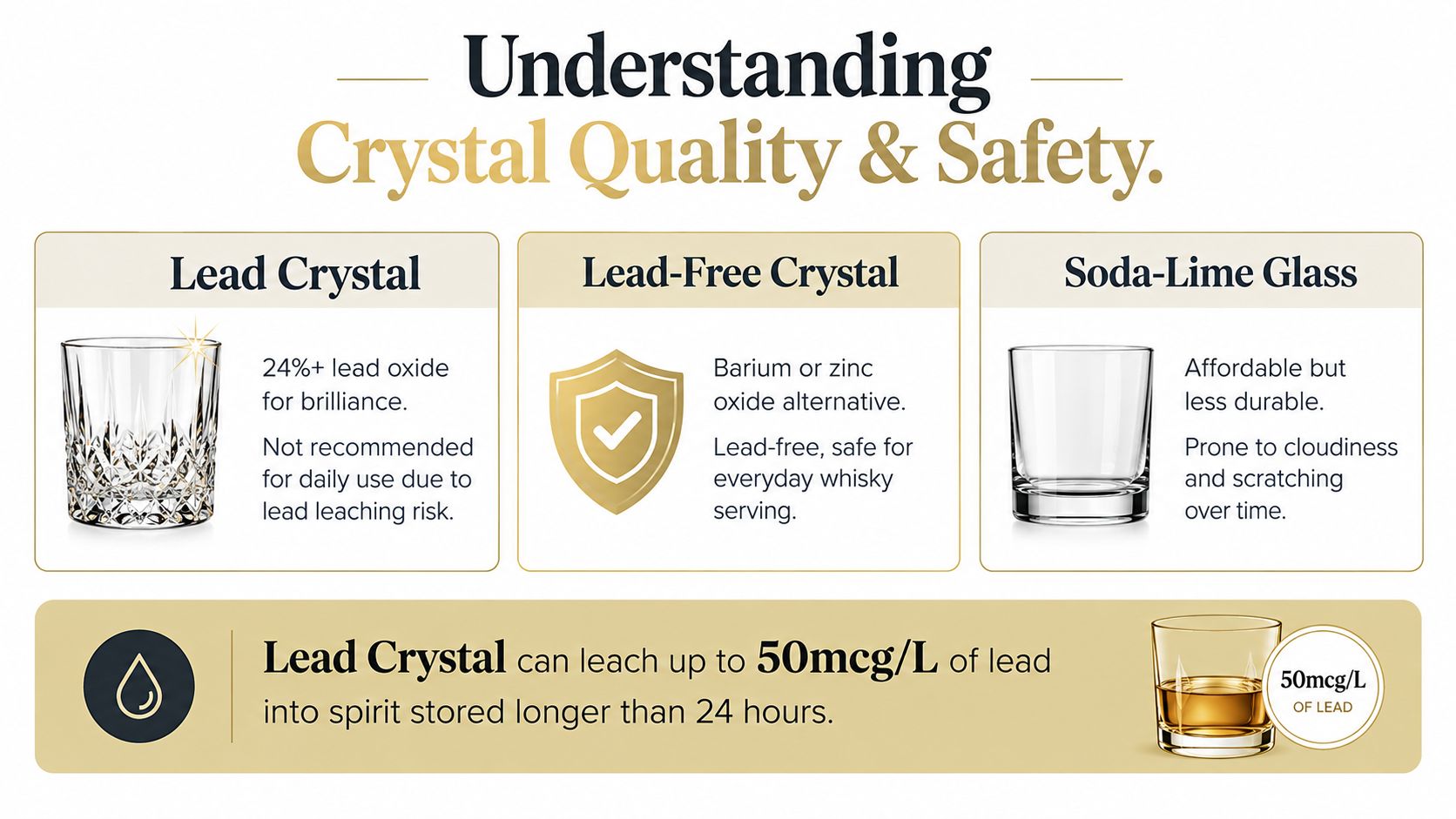
Traditional lead crystal is prized for its weight, brilliance and high refractive power. Those qualities explain why ornate vintage decanters can look spectacular under warm lighting. They also create a safety issue when the vessel holds alcohol for extended periods. California's public-health guidance advises against storing food or alcohol in leaded-crystal decanters because lead migration increases with storage duration. California's guidance on lead in tableware is the relevant reference for buyers who need a practical safety decision.
The material choices in plain language
Lead crystal offers classic sparkle and substantial hand feel, but an unverified leaded decanter should be treated as a serve-and-display vessel, not a long-term whisky container. The concern is especially important for corporate gifts because the recipient may assume that a heavier, more elaborate vessel is automatically suitable for daily storage.
Lead-free crystal uses alternatives such as barium or zinc oxide to create clarity and decorative brilliance without lead. It's the sensible default for a gift intended for frequent serving. Ask the seller to state “lead-free” clearly rather than accepting the broad word “crystal.”
Borosilicate glass is another strong technical option. Its coefficient of thermal expansion is approximately 3.3 × 10⁻⁶/°C, compared with about 9 × 10⁻⁶/°C for soda-lime glass, according to this glassware safety overview. The lower expansion can reduce internal stress during temperature changes, though it doesn't make any decanter immune to cracking.
Check these details before placing a bulk order:
- Material declaration: Confirm whether the vessel is lead-free, leaded crystal or ordinary glass.
- Food-contact compliance: Request the applicable statement or documentation, particularly for corporate gifting.
- Thermal-shock guidance: Ask about stated temperature limits and test methods when borosilicate is claimed.
- Use instructions: If composition isn't clear, recommend serving whisky from the decanter and returning the remainder to its original bottle.
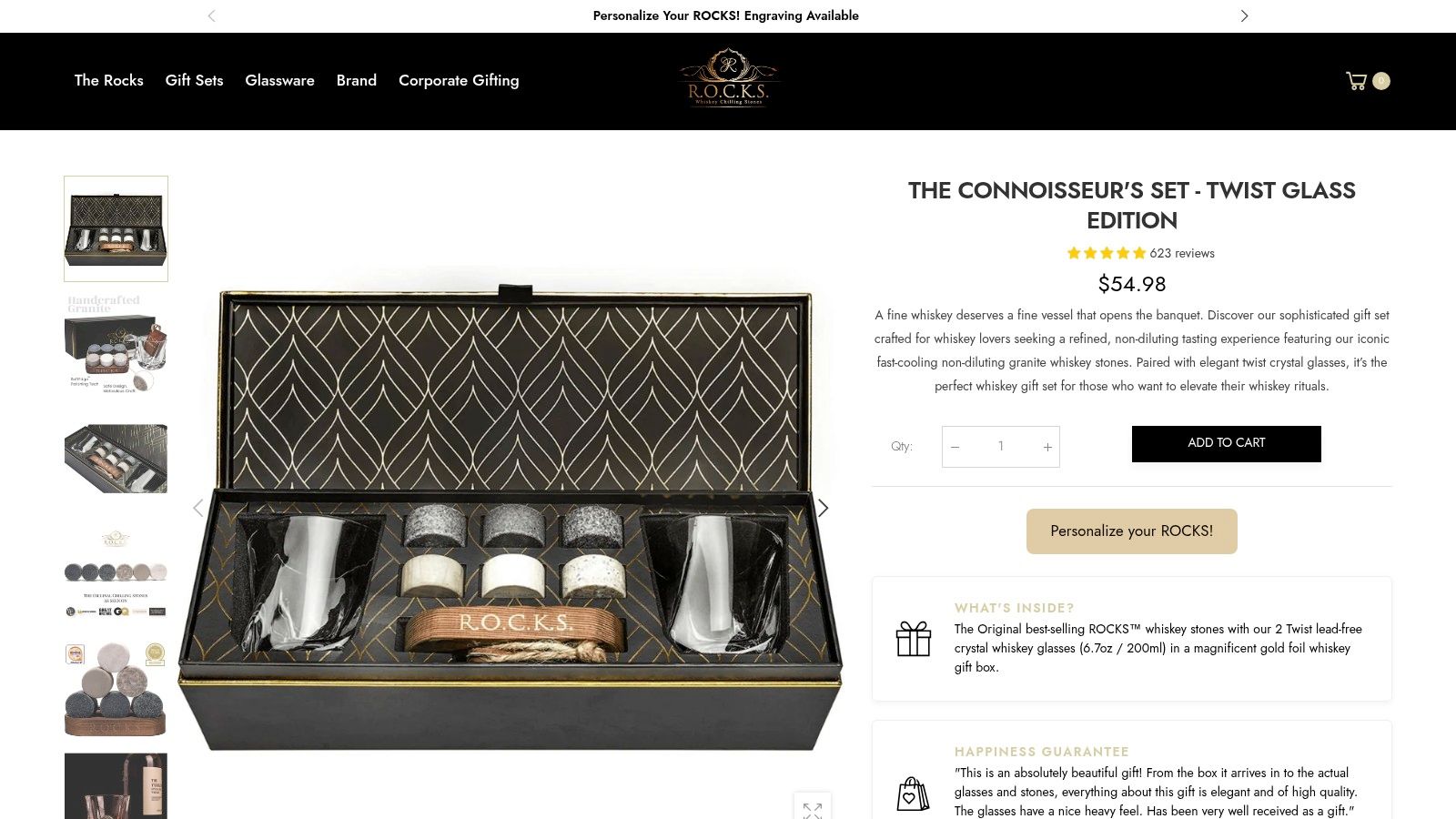
For a gift centered on non-diluting service, The Connoisseur's Set - Twist Glass Edition pairs twist crystal glasses with fast-cooling granite whiskey stones. Its relevance is practical: the recipient can present the whisky attractively while choosing chilled service without melting ice directly into the drink. Buyers comparing materials can also consult this guide to lead-free crystal whiskey decanters before selecting a set.
Choosing the Right Capacity and Stopper Design
Capacity should follow the occasion, not the marketing photograph. A larger decanter suits a hosted dinner, reception table or office bar where the recipient wants to serve a bottle to several guests. A compact vessel works better in a curated gift box, a personal study or a home where the decanter is primarily decorative.
The stopper deserves equal attention. A beautiful plug that sits loosely can allow more air exchange and evaporation than the recipient expects. A well-sealed decanter can significantly slow oxidation compared with an open pour, helping preserve aroma and alcohol strength during serving. That makes the stopper a performance component, not just a decorative cap.
Match the vessel to the recipient
A set intended for a whisky enthusiast who hosts regularly should emphasize a stable base, comfortable pouring weight and a stopper that fits securely. Matching glasses make the gift feel complete because the recipient doesn't need to assemble the serving ritual from unrelated pieces.
For a smaller personal gift, prioritize proportion and ease of handling. An overlarge decanter with a wide empty space above the whisky can be less practical than a smaller vessel that keeps the spirit closer to the stopper. Fill level, headspace, temperature, light and storage duration all influence how well the whisky holds up, so transferring an entire bottle merely because the decanter can accommodate it isn't automatically wise.
Compare stopper styles
| Stopper style | Strength | Limitation | Best use |
|---|---|---|---|
| Heavy crystal plug | Strong visual impact and substantial feel | The fit must be checked carefully | Formal display and hosted service |
| Cork stopper | Can provide a practical, traditional closure | Cork quality and fit vary | Casual home bars and gift sets with a classic character |
| Decorative loose stopper | Attractive on a shelf | Offers weak protection against air exchange | Display only, with whisky kept in its original bottle nearby |
Treat the decanter as a serving accessory rather than a maturation vessel. Whisky doesn't improve in a decanter the way it matured in a barrel. For a gathering, pour what you expect to serve, close the stopper between pours and keep the original bottle available for longer-term storage. That approach preserves the ceremony without turning a gift into an avoidable storage risk.
Care and Maintenance Tips for Crystal Glassware
A crystal set stays impressive when the recipient treats it as delicate barware rather than ordinary kitchen glass. Chips usually start at vulnerable edges, while cloudiness and surface marks can come from harsh detergents, abrasive tools or repeated dishwasher cycles. Give the recipient clear care instructions with the gift, especially when the set includes a sculptural stopper or narrow neck.
Start with the simplest routine:
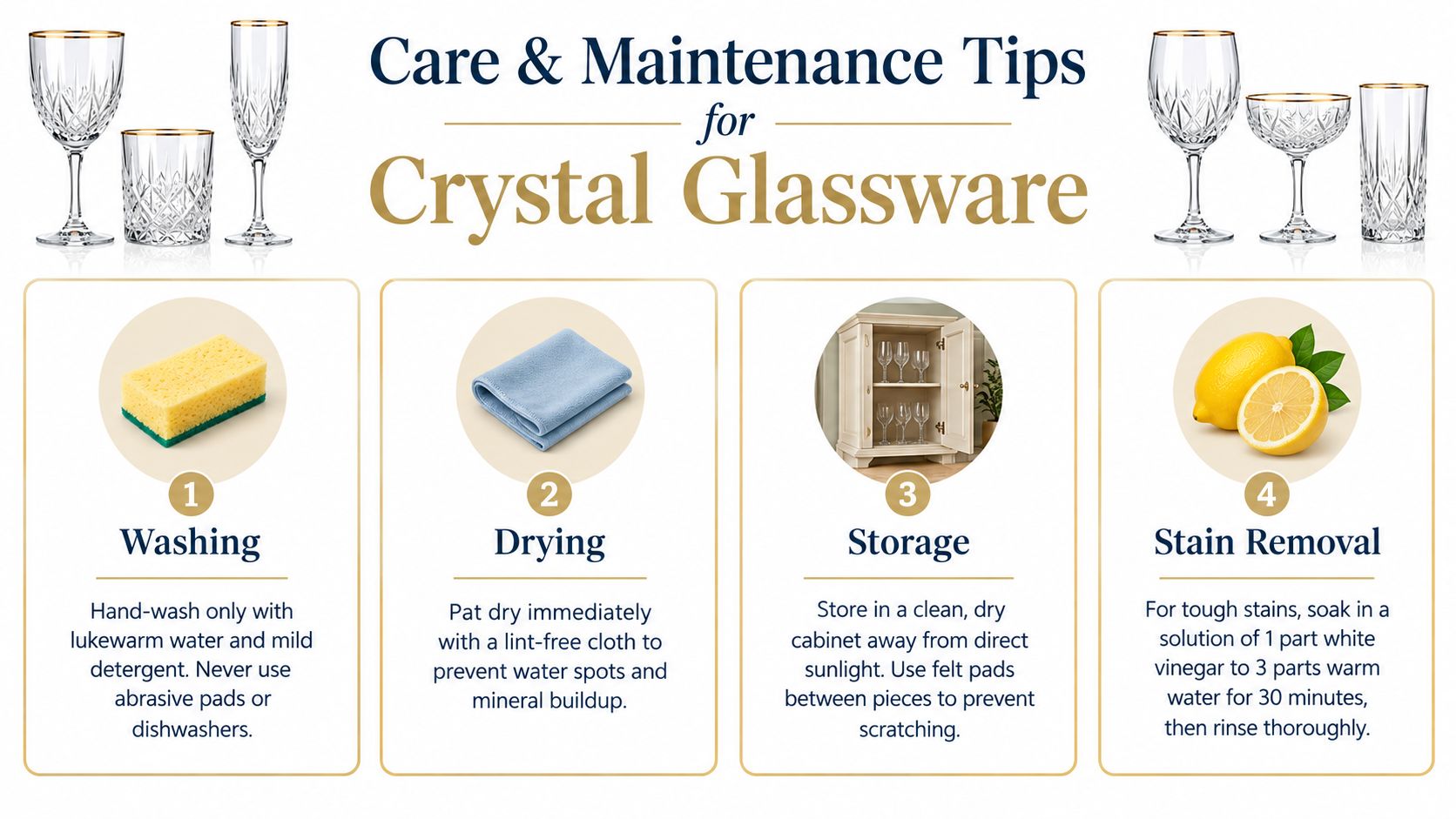
- Wash by hand. Use lukewarm water, a mild detergent and a soft sponge. Avoid abrasive pads and dishwashers because heat, detergent strength and movement can damage the finish or create stress in the glass.
- Rinse completely. Residual detergent can affect aroma and leave a dull film. Hold the decanter securely around its body rather than lifting it by the neck or stopper.
- Dry immediately. Pat the glass with a lint-free microfiber cloth. This reduces water spots and mineral buildup, especially in areas with hard water.
- Store with separation. Keep the decanter and glasses in a clean, dry cabinet away from direct sunlight. Felt pads between pieces help prevent scratching.
Remove stains without damaging the surface
Whisky residue can collect around the base and shoulder of a decanter. Don't attack it with a bottle brush that has a hard shaft or with scouring powder. Instead, soak the vessel in a solution of one part white vinegar to three parts warm water for 30 minutes, then rinse thoroughly and dry with a lint-free cloth.
The crystal decanter cleaning guide provides a useful reference for passing care advice to a gift recipient. For a narrow-neck design, let the solution loosen the residue rather than forcing a tool into the opening. Never twist a stopper that has dried in place. Moisten the area and work it loose gradually.
Practical care: Never pour very hot liquid into a cold decanter or expose cold glass to boiling water. Sudden surface temperature differences can cause cracking, even when the glass has a relatively low expansion rate.
If the decanter's material is uncertain, clean it for serving use and don't leave whisky inside between occasions. Return unfinished whisky to its original bottle, seal it properly and store it in a dark, temperature-stable place. That routine protects the spirit and keeps the gift available for the next celebration.
Styling Your Decanter for Bar Carts and Gift Sets
A decanter looks most convincing when the surrounding pieces support its purpose. Place it where guests can see the glass and reach the stopper without brushing against nearby bottles. A wooden tray gives the arrangement a defined footprint, while matching tumblers create visual order and make the set feel like a complete gift rather than a single decorative object.
Build the arrangement around three roles:
- The decanter: Keep it central, with enough space to lift and pour safely.
- The glasses: Set them beside the vessel, not directly in front of the pouring path.
- The serving accessory: Add whiskey stones, a small water pitcher or a measured pourer according to the recipient's habits.
The right accessory should improve the ritual, not clutter it. Non-diluting granite whiskey stones can offer a chilling option for drinkers who don't want melting ice to change the spirit. They don't solve sealing, evaporation, light exposure or material-safety concerns, so present them as a serving choice rather than a preservation method.
A curated gift box can include the decanter, matching glasses, a presentation tray and a concise care card. For a client or employee, that combination communicates thoughtfulness without requiring the recipient to understand specialist barware. For a wedding or housewarming gift, coordinate the tray finish with the recipient's interior style. Clear faceted glass suits traditional rooms, while simpler geometric forms work well in contemporary spaces.
Keep bottles and accessories visually balanced. Too many pieces make the presentation feel like a promotional bundle, while too few can make the decanter appear unfinished. The best assortment gives the recipient a clear ritual: select the whisky, pour it into a verified vessel for serving, use the matching glasses and return the remainder to controlled storage.
Corporate Gifting and Personalized Engraving Options
Corporate buyers should reject generic luxury and choose relevance instead. A whisky crystal decanter set works because it can acknowledge a person, an achievement or a business relationship while remaining useful after the event. The gift feels stronger when the buyer knows the recipient drinks whisky, appreciates barware or enjoys hosting. For recipients who don't drink, select another barware or lifestyle option rather than assuming the category fits everyone.
Engraving adds the personal layer. A name or initials suit an individual reward. A company logo can work for client appreciation, provided it's subtle and placed where it won't overpower the glass. A milestone date, retirement message or event name can turn the set into a lasting reminder of the occasion.
A cited study found that 55% of consumers keep personalized items longer than generic products, and 40% keep them permanently, as reported by this summary of personalization research. That supports a clear buying decision: personalize the item when the relationship or event justifies it, but don't add excessive branding that makes a premium gift feel like merchandise.
Choose the right corporate format
For a small executive or client program, use one refined set with discreet engraving and a short handwritten note. For a larger employee event, standardize the material declaration, packaging and engraving position so every recipient receives the same quality. Procurement teams should request lead-free confirmation, food-contact information and care instructions before approving a bulk order.
A premium gift should also arrive ready to present. The tray, glasses and stopper need protective packaging, and the recipient should understand that an unverified or leaded decanter is better for serving and display than prolonged storage. Buyers exploring broader options can review Cashmere Boutique corporate gifting for additional ideas when building a considered client or employee gift program.
Personalized sets suit birthdays, weddings, anniversaries, housewarmings, retirements, client thank-you gifts and employee recognition. The strongest assortment combines a safe vessel, useful glasses, a polished presentation and an engraving that says why this person received it. That is what makes our gifting assortment a good fit for buyers who want barware to carry emotional value, not just visual appeal. For more guidance on customization, see this resource on a personalized whisky decanter set.
ROCKS Whiskey Chilling Stones offers curated whisky gift sets, crystal glasses, whiskey chilling stones and customizable wood-tray or glassware presentation for personal and corporate gifting. Visit ROCKS Whiskey Chilling Stones to choose a polished barware gift for a client, employee, whisky lover or milestone celebration.


